A SHORT BIOGRAPHY OF NTHANGALI JOSEPH GIBSON BENTHU NTHENGWE
1. BENTHU’S RENDITION (CHITHOKOZO CHA BENTHU)
Chitokozo is a rhythmic recital of names of ancestors arranged in hierarchical order. It helps mark our profound expression of gratitude to them in order to guarantee and authenticate our sense of belonging to the clan. Chithoko defines genealogical distinction between our clan and others.
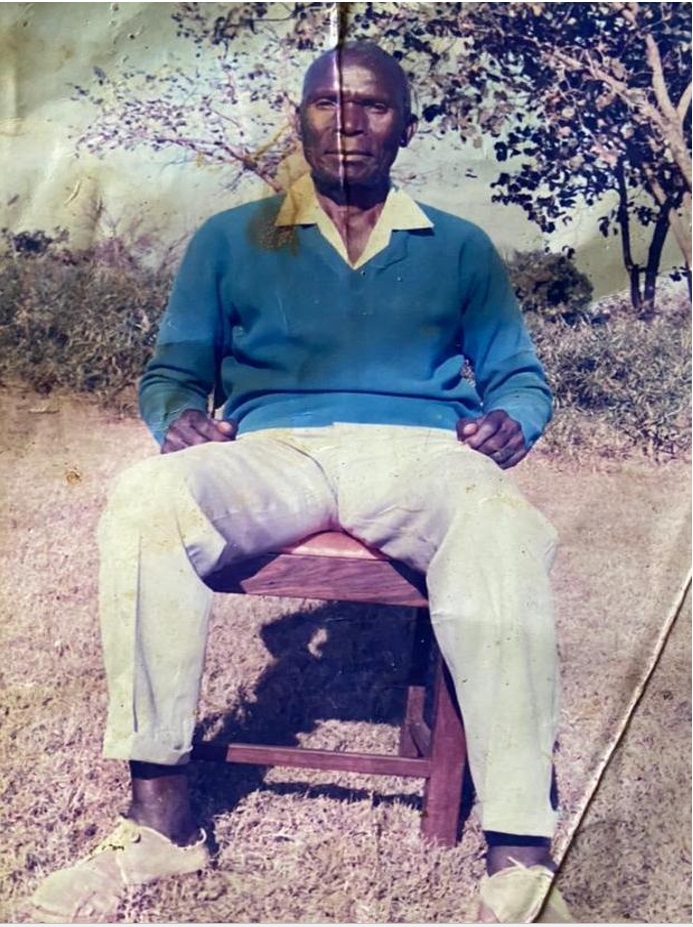
BENTHU David Benthu Nthengwe
Know your heritage
Chithokozo cha Benthu partially meets this definition. It reads:
Benthu kalizga bana
Akalizga bana ba anyakhe
Bakhe bakamutonda
Chamateta wakateta kanthu
Kanthu kali mu lukolo
Lukolo lwanyina vyala
Tikome tikome siku zikuya
Vwinkhu, Vwalanchanya!
Apa tikwenda
Basungwana na banyamata
Vimwemwe pera
Source: As recited by Dokiso Tiwakomole Nthengwe. Dokiso is second born of Benthu and Erness.
2. INTRODUCTION
This biography is a deep-dive attempt into the life of Benthu. What we capture from this attempt is only a bird’s-eye view. For a man who is larger than life, Benthu’s life story cannot be explained in a few pages. In telling his life protracted struggles and successes, we discover the man but not holistically. Tracing and explaining Benthus Holy Grail, family routes, identity and belonging, is made possible through narrations from people who know him well, particularly his late wives, surviving children and some of his grandchildren. Some of the tales of this man are reflections from people who have a good recollection of Benthu or those whose lives he touched indelibly. That notwithstanding, it is folly to claim that anyone of these sources or a combination of them bring out a full life story of Benthu.
'Mungaba banthu imwe? Mungayana naine imwe? Ine ndine Benthu Kalizgaban...' [You, are you men of integrity? Can you compare yourself to me? I am Benthu Kalizgawana...' Benthu often mocks some of his admirers when elated or was furious about something. Unguarded expressions like these radiate deep pride from a man who overcomes hurdles and survives attempts at his life. Such bragging words also connote tested moral principles which were unmatched among the man's peers.
A life!
Nehemiah 2:17
Then I said to them, "you see the distress that we are in, how Jerusalem lies waste, and its gates are burned with fire. Come and let us build the walls of Jerusalem, that we may no longer be a reproach.""3. ABOUT BENTHUPEDIA
Benthupedia is a treasure trove of information about roots and heritage of the Benthu clan. The platform functions as a repository (archive) for preserving our history that dates back to the 1800s. This history is published on web pages, digital platforms (Facebook, Instagram, Tumbler, Twitter, WhatsApp, TikTok and many more). It also appears in hard and soft copies, as well as audio.
Understandably, this history and the story of Benthu have been orally passed down from generation to generation. Most of the historical facts, dates and locations are either missing, incoherent, distorted or incomplete. In 2002, efforts were made to capture this history verbatim in the Tumbuka language. It mainly captures Benthu’s lineage. This one, too, is full of yawning gaps. We hope that some of the historical gaps will eventually be filled in by those who lived closest to Benthu, the focus of the biography in Benthupedia. But this is a tall order. Most of Benthu’s contemporaries have passed on. Benthu’s own children reveal scanty information about their parents and roots. This can be explained by the fact that Benthu’s children disperse away from their home village to pursue education, professional life or marriage. When available, his children have limited time and interest to document whatever they learn about their family history. The closest they come is to point to their father, mother and immediate descendants, not beyond.
Most of the information we capture in Benthupedia is thanks to Elita Bakole Msimuko, the Nthengwe Benthu’s fourth surviving child. She combines the tales of her father, Benthu, with that of her mother, Erness. Dokiso, Benthu’s second surviving child, plugs some of the gaps. Still, most of the information needs further research. Some of the information is, therefore, anecdotal from multiple sources. For now, we document what is available.
Readers will notice that the information is written in the present tense. There are good reasons for choosing this tense. We are writing about the deceased and the living. The spirits of the dead are easy to see. You can see them performing their chores. You can see them up and about the yard. The deceased die only in their physicality. In the minds of the living, the departed are still alive. We see them in our memory. We dream about them. They are NOT DEAD! So, it’s only fitting to write about them in the present -as if they are still here with us.
Crucially, the history we are stitching together is for the future generation. Posterity will weigh and judge us by the collective zeal to explain our roots. The author acknowledges that the biography largely centres on one character, Benthu. Some readers will find the approach unfair and impartial. Biographies are not without bias. This is either deliberately, blind omission, or from incomplete information. Fainess and impartiality are benchmarks too high to satisfy. But the author has attempted to achieve the benchmarks based on exhausting and extensive research.
Research methodologies are multifaceted. The author has heavily relied upon interviews and conversations with Benthu’s surviving family members, relatives and friends. Further research has been ploughing through written material and visuals. Surfing the internet for information has been useful, but to a limited extent. The author’s own recollection of events, places and players has been critical to excavate Benthu’s life story.
May the souls of the departed continue to rest in eternal peace!
4. POEM OF A FAMILY TREE
Root and branch
The bloodline
A leafy tree of branches
Flowers and blossoms
Feeding from its roots
A tree denied of leaves
Neither flowers, nor blossoms
The tree wilts to its roots
Wilts and dries in death
5. FOREWORD
Our father was extraordinary and incomparable. As children, we at times found it confounding to understand Benthu. Sometimes, we thought he was too high-handed when dealing with us and our mothers. What we did not understand were his daily struggles to feed and educate us.
We also did not understand the battles he fought with the villagers at home in the interest of his family. He, however, did not waver in the face of hostility. The man developed a character of steel. Benthu remained determined and focused on achieving his goals --feed and educate his children. He led with fortitude to overcome obstacles.
Our father was ahead of many people then and even in the later days. For a man who did not have a formal education, he surpassed everybody in his demeanour and purpose. He also understood that protecting a family is a prime duty. He did not procrastinate. Briefly, Benthu was born in 1914. He married his first wife Chioni Erness Nyirenda in 1937. Our mother was born in 1924. In 1943, our father married a second wife, Dyness Kawoli Nyirongo. She was born somewhere in 1920.
Our father was ahead of many people then and even in the later days. For a man who did not have a formal education, he surpassed everybody in his demeanor and purpose. He also understood that protecting a family is a prime duty. He did not procrastinate.
We, their children, were born between 1939 and 1969. Had the children survived the perils of infancy, we would be 19 boys and girls in both of our mothers. Loss of children in between has been deeply traumatising to our parents. But they learned that this is a walk of life.
Our father was uneducated in the academic sense. In his advancing age, Benthu spent his days working on the land. Even without a formal education, he was very well versed about the world around him. In his lonely days, the radio kept him informed of the local and international news. He was well updated about the political history of Southern Africa; black repression in South Africa, Malawi, Zimbabwe and Noorthern Rhodesia and also the Israel-Palestine conflict in the Middle East.
Benthu was not easily carried away neither by song nor any kind of celebration. But he was eloquent in discussing critical issues. He discussed his family and roots hours on end. Benthu also enjoyed a good brew and ground tobacco snuff, tastes he acquired from his mother Yandula Chindere Mkandawire. Our father was not ravenous for food. He was picky in what he wanted to take. At times he enjoyed okra tenderised in groundnut flour. He loved tea. He picked up this tea-drinking habit from his travels to South Africa where he worked in the restaurants.
Benthu had his firsts. In 1940, he was the first man to bring a bicycle in his village, as much as he was the first man to send his children to school. Most importantly and critical is that he value of modern education. He learnt his lesson in South Africa where he was denied a job for not being able to read, write or count in English. With that demeaning encounter, he swore never to see his children go through what he experienced. He, in fact, became a potent symbol against illiteracy. What probably drove him so hard was the fear of a repeat of the belittling exposure in South Africa.
It was only after we tasted the amenities of education that we understood why our father did not spare the rod and was sometimes stringent with us. In hindsight, we did not see what Benthu saw. Raising and educating our own children has also been an eye-opener to the reason why our father was steadfast with us. He moulded us into disciplined children who, now, need to pass on the lessons of ‘upright’ living to our children and their peers under our influence. If we would show the resting old man how indiscipline and recklessness are causing untold pain and tears in society now, he would probably turn in his grave and remind us of the dire consequences he had foreseen in his lifetime by saying, “I told you so!’’.
The man was a visionary we did not appreciate. Many people had a scanty understanding of who he was and what he purposed in life. Village contemporaries ridiculed and poured scorn on him for the unpopular decisions he took. Some even concluded, ‘Benthu is mad’. Others accused him of practising witchcraft. Worse still, others accused him of using ghosts to produce and multiply crops in his annual bumper harvest. But Benthu, our father, understood his detractors. He brushed aside all accusations as unfounded and preposterous.
Wisdom can be puzzling to the juvinile and unsavvy grown-ups. But hindsight will today make us to better appreciate our father’s untiring efforts as progressive, genius and far-sighted. We are educated and so are our children. We live in comfort that our parents did not enjoy. One wonders how one pays back to the parents everything they sacrificed for us.
Like any other person, Benthu had his imperfections. He faced trials and temptations. But those who knew him well readily confess that his flaws strengthened and built him into an outstanding man. When he fell, either literally or figuratively, he got back up fighting ferociously, the observers say, adding that despite his imperfections, Benthu shunned the temptation to take easier paths that avoided responsibilities to his family and relatives. The message Benthu leaves with us is …that life is a bruising journey.
Our father understood the collective power of working together with kith and kin. He retained a common touch with them. Benthu’s success was not achieved by him alone. He established a network of like-minded relatives to support him in his endeavours. Those who answered to his call are unsung heroes and heroines. They took on work that would have been impossible for Benthu to achieve alone.
Curiously, Benthu had good rapport among kith and kin. He fostered some of his children to live and school with relatives far and away. In this, he demonstrated that it takes a village to raise and even educate a child. The Benthu family will forever be indebted to such accommodating relatives. Without their selfless support, we would not be wallowing in comfort today. They unveiled and facilitated opportunities to us to be educated. Their sacrifice is immensely invaluable.
Remarkably, our dad had a giving and tolerant heart. Even as he grappled with his own poverty, he remained empathetic and sympathetic to the less privileged. He did not ignore those in need but came to their aid with whatever little he could. For the most, our father did not segregate against children of his other family members.
As he grew wiser, villagers counted on him for advice and solutions to many of the community challenges. He preferred unity to division; he reconciled families; and he was celebrated as a 'library,' in light of schooling other villagers about their roots and heritage. We cherish our father in the small and big things he delivered. Benthu did not educate every single one of us. For those without an education, he equipped them with survival skills like crop production. Small wonder that, in our heart of hearts, a tear-evoking song mixed with regrets and nostalgia often erupts: "Adada…, mubenge kuti mukwizaso, nthena tamugongoweskaniso yayi!" (Father..., were you to come back (to life) again, we would never ever fail you!)
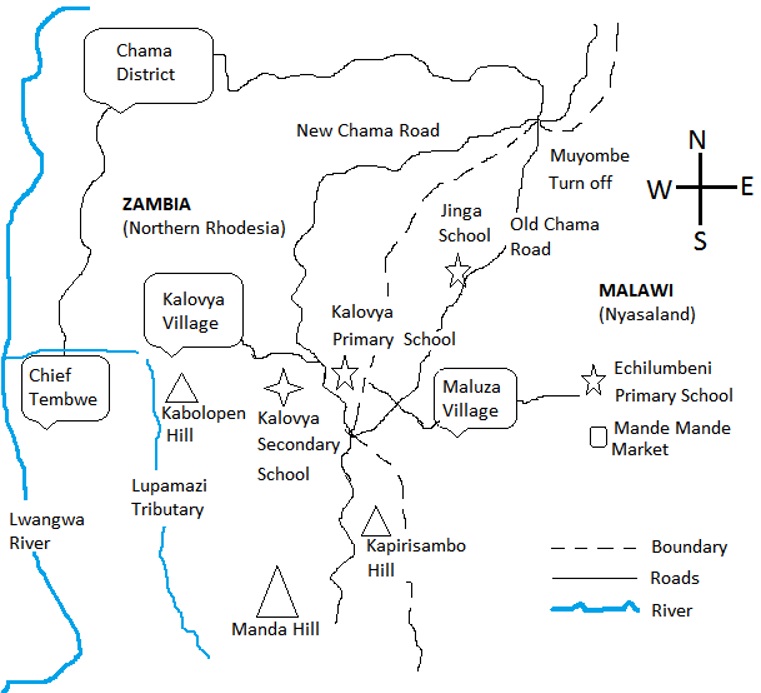
Dr. Rodrick Joseph Chiliro Benthu Nthengwe6. KALOVYA IN ZAMBIA AND MALUZA IN MALAWI LOCATIONS
7. DEATH OF A GOD
If someone else writes your history, you will hate it. If you write your own history, you can defend it.
It must have been in the 1800s when this episode plays out. The location is Chizimba in Malambo of Chama District, Northern Rhedsia. Northern Rhodesia is currently what is known as Zambia. People of this territory worship deities and idols (chiutangoza). Deities are either a bird, animal or mountain. Idols are either a sculpture, shrine, or spiritual laity
A young boy goes about setting up a trap in the bush. The adolescent is driven by the desire to prove that he is man enough to provide for the family. He sets up a trap around the Chagaga tree to catch birds picking on the yellow fruit. Sure enough, when he goes to check the next day, he finds a bird hanging by the rope, dead.
In delight, the boy shouts out,“Eureka!”
The lad rushes back to the Village to show off his day’s catch to his mother.
“Mum, look…! I have a meal for us,” The lad declares, as he presents the carcass of the bird.
“Oh…! My son, what have you done?” His mom reacts in fear, knowing the significance of the bird.
Unaware of the religion and beliefs, the catch he gloats about killing, is the god of the land. What he brings home dead in his hand is bird Kalukumbili. The bird is revered by the people in the community as their deity. So, by killing this god, the young boy has unknowingly desecrated the cultural belief of the community.
Bird Kalukumbili is not distinct from other flying lot. One can only assume the wild bird exudes terrifying godly looks with a hairy head and slit wide popping global eyes. But is it black, red or yellow? Is it blue, green or white? Or does it spot a combination of all these colours? Make what you may.
Petrified by the abomination, the mother wilfully turns in the boy to the Village authorities. Stooping with hand on heart, the boy’s mother frets, and “Elders…, my boy has defiled our land. He has committed the most serious crime in our land…” The sudden news alarms the chiefs. They request the woman to explain what it is that the boy has done.
The news alarms the chiefs. They request the woman to explain what it is that the boy has done.
“Elders, my boy has killed… our god,” Reluctantly, she reveals.
She grovels while begging, “Please have mercy. My boy is ignorant about our religion and beliefs… he did not intend to to…,” the woman stammers, “to kill our god.”
“Ooh!” one of the grey-haired elders’ casts around his eyes to gauge the reaction of the gathering elders. He then turns to the woman rolling over on the ground.
“Woman, you know what verdict we hand to anyone who kills our god… Dare I say that verdict?” he pauses for effect, before he thunders, “it’s death!”
The woman confesses the crime. She rolls over again in anguish griped by fear. Grim faced onlookers murmur in shock.
In Malambo, the killing of bird Kalukumbili is the highest crime of the land. The trending culture extols Kalukumbili as a god. In their belief, whosoever kills this deity bird, even inadvertently, is handed one of the three verdicts: death, banishment, or labelled a Benthu. The name Benthu has some significance. When sentenced to death, the convict is sent to a prison they have named Benthu for hanging. The lesser penalty is to banish the convict from the community. The most lenient is to label the convict after Benthu prison.
When she next appears before the court of chiefs, the woman makes a compelling argument why her boy should not receive capital punishment. The mother pleads in mitigation that the boy is too young to understand the religion of the land. The lad is a young adolescent too naive to tell what beliefs hold the people together. The boy’s mother asks for mercy, so that the poor lad is not handed a death sentence or banishment.
Following her plea, the chiefs review the boy’s case. On the official sentencing day, the tribunal of chief’s finds the boy guilty of defiling the law of the land, but the chiefs grant the boy clemency. They spare the death sentence and banishment. Merciful elders, instead, decide to label the boy a Benthu as punishment. What also mitigates the severity of the felony are two factors, one is that she wilfully turns in the boy to report the event to the Village elders, the other is that she confesses to the crime on behalf of her unschooled boy.
In any case, the name Benthu carries with it a curse of a convict. This is although the labelling is not in a literal sense. The only crime that the naïve boy commits is to kill deity, Kalukumbili. Given the circumstances, Benthu also means chilango in Tumbuka vernacular. In present-day Chitipa, of northern Malawi, Benthu is a thriving Village full of life.
8. FATHER AND FOUNDER OF THE BENTHU CLAN
The father and founder of the Benthu clan is Chowo Nthengwe and his wife Njabanthu Khalapazuba. Chowo also carries the title of Kasumbukila. The founders are of Senga ethnicity from Malambo Valley of Chama District, formerly Northern Rhodesia. Their village is Chizimba, just across Kamphemba Tributory, with its source from Nyika Mountains.
Chowo and Njabanthu bear six children, four boys and two girls. Benthu, killer of Kalukumbiri, is the eldest. He is followed by Mahuza, Kanyung’unyanga Nthangali, Mundalira, Satumbwa and Tiza Tiwonelepo. Chowo and Njabanthu die in Malambo at Chizimba Village in Chama District of Zambia. The year of demise is unknown.
A ravaging Zoa war force the remaining family to flee from Chizimba to the Ngoni land. They settle at Chief Magod’s area. Along with their in-law Thomas Mbale, they occupy Kalovya village. Mbale marries Tiza Tibonelepo Nthengwe, sister to Mundalira. During flight from the Zoa war, some of the family members split up. Mahuza crosses into the Nkhamanga Kingdom of Rumphi in Nyasaland. In Rumphi, he marries a lady named Nyawankhama. He returns to Kalovya to re-join his brothers. Mahuza and group later move to between Maluza and Kalovya in the no man’s land.
At Lundadzi of Northern Rhodesia, kernel brown is commissioner of the British Oversees Military Administration (BOMA). Lundadzi is a border town in the Eastern province of Northern Rhodesia. In 1912, Kernel Brown negotiates with the Kalovya group to move eastwards. Talks to move to the border between Northern Rhodesia and Nyasaland involve the Chowo family. Relocation is to allow the creation of a Game Reserve. The group relocates and settles in the no man’s land between Zambia and Malawi. Further internal migration takes the Chowo family to arrive at Maluza village, in the Tumbuka land.
When the group migrate from Malambo, they leave behind Benthu, killer of bird Kalukumbiri. Benthu dies in Malambo. The year is unknown. The whereabouts of Benthu’s family is also unknown.
At Maluza Village, Mundalila meets and marries Yandula Chindere Mkandawire. The couple bears five children - four boys and one girl. The children are: Jonas Kasumbukira, Zakeyo, Chanozga Esau, Nthangali and the lastborn daughter, Fannie Chitira.
Under patriarchy, each one of the male children constitutes a parent trunk that grows into a family tree. One of the boys, who is the focus of this biography, is Nthangali. He is the lastborn male of Mundalira and Chindere family.
Nthangali is born in 1914, at the start of the First World War. Oddly enough, Nthangali goes to inherit the name of his father’s brother, Benthu, killer of the sacred bird Kalukumbili. To his names Nthangali Benthu, he adds Joseph Gibson to become Nthangali Joseph Gibson Benthu Nthengwe.
Of Chindere’s five off springs, Nthangali Benthu appears to be the mother’s favourite. In the realms and territories across, wife Chindere steals the limelight that overshadows husband Mundalira across communities.
Who is Yandula Chindere Mkandawire? Yandula Chindere Mkandawire is the queen mother of the Nthangali Joseph Gibson Benthu Nthengwe family. Chindere’s year and specific village of birth are unknown. Her territory of birth is Malambo of Chama, northeast Zambia, formerly Northern Rhodesia.
Ensuing Zoa war forces Yandula Chindere to flee with her family to the Nkhamanga Kingdom, in present-day Rumphi. They settle in a village named Zolokele of the Mphalula family in the Chihana Clan.
Born in Malambo, Yandula Chindere is the last of six daughters in the family of Munguza Mkandawire and Chikomazgango. Munguza and Chikomazgango die in Malambo, leaving behind Kajimonkhole, Ngayithi, Wayitha, Tembani, and Yandula Chindere. The other elder sister of Yandula Chindere is unknown.
Years after, Yandula Chindere and her elder sisters, migrate from Rumphi to Maluza, in what is now called Mzimba, in present-day Malawi. In Maluza, they are following their brother, the first Maluza Nyirenda. Maluza Nyirenda and the Mkandawire daughters are brother and sister, through their mothers back in Malambo.
Raised in absolute poverty, Yandula Chindere carries the stature of a tall light-skin beauty. She owns simple attire for her daily wear. Each day, she prefers wearing a black cotton cloth. She wraps her wear around her body above the bust (chiyaga). Unlike her husband, Mundalira, Chindere routinely tends to her crop field. Of the variety of her yield, she mostly chews on fresh sorghum (Kantchewere). With her hardworking spirit, she nurtures Nthangali Benthu into a man that later stares life in its face.
Benthupedia gathers that Chindere possesses special life skills. She is a porter. She moulds clay pots from small to gigantic vessels. Small pots are for cooking meals. Big vessels, up to the height of a five-year old, are for preparing brew. The queen mother has the knowhow and a vital life skill in crop production, pottery and beer brewing. They are skill sets that famously earn Yandula Chindere praise across communities. She passes down her special knowledge and a subset of skills to Benthu and his family. Nurturing from his mother, Benthu becomes of age.
9. BENTHU’S FAMILY LIFE
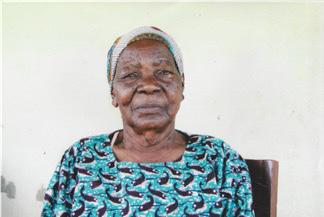
Figure 1: Erness Chioni Nyirenda (1924-2009): Benthu’s first wife. She is born in 1924 at Ntchalinda Village. Erness marries Benthu in 1937. Erness is the spine of the Benthu family in 64 years of their marriage. Erness passes away on Saturday, 8th November, 2009.
Benthu is born at the start of the First World War in 1914. He is the lastborn male in a family of five, four boys and one girl. Parents are Mundalira Nthengwe and Yandula Chindere Mkandawire.
Benthu is uneducated in the academic sense. His highest education is Kasepuka na Kasungwana (little boy and little girl class). The years he attends these classes are probably mid to late 1920s. With that level of education, Benthu is only able to write, read and count in his vernacular, Tumbuka. In the British colonial days, learners start classes from ‘Kasepuka’ na ‘Kasungwana’ level. Successful ones proceed to Sub-A and sub-B before graduating to Standard 1 through Standard 6.
In 1937, Benthu weds his first wife, Chioni Erness Nyirenda. The story of his love life is fascinating. We learn that youthful Benthu is not quick-footed for ladies. The story is that his elder brother, Jonas Kasumbukila, is actually the matchmaker. He is the line, hook and sinker. One day, under the cover of dark, Kasumbukila helps to elope Erness from Ntchalinda Village across South Rukuru River on the eastern bank. On that night, Kasumbukila hands Erness to Benthu. Marriage ensues.
Erness is born in 1924, the age difference with Benthu, the husband, is 10 years. At the time Erness enters into marriage, she is 13 and Benthu is 23 years old.
In 1939, Erness is a mother at 14 of age. Benthu and Erness have their first-born child. He is a boy they name Longolani. The year of his birth is the start of the Second World War. Not long after, Benthu makes his maiden journey to the Union of South Africa, presently the Republic of South Africa.
The gruelling and perilous journey is on bare feet with little to keep soul and body. They drink unsafe water from swamp and river. They feed on salted chimphonde from fried and pounded groundnut. In South Africa, like many others from Nyasaland, Benthu is an economic migrant. In 1941, Benthu returns back to his village. In 1942, Benthu and Erness are blessed with their second child, a girl they name Dongo. Dongo means bristle, breakable. But Dongo does not survive.
In 1943, Benthu marries a second wife, Dyness Kawoli Nyirongo. Dyness is born somewhere in 1920. Her birth place is Kapera Village, just west of South Rukuru River. Before making the move to marry Dyness, Benthu approaches Erness if he can marry another wife. Benthu fronts the declining health of his mother, Chindere, as an alibi to get a second wife.
The queen mother is by now ailing and frail. So, Benthu frantically needs another pair of hands to support Erness in the care of his aging mother. Not sure what to expect, Benthu turns to his impressionable first wife for concert. Erness is probably 18 of age and in her third pregnancy at the time. It is not apparent if Erness resisted the suggestion. Love justice? Perhaps a good woman knows her place in the home.
Erness has a different kind of leadership that goes unnoticed. She appears not to have her own mind, own words, and holds no opinion on most issues, so one would think. Oftentimes, she parrots and enforces Benthu’s top line messaging to family. In doing so, Erness speaks with a voice that does not contradict the husband, or family values.
In 1944, Dokiso is born to Erness. She is a girl and 3rd in line. She survives the perils of infancy. Wayilela is born in 1946, but does not see the light of day. Masozi is born in 1947, she is the fifth child. She survives. She is named Masozi because it is also the year when her grandfather Mundalira dies. In 1950, a boy they name Chikomazga is born, he is the 6th child, but departs early. In 1952, when Erness is hardly 26 of age, she gives birth to Mukole. The seventh child survives. Erness gives birth to still twin babies in 1954. They are eighth and ninth.
In 1955, tragedy strikes Benthu’s family. Queen mother Chindere dies. The story is that Benthu moans his beloved mother profusely.
“Oh, mom! Is it hunger that has taken you? Or is it me that has failed you?” He does not get a response. The dead do not talk. ‘Khweu, khweu, khweu!’ a bird chirps loudly from the direction of the cemetery, days after the remains of Chindere are interred. The sound of the bird frightens Mukole (Elita) who dashes to the mourning parents to report. Father, a bird has taken away grandma,” Emotion engulfs Benthu, who does not know what to tell innocent Mukole: when the daughter notices tears rolling down the cheeks of her speechless father, her own eyes well up tears and cascade down her face.
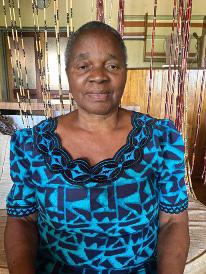
Figure 2: Elita Mukole Nthengwe: The ninth-child in order of birth in Benthu and Erness born in 1952. Her father, Benthu, embraces the significance of ‘girl education’ long before the term turns into a buzzing phrase. Benthu puts Elita in boarding at Katete Primary of Champhira, in 1967. Outstanding Elita gets selected to start form 1 at Lilongwe Girls Secondary School in 1969. Done with her high school, Elita enters into marriage with Austin Nelson Msimuko in 1973. Prudent and strict on uprightness, Elita takes up a profession in teaching in 1978. After 22 years in the public service, Elita Mukole retires in 2000. On Monday, 25 January 2021, tragedy strikes the Msimuko family. Her husband, Austin Nelson Msimuko, dies unexpectedly. Death separates the couple after 48 years in marriage. Austin is survived by his wife and 6 children, two boys and four girls. Photo: N. Msimuko/21st March 2023
In the aftermath of the queen mothers passing, a boy they name Chiliro (Rodrick) is born in the same year (1955). He is the 10th child. Chiliro means mourning. He makes it. Nthangali is born in 1957, during the Hiroshima uprising in north-eastern Zambia. He is child number 11. He, too, makes it. The name Nthangali doesn’t last. His brother Longolani names him George. Benthu and Erness call him Kajolo or Joloji for George. In 1960, along comes a boy they name Mapopa (wilderness). Mapopa is 12th in line.
Now at the age of 34, Erness gives birth to a second set of twins. They are Omi and Kamphamba. They are born in 1962. They are 13th and 14th in the family. Hardly ten years later, Omi passes away in 1972. Seven years in counting after Kamphamba and Omi, a girl they name Zinyanga is born in 1969. She is their last born. She dies in the year 2000. When Zinyanga is born in 1969, Benthu is 55 and Erness is 45 of age.
If everyone in the streak of the children survived, Benthu and Erness count 15 souls in all. Stunningly, 15 babies actually mean that Chioni spends eleven years, or 135 months totalling 585 weeks of child bearing. In his second wife, Kawoli, Benthu fathers four children.
In 1944, Vileme Stayi is born. She dies in her adult age. A boy they name Chikomeni (Alfred) is born in 1947. He survives into adulthood. Mike Brightwell is born in 1952. The left hander sees the light of day. The last child is Masiya, born in 1955. Masiya means orphan after the demise of her grandmother Yandula Chindere , who died in 1955.Altogether, in Erness and Kawoli, Benthu counts 19 boys and girls. Loss of children in between their lives is deeply traumatising to the Benthu family. But they persevere, learning that this is a walk of life.
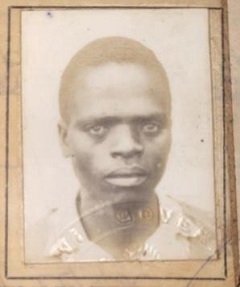
Figure 3: Joseph Gibson Alfred Chikomeni Nthengwe (11947-1997): Chikomeni is second born child of Benthu and Dynes Kawoli Nyirongo. Dyness is Benthu’s Second wife. In 1971, Chikomeni marries Neggie Lusale of Lunda Village. Together, they have ten children. Like his father, in the early 1970s, Chikomeni travels to the Union of South Africa in search of well-paying jobs. Chikomeni dies in 1998 after 27 years in marriage with Neggie. His mother Dyness dies in 1999 after more than half a century, a staggering 56 years in marriage. Photo: N. Msimuko/20th May 2023 (Archive)
10. NAMING AND MEANING
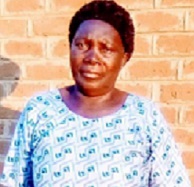
Figure 4: Masozi Macrida Nthengwe (1947-2022): QUIET is one word that best describes Masozi. Masozi is born on Monday, 1 September 1947. She is the sixth child of Benthu and Erness. Masozi translates as tears. In common tradition, the name proffers mourning. In 1967, Masozi marries Medson Palimwazi Mhlanga of Mwata in Zambia. Masozi and her husband are blessed with 12 children. For the most, introvert Masozi takes after her parents. She too enjoys good brew and ground tobacco snuff. After 35 years in marriage, her husband dies on Sunday, 25 May 2002. Two decades later, Masozi dies on Friday, 7 January 2022, in Mpherembe, where she lived with her daughter Tafwachi Mhlanga. The remains of Masozi are laid to rest in her father’s home village, at Maluza. At the time of her demise, she is survived by Seven children, five girls and two boys. Photo: T. Mhlanga/21st July 2023 (Archive)
In the Africa of the Banthu, every name carries a profound meaning. In some cases, naming a child calls for a special ceremony. The significance of naming is founded in the roots and heritage of the Banthu. Such practice upholds the collective identity of clans and bloodlines. They tell of our roots and heritage. Names of our forefathers are passed down to descendants from generation to generation.
The coming and influence of Christianity distorted the Banthu’s way of life. We worship deities and idols. The Christian faith demonises our gods as unholy. This faith also condemns our traditional naming as unchristian. Instead, Christianity introduces biblical names such as John, Peter, Joseph and many like these. We are forced to adopt Christian names, names of the famous English explorers, or of Kings and queens of distant territories. So, Chanozga is named Esau, Benthu is named Joseph and Kondwani becomes Mary.
In the Banthu’s way of life or tradition, the name Henry James, or David Simpson, has no meaning or place in our culture. In the Banthu’s culture, naming has meaning that has identity or tells of one’s roots. Names and family relations are significant to explaining the values of the African people. Africa’s is divergent from the English culture in the relations of family members.
In our African relations, your father’s other wife (stepmother in English) is addressed as mother. The only difference is that you might wish to refer to her as the elder or younger mother, only for purposes of distinction. Equally, you address a brother to your father as father – not uncle, as it is in the English family tradition. It also applies to your mother’s sister. She is not called auntie, as it in the English tradition of relations. In our culture, she is your mother.Your father's sister is your auntie – ankhazi, in vernacular and particularly in Tumbuka. Children of your stepfather or stepmother are addressed as either your sisters or your brothers. The distinction only comes with age difference. For instance, what the English refer to as a cousin, meaning a son of your stepfather – if a boy - is referred to as a brother in our tradition. Similarly, with a girl, she is your sister and not a cousin.
The pattern changes when the man or woman being referred to is a brother to your mother or vice versa. The former is called sibweni and the latter nkhazi. Now, the child of your sibweni or nkhazi is mvyala, who, in the English tradition, is a cousin. On another level, your father’s father/mother and vice versa, is your grandparent or in vernacular agogo. We guess it is the same in English family relations. We meet the English or the English meet our version of relations when it comes to in-laws. Father/mother-in-law, are referred to as tatavyala or mamavyala in that order of gender. For the son/daughter-in-law, they are respectively addressed as mukweni (male) and mukamwana (female).
All other distant relations would be one or other in the order as explained above. When you hear or read a name that starts with ‘nya’, it’s an affix that connotes ‘daughter of’. So, nyaMwale actually is female whose father is Mwale. A man would be saluted as a Mwale or Mwale, with no affix.
Another departure from the English tradition is the sequencing of the grandchildren. In the English tradition, you are either a grandchild, great grandchild, great great grandchild or great great great-grandchild. In the Senga tradition, grandchildren cascade in the following order: we have muzukulu (grandchild), muzukulu chivu (great grandchild), muzukulu choto (great great-grandchild), muzukulu Thengere (great great great-grandchild) and muzukulu Mavi (great, great, great, great-grandchild). We do not have the reverse equivalent to grandparents.
In naming a baby, events surrounding the birth of a child determine what name is given. Most of the names analysed below are found in the Benthu family.
Names associated with hope
In literal vernacular, Longolani translates as ‘point, or show, or lead.’ The name is given to the firstborn who must be a boy. Gomezgani means ‘believe,’ Chigomezgo means ‘belief.’ The names inspire hope in the couple, family members and well-wishers.
Names associated with despair or loss of hope
Dokiso means ‘something taunting that you don’t own.’ The name gives hope where there is no hope. Tiwakomole translates as ‘let us deprive them’. Sekeladala translates as ‘a deliberate laugh, or a deceiving laugh’. Tombozgani translates as ‘torture’, the name is usually given to a child whose parents have suffered several child losses.
Names associated with death, mourning, absence or misfortune
Masozi refers to ‘tears of mourning’, while Chiliro means ‘mourning’. The names are given when a child is born soon after the passing of an elderly. Masozi is both, male or female. Chiliro is male. Mapopa, translates as ‘wilderness.’ The child has come after most of the elderly in the Village are gone. The name is given to a male child. Vitima means ‘sorrow’ concerning many people or sorrowful incidents. The name is given in the same situation as Masozi or Chiliro. As a name Vitima has no gender. Soka means ‘misfortune’. Misfortune can be a child born without one of the parents or is born with deformities. Tamara or Tamaratose means ‘no one is left.’ Tamara can literally mean ‘we are done or finished with bearing children. Chikomeni or Komani means ‘kill him.’ Such names are only given to male children. Malizgani means ‘finish us. Malizgani can be male or female.’ Tafwachi for girls, translates as ‘why have we died?’
Names associated with child bearing or the challenge of it
Twins named Fumu and Nyuma. Fumu is a boy who arrives first. Literally, Fumu means king or chief (first). Nyuma means ‘behind’. At twins’ birth, it means the last child to arrive. Nyuma is to females, Sinya is to males. In a twin set up, when the first born is a girl, she is named Goli. When the second born is a boy, he is called Nyuma or Sinya. The name Nyuma or Sinya is gender neutral. When both are boys, the first born is named Fumu, while the second is named Nyuma or Sinya. When both are female, the first to arrive is named Goli, while the second one is Nyuma or Sinya. Other tribes have different names for twin babies.
Names of triplets, quadruplets or any number greater than four, are unspecified. Names like Kamkota, Kamsisi, Kamkhwala, or Penjani, signify a delay in the wife to conceive either first, second or third pregnancy. The name Kamkota or Kamkhwala literally mean ‘medicine’. Kamsisi means ‘the root’. While Penjani means ‘look for’. The bearers of these names signify a special probability behind their births –that herbs and roots were applied to induce their entry into this world.’ Thokozani or Thokozire means ‘thanks giving’. Phelire translates as done or finished – for the last born.
Names associated with joy, status, fame, intimacy/affection, kindness or the lack of it
Chimwemwe means ‘joy’ or ‘happiness’. Chisambazi means ‘the rich one’. Lusungu is ‘kindness. Walusungu is ‘one that is kind’. This may mean God is kind. Temwa means ‘love’. Temwanani means ‘love each other,’ or -broadly speaking-, ‘love one another’. Thandiwe means ‘the loved one’. These names signify gratitude. Tinkhani, or Tinkho, means ‘hate’. The child is born from a family that is perceptibly hated.
Names associated with good looks, brightness or wisdom
Towa or Towela means ‘beauty’ or ‘beautiful.’ Mahala means gifted with a good Intelligence Quotient (IQ). Vinjelu can sometimes mean ‘wisdom’ or ‘a person of a measured mind’. Mjedu is a name for a boy child. It is after the ‘morning eastern twinkling star’. Nthanda, for a girl, means ‘star,’ which signifies beauty.
Names associated with a child born out of wedlock
Chawanangwa means ‘a gift from somebody’ (but not always born out of wedlock). Chamnthowa means ‘found by the wayside’. Chisisi is a name that can be given under two significant situations: whereby the mother does not want to reveal the father of the child or the child is born out of incest’. The name Mulandu translates as ‘misdemeanour’. Vangani is a rather controversial name given to a child allegedly born of many fathers (there was no DNA -deoxyribonucleic acid- testing then). Chizamsoka, is given to child born unexpectedly or unplanned (but not always born out of wedlock).
Names associated with amusement/entertainment (pets/tamed animals)
Mphawo is usually the name of a dog whose owner is derogatively lamenting the reality of being an unwanted alien. The name is given in a desperate search for a place to call home. Mphabene means ‘I don’t belong’, signifying that you do not belong or that where you live is not your home. Nangaunozge means ‘even if you do good’. The name suggests that people are never grateful. Banthundiwo means ‘only they are the wise’. It tells of ridicule poured on one family by another. Many times, these names carry a subtle expression of displeasure, pain or rejection. Zambia is usually a name given to a cow that originally came from the neighbouring country, or in admiration of it being a star performer in milk production, or other value-addition works. Traditional names carry deep meaning, they are symbols and links of a people. They help to hold a people together. This is the reason they are passed down from generation to generation.
Benthu’s names, Nthangali Joseph Gibson Benthu is woven in cultural and religious shift, migration and identity. The name Benthu is exceptional. In the old days, Benthu is a prison where convicts sentenced to death are hanged. The story is that, a young man kills the revered bird Kalukumbili with the communal significance. The trending culture assigns Kalukumbili as a god. The people are Senga who trek from Malambo of Chama in the 1800s. Chama in the northeast of what is now called Zambia. In their strong communal edict, whosoever kills this bird, even without intending so, is sentenced to death. When sentenced accordingly, the convict is sent to Benthu Prison for hanging. The lesser penalty is to banish the convict from the community. The most lenient penalty is to name the convict a Benthu, after the name of the prison. Regarding the cited case whereby a boy kills the godly bird, the killer boy appears before the court, his mother confesses and pleads for mercy not to hand the poor lad a death sentence. The court grants clemency by not handing the death sentence. It does not also banish him from the community, further deciding, to hand the name Benthu to the guilty boy as punishment. The name Benthu still carries the curse of a criminal, although not in a literal sense. The only crime that the convicted boy commits is to kill a deity, the bird Kalukumbili. Given these circumstances, Benthu also means chilango in Senga and Tumbuka vernacular.
The place where the prison is located is currently a thriving Village in Chitipa, in northern Malawi. Before the colonisers created national boundaries, Chama, in Zambia, Rumphi, Chitipa and Mzimba in Malawi, are one territory. Their people are of the Banthu by origin, probably from former Zaire, now the Democratic Republic of the Congo.
11. BENTHU's ROOTS AND HERITAGE
‘Under matrimony, nephews are inherent heirs of the Maluza, Kalovya, Kamphata, Tembwe, Chikwa, Lundu, Chifunda and Chibale chieftaincies,’ so is the custom in our heritage. All of these chiefs fall under paramount chief Kambombo. Chieftaincies of Maluza and Kalovya have long departed from the tradition to install nephews. A patriarchal system has taken hold ever since they Migrated towards the east into Malawi by the influence of the Ngoni from South Africa and the Tumbuka from the Nkhamanga kingdom in Rumphi.
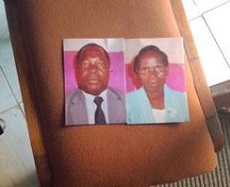
Figure 5: Longolani Austin Tyson Samwanga Nthengwe,(11939-2009) and his first wife, Joyce Nqube Nzima: Longolani is first-born of Benthu and Erness. Longolani and his wife are the first family in the Joseph Gibson Benthu bloodline. Born in 1939, Longolani is the first child Benthu introduces into education. Longolani translates as point, or show, or lead. By his name. He dies on 2nd March 2009. He spends 48 years in marriage with Joyce Nqube Nzima, 37 with Suzanna Francisco Makwenda, and 31 with Tamaratose Zgambo. Photo: P. Nthengwe/22nd May 2023 (Archive)
Roots are the origins of a people. Heritage is a people’s whole way of life. There is a yawning historical gap between the years when the people we write about in this biography exist. But one can accurately assume that these people live in the years going back before the 1800s. Research teaches us that the past is rooted in the Village dwellers. They are the custodian of the roots and heritage of any community. In this set up, history is passed down orally from generation to generation.
Understandably, roots and heritage of every people suffer from the weaknesses of oral, or remembered history. This is particularly true in societies that have not embraced the culture to document events and happenings. Even though not entirely reliable, oral history is the only valuable source of information in such societies. The people we write about here are Senga by ethnicity. They are from Malambo. Malambo is in the territory of Chama District now part of north-east Zambia, former Northern Rhodesia.
When the bloody Zoa war breaks out in Malambo, probably in the mid-1800s, the Senga people split up. Some of them flee east of Chama, into territories which are now part of Malawi. In Malawi most of them settle in the Ngoni land of Mzimba, while others settle in Rumphi. Mzimba and Rumphi are in the Northern Region of Malawi, part of former Nyasaland. The Ngoni are an ethnic group that flees the Shaka Zulu war in South Africa. They flee northwards. Along the way they settle in some parts of Zimbabwe, Mozambique, Zambia, Malawi and Southern Tanzania.
In Mzimba of Malawi, the Ngoni fight and conquer the Tumbuka under the Nkhamanga Kingdom of Rumphi. When they arrive in Mzimba, the Senga people settle in an area called Maluza. The Ngoni arrive and subdue communities across Mzimba territory in the mid nineteenth century. The Ngoni find the Senga and the Tumbuka around this period. Communities the Ngoni conquer around Euthini area of Mzimba are co-opted under a Ngoni chief, Chindi Jere. A sub chief, Madede Nzima, administers Maluza and other tribal chiefs around. Altogether, these people are now a mix of the Senga, Tumbuka and Ngoni ethnicities. The Senga and Tumbuka in Mzimba are migrants from former Zaire, now the Democratic Republic of Congo.
History tells us that the owners of all these territories we mention are the Kafula. Having been crashed and displaced by brutal ethnic forces, this tribe of dwarf people is extinct in Mzimba and surrounding territories.
Along with them, the Senga bring their heritage from Malambo. Inherently, the Sengas are organised according to their matrimonial system of marriage. When they arrive in Mzimba, they assume a patriarchal system. In the patriarchal system, male children retain the bloodline of the family. By and large, matrimonial and patriarchal systems define the social and cultural fabric of societies – dependent and interdependent.
Back home in Malambo (Chama Territory), the Senga are organised around tribal pockets which are characterised by rivalry. The sources of conflict are linked to control of land for cultivation, fishing and hunting rights. Limited grazing land and water also fuel this rivalry. Consequently, it is about survival of the fittest. Unlike in the Ngoni tradition, the nephew inherits the chieftaincy in the Senga and Tumbuka ethnicities. The children of Dokiso Tibakomole Nthengwe are case in point. Arguably, these children are the rightful heirs of the chieftaincies under Maluza and Malambo. They are in the bloodline of nephews.
The people that flee the Zoa war in Malambo to Mzimba carry a distinct cultural identity through song and dance, folklore and witchcraft. In dance, the Senga and Tumbuka bring Vimbuza. In Mzimba, the Ngoni introduce Ingoma dance of the Zulu from South Africa. The Senga hunt with bows and arrows, spears and clubs. They also set up traps to catch prey. Some individuals own homemade guns for hunting. Senga migrants possess limited farming skills. Their basic tools for working the land are a hoe and an axe. Similarly, processing of staple food involves pounding grain in a wooden mortar and pestle (Thuli na Musi) or on the milling stone (Mphero). Corn is their main staple. Otherwise, they live off nature’s wild providence of rodents, alligators (mbulu/kababa), special river frogs, tortoise and a variety of birds (including tender Ntheputepu of birds). Wild fruit and honey are a natural ration. Outside these delicacies the Senga also live off big animals from deer to Elephant meat. In all, the Senga are inherently hunters and wild food gatherers for their survival.
As raw as they come, these people are well versed in traditional medicines. They treat disease outbreaks with all sorts of concoction from leaves, tree barks, roots and shrub. Animal parts are also used for treating a number of ailments.
The Senga people believe in symbols and myths to explain their tragedies or fortunes. They practice rituals that hold communities together. When a Senga dies, the head in the tomb points northwards. The Senga also use dreams to interpret life. If one dreams of standing in human poo (faeces), it is good fortune. If you dream that you are covered in lice, it is also good fortune. It is similarly a fortune, if you dream of catching small white fish. If you swim across a flooding river, or surmount an obstacle in your dream, points to good luck. But a misfortune is afoot if you dream of mud fish (Mlamba), it says of a misfortune. So, be on the lookout. Acutely abhorrent among the Senga is to have sex with your own wife in your dream. It says of a cheating wife. Unknown are dreams by a wife about a cheating husband. During day, an army of black ants (sisinye) carrying white larva, says of everything rosy ahead. Vocalising and chirping of some birds tell of good or bad fortune. Some point to the coming of visitors or of a new season. Myths, superstitions, beliefs, signals and symbols, are a life of the Senga people.
In their day, families construct round thatched housing from wattle(mazengo). Wattle is reinforced with a cast of thick mud.
You can tell a Senga by the craving for alcohol. Taking fermented brew is an inherent and intractable part of their culture. They passionately believe that beer-drinking occasions strengthen family relations. On such occasions, taking brew, elated discussions and dance lift spirits of Villagers, so they believe. Gathered in a circle of men and women, they let out steam and set aside anxiety, thrilled by song and dance. As drumming changes, so does body dance movement, signifying adaptability to changes in life.
Amidst dancing, they pass the calabash around a ring of men and women. Until the advent of Christianity, the Senga worship deities and idols. In the Malambo territory, bird Kalukumbili is their god.
Naming is a critical inheritance in the Senga, Tumbuka and Ngoni ethnicities. Our forefathers’ names are often passed down from generation to generation. Names carry telling meanings that point to one’s roots, bloodline and clan.
ThCommunities are acutely aware of the scars of colonialism. One day they are one people. The next day they are nationalities of different countries. Alien religion, foreign languages and western education add to the confusion. Western cultural products such as music and movies further adulterate our African culture. Such is the impact. Worse still, the ever-evolving cutting-edge information technology, is an existential threat to the survival of some cultural identities, particularly those of the global south. If not preserved, identities on the fringes of the mainstream cultural discourse are stifled to die a slow death, probably to resurrect into the dominant homogeneous cultures of the global west. Consequently, the African heritage is watered down, forgotten, or lost altogether. And yet we are, because they were!.
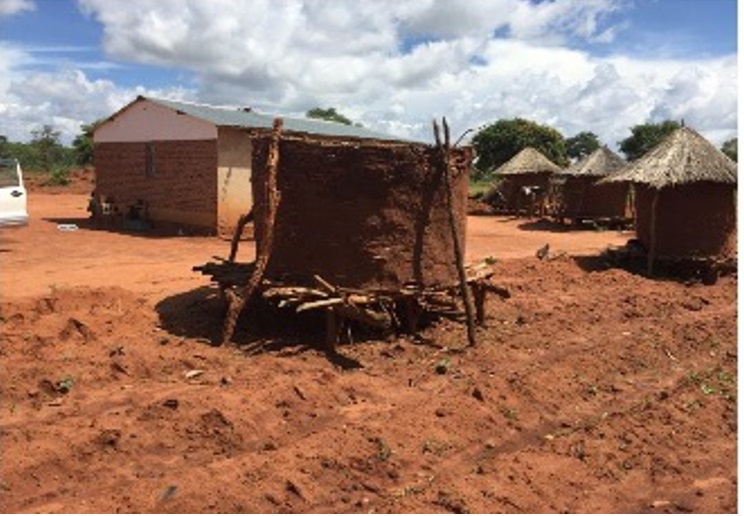
Figure 6: Nkhokwe: A granary for storing corn. The Senga are masters at weaving granaries using sticks called sito. Once completed, the flooring of a granary is with mud to prevent rodents from entering. Walls are sometimes reinforced with mud to prevent rain water from soaking stored grain. The roof of the granary is called kabale. Because Benthu produces a bumper yield of corn, he makes several granaries to store of his produce. Morden ways for preserving grain use polyethene bags and not Nkhokwe. Pesticides are applied to prevent weevils from destroying bagged grain. (For a full description of a Nkhokwe, read Nkhokwe under Glossary). Photo: Photo: D.B. Nthengwe/26th December 2008 (Archive)
Benthu’s World of Rituals and Myths
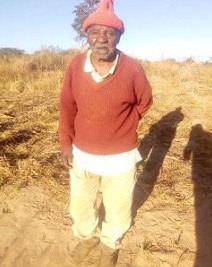
Figure 7: Watson Chiliro Mziya Nyirenda: Watson is born in 1928. He is a nephew to Benthu. Mndalila Nthengwe is husband to Yandula Chindere Mkandawire. The couple is blessed with six children - five boys and one girl. They name the girl Fannie Fannie Chitira. She is the lastborn. Among the five brothers in the family, one is Nthangali Benthu Nthengwe. Fannie Chitira later marries one Chimgolo Nyirenda, the couple bears three children, two girls and one boy. The lone boy is named Chililo Mziya Watson Nyirenda. His two sisters are respectively named Kafarina Chigowi and Sinayi. Photo: C.S Nthengwe/ 04th June 2023 (Archive)
Cultural symbols are rooted in communities. They are an expression of a people. These symbols are ritualised or performed through tragedies, celebrations or ceremonies. Symbols are depictive of a custom, a tradition and a belief through which cultural meaning is expressed. Some symbols are constructed traditions for commercial gain, such as a wedding dress, a wedding ring and honeymoon. Valentine’s Day, observed on every 14th February, is another example. In every tradition, cultural symbols are sign posts by which a people are known or organised.
One particular incident of cultural expression, happens to a nephew of Benthu in the 1960s Mundalila Nthengwe is husband to Yandula Chindere Mkandawire. They are blessed with five children - four boys and one girl. They name the girl Fannie Chitira. She is the lastborn. Among the four brothers in the family, one is Joseph Gibson Benthu Nthengwe. Fannie Chitira later marries one Chimgolo Nyirenda, the couple bear three children- two girls and one boy. The lone boy is named Chiliro Mziya Watson Nyirenda. His two sisters are respectively named Kafarina Chigowi and Sinayi. Fannie Chitira’s children are nieces and nephew to Benthu. The three live and grow up into adulthood with Benthu.
Benthu speaks of Mziya very fondly. It so happens that Mziya works at a construction site in Blantyre in the 1960s. The construction site is the first multi-story building in Blantyre called Delamere House. The building is erected along Victoria Avenue. Benthu describes Blantyre as Kachalo Kawisi, referring to its often-wet, cold weather.
One fateful day, as works advance on the building, a brick slips from the hands of one of the workers many stories up. The brick heads towards the ground at high velocity. With full weight, the missile lands just next to where Mziya is standing, missing him by a whisker. Had the weight and force of the brick struck on his head, or any part of the body, Mziya Watson Nyirenda would have been no more. Shocked by the close shave with death, Mziya leaves the site a shaken soul.
Troubled Mziya goes to narrate the episode to Benthu. Believing that this is a message from the ancestors, Benthu advises his nephew to perform a ritual. Mziya is to purchase a black cloth. The cloth is called a Phachi. It works as an honour to calm down the spirits of the fallen. Mziya does as advised. Benthu collects and folds the Phachi. He stores the black cloth away in one of his metal trunks from South Africa. To this day, family does not know what happened to the Phachi. But it is believed that Benthu must have laid the black cloth on Chindere’s tomb. Ever since this ritual is performed, Mziya does not report any such near close encounters with death.
One fateful day, as works advance on the building, a brick slips from the hands of one of the builders at work hands many stories up. The brick heads towards the ground at high velocity. With full weight, the missile lands just next to where Mziya is standing, missing him by a whisker. Had the weight and force of the brick struck on his head, or any part of the body, Mziya Watson Nyirenda would have been no more. Shocked by the close shave with death, Mziya leaves the site a shaken soul.
Troubled Mziya goes to narrates the episode to Benthu. Believing that this is a message from the ancestors, Benthu advises his nephew to perform a ritual. Mziya is to purchase a black cloth. The cloth is called a Phachi. It works as an honour to calm down the spirits of the fallen. Mziya does as advised. Benthu collects and folds the Phachi. He stores the black cloth away in one of his metal trunks from South Africa. To this day, we do not know what happened to the Phachi. But it is believed that Benthu must have laid the black cloth on Chindere's tomb. Ever since this ritual is performed, Mziya does not report any such near close encounters with death.
As we write this biography, Watson Mziya lives on.
The ritual represents symbols, links and beliefs denoting that clings any bad omen. Such rituals also help to bind together communities. Asking why and how makes us human, while learning about our heritage is the foundation of our existence. Regrettably, the rich heritage of our rituals is slowly fading away in the communities today.
12. JOURNEY OF A THOUSAND MILES
Born at the beginning of the first word war in 1914, Benthu is a father of one and hardly 25 years of age, when he makes his maiden journey to the RSA of old. The year he makes his journey is 1939, when the Second World War has just broken out. In this year, Longolani, Benthu’s firstborn boy, is less than a year old. The departure for South Africa means that Benthu has given up his young family in search for a job. His wife, Erness, is hardly 14 of age and is a mother of one, Longolani.
The distance between Malawi and South Africa is more than 2200 kilometres. By Air, the trip takes two hours and around 50 hours by road. On foot, the gruelling journey takes approximately three months. Once the job-seekers cross the fierce Zambezi River, they are certain of reaching their intended destination.
Departure to Chibalo in RSA from home in Maluza Village, is usually shrouded in secrecy. Journey makers start off at dawn. They do not say bye-bye to kith and kin in fear of a bad omen from incantations. Journey makers take months without communicating to their wives or relatives until they arrive in RSA. Only when they arrive, can they communicate to families back home through letters. All along, families they leave behind ceaselessly agonise over their safety along the way to the foreign land in RSA.
Some families dread their spouses may never return. Fears from loss of life, or being forsaken, are understandable. It often happens. Benthu’s elder brother, Zakeyo, who leaves earlier for the dream land, arrives safely. While he survives the perilous journey, Zakeyo does not survive the new environment in South Africa. He dies in Cape Town of unknown causes. His remains are buried there. The other fear is that the more daring job seekers choose to abandon family back home in Nyasaland. They start a new life by marrying and settling in the foreign land. Fear of perishing in the jungle is undoubtedly real. Most of the ardours 2200 Kilometre journey penetrates through thick, dangerous savannah forest. Journey makers carry just enough food to keep body and soul together. Enroute, bush trekkers avoid humans more than wild animals. Those who survive and return home like Benthu, are received with pomp, hue and outpouring sighs of relief.
In a racially polarised Union of South Africa, Benthu looks for menial jobs in the mines, on farms, or in eating houses. But he prefers working in the restaurants, dishing out meals to white patrons. The locations in which he finds work are Egoli, now Johannesburg, Cape Town and Pretoria.
Soon, there is a job offer on a fruit farm in Cape Town. The job involves collecting and collating data for the employer. But this new job comes with English language strings attached. One must read, write and count in English. Sometimes fortune favours the blind. Benthu does not cut the mustard, so, the farm owner rebuffs him as unsuitable for the job. It is the battle Benthu loses decisively, but from which he springs back up vigorously.
Driven by pain, Benthu vows to educate his boys and daughters, at whatever cost. The frustrated man does not wish a repeat of his experience to befall his children. The belittling encounter also defines his life forever. Yes, Benthu is down, but not out. From this moment on, Benthu works hand and foot to educate his children. So, in his subsequent efforts, education is not for debate.
Benthu does not procrastinate on his vow. The bitter reality sets him out to take control of everything and everyone around him. As a first step, Benthu decides to run and dominate internal family affairs. His two wives and children only take and obey orders from the strong man. Little else. As a second step, Benthu decides to break away from the collective Mudadada village undeterred. The rationale is that living under the Mudadada , he cannot raise and educate his children as he wishes. As a third step, when he can no longer travel to the mines, he turns to tilling the land aggressively. Benthu takes traits of a hard worker after his mother, Yandula Chindere Mkandawire.
The period is middle to late 1940s, when Longolani reaches school-going age. Benthu makes up for his lack in his education by placing his first child in school. He fosters his son, Longolani, at Ntchalinda Village. The Village is just across South Rukuru River to the east. He starts schooling at Echilumbeni Primary facility, a short walking distance from Ntchalinda Village. Ntchalinda is where Benthu married his first wife, Erness. Longolani is now under the care of grandparents, Enock Nyirenda and Enala Changatizga Botha, parents to Erness.
However, Longolani does not stay long at Ntchalinda. Word is that Longolani is grazing sheep instead of attending classes. Hard-wired about education, Benthu swiftly pulls out his son from Ntchalinda. He places him at Mzambazi Catholic Primary School under the care of his relative, Adamson Gulupa Mkandawire. After completing his Standard Six education in late 1950’s, Longolani enrols for training in a teaching profession. He takes his course at Katete Catholic Teachers College in Zambia. On completion, he starts a teaching job at Kamubanga Primary School in Euthini, Mzimba.
In between tribulations of life, and armed with unbending resolve, Benthu has work cut out for himself to educate his children. In the village, Benthu hustles to realise a dream he hatched in the Republic of South Africa.
It is rainy season. When dawn breaks, wearing a wide fluffy brown round hat on his head, Benthu leads his wives, children and grandchildren to the crop field. Hoe on shoulder, or hand held, they file to the field. Benthu employs crop growing techniques he acquired working on farms in South Africa.
What turns around Benthu’s fortune, is the coming of a state-run entity, Agriculture Development Marketing Corporation (ADMARK). ADMARC is introduced and incepted around rural communities in the early 1970s. Coincidentally, this is also the period when Benthu is strapped for cash to educate his children. Benthu is now able to sell surplus grain at ADMARC, that earns him a steady income. Especially grain of nuts and beans, fetched him good money with which to sustain his children in school.
When need be, Benthu organises work for food or drink activities in his crop field. In particular, his wives, Erness and Dyness, prepare local brew from millet (moba). The family uses as drink for work. Before partaking of the brew, imbibers are asked to first labour in the crop field. Work may include ridging, or weeding, to ease off the family’s workload. At other times, work for brew involves harvesting crop, or constructing granary. Periodically, brew is sold for cash to generate income for domestic use, or make up for children’s ever pressing school needs.
Water is precious, but scarce in and around Maluza area. Families walk up to 10 kilometres to fetch the life liquid. Stricken by hunger, some women supply water in calabashes to Benthu in exchange for grain. Readily water supply, means that Benthu’s family has spare time to attend to other chores. So, indeed, a good turn deserves another!
As it is, Benthu’s first-born is named Longolani. The name Longolani translates as ‘point, or show, or lead. In showing the way, Longolani moves in with five of his siblings at Kamubanga Primary School in 1962, some 60 kilometres, east of Maluza Village. The five siblings are Mukole and Chiliro of Erness. Chikomeni, Mike and Norit of Dyness. Longolani supports all of his five siblings with their education. Such benevolence is common among families during this era. Longolani’s kind gesture is a huge let up on Benthu, who is by now in the middle 50s and hard-pressed for income. Clearly, the burden on Benthu is also increasing with the growing number of children from both wives.
Without warning, a mishap befalls Longolani. A catastrophic error of judgement in his social life, forces teacher Longolani to vacate Kamubanga to Mtende Primary School. Soon after, Longolani is transferred to Chigude Primary School where he does not stay long either. The Government Public Service Commission has by now determined his case at Kamubanga to relinquish his job as a teacher. Not long after, Longolani leaves for the capital, Zomba, where he miraculously picks up a job in the Office of the President and Cabinet. With Longolani gone, the five children return to their father in the Village. Now Benthu has a daunting task ahead of him.
Benthu does not relent, however. He fosters Chiliro (Rodrick) with Rabbani Chivwama Gondwe in late 1962, where he continues with his education at Lilongwe boys Primary. He dispatches Elita Mukole to Katete Catholic Boarding Primary school at Champhila in 1967. He later fosters Nthangali George with Jonah Chivwama Gondwe, at Mzambazi Catholic Primary School, some 50 kilometres away from the Village. That is in 1974. Rabbani and Jonah are relatives of Benthu’s first wife, Erness. Benthu provides for the remaining children. Also, under his care, are grandchildren, Alick and David, from his daughter, Dokiso. They move in at the old man’s home from Livingston town of Zambia at the start of early 1972.
Lady luck smiles at Benthu. The children he fights to put back into primary excel into secondary education and beyond. But the school needs have also doubled up. In order to adequately meet the needs of all under his care, Benthu doubles down the back-breaking work of tilling the land. Benthu’s dream is not fully realised, though. Two of Benthu’s 12 children only attempt primary education. Alfred Chikomeni and Norit of Dyness drop out of primary, caught by the wind of social trappings. They move into marriage. Two others, Dokiso and Masozi are deliberately left out of school on sound ground. When Longolani is attending primary school at Mzambazi, these immediate sisters are deliberately kept away from school.
When Dokiso and Masozi are born in 1944 and 1947 in order of birth, Benthu and his family live in a very remote and thinly-populated area. School facilities are few and many miles between. Being girls and young, Dokiso and Masozi are prone to several perils, so they are kept away from school. Benthu, however, argues that, they too, have received some schooling. The father takes pride in that he has equipped them with-skills in crop production.
Expectedly, the children he puts in school find employment in the public sector. They take up positions in various government ministries. As we put together this biography, some are retired and settled away from their father’s home village. Remarkably, Longolani initially leads the way in that his first job is teaching. His sister Elita Mukole also joins teaching. Chiliro, his younger brother, becomes a secondary school teacher after his university education. Brightwell Mike gets recruited at the government printing press in Zomba, former capital city. Mapopa and Zinyanga get drafted into the government department of Human Resources. Kamphamba too, joins the queue. He graduates as a secondary school teacher. Perhaps Benthu’s high mark in his struggle comes when he attends the graduation of his 10th child, Rodrick Joseph Chiliro. After the hard knocks of primary and secondary education, Chiliro makes it to the prestigious University of Malawi in 1974.
In the month of July, 1977, Benthu attends the first graduation of his son at Chancellor College, the University of Malawi, in Zomba. On 3rd November 1997, ailing Benthu celebrates the second graduation of his son’s first degree. On both of these ground-breaking occasions, Benthu feels immensely vindicated. The sweat from pushing his children to school pays off.
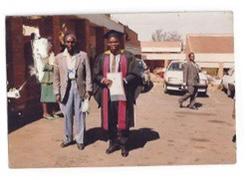
Figure 8: The graduation ceremony at the Chancellor College Great Hall: (Left) Joseph Gibson Benthu Nthengwe (1914-2001) and (Right) his graduating son, Rodrick Joseph Benthu Chiliro Nthengwe, at the Great Hall, in Zomba. Rodrick has just graduated at Chancellor College, the University of Malawi, on 3rd November,1997. This is a watershed moment for Benthu who works hand and foot to educate his children. Rodrick is now a holder of a Doctorate Degree. At the time we are preparing the biography of Benthu, Dr R.J Nthengwe is a lecturer at UNICAF University Lilongwe, Malawi. Born in 1955, he is child number ten of Benthu and Erness. Photo Dr. R. J. Nthengwe 3rd November 1997 (Archive)
The hallmark of his success and pride lies in the fact that all of his children he sends to school, read, write and count in English from the sale of grain and brew. More than 50 years of a struggle to educate his children, culminate on 3rd November, 1997, with the words, “Mwana wane, ine nafisya icho nkhakhumbanga paumoyo wane… [My son, I have accomplished what I purposed in life.]” With these parting words, Benthu departs on a journey of more than a thousand miles. As if he has been waiting for the graduation of his son, four years later, on Thursday, 27th December, 2001, Benthu dies, never to witness the other milestones of his family.
Whether it is in lucrative South Africa, or in his deprived home village, Benthu deep dived into the world of the unknown. But the old man dies with a catch in hand from his life journey of a thousand miles.
13. THE HOMESTEAD
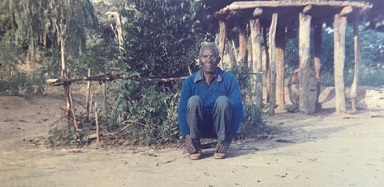
Figure 9: Nthangali Joseph Gibson Benthu Nthengwe (1914-2001) : under his mphungu, Bentthu makes critical decisions about the future of his family. But the road ahead is not easy for Benthu. Photo: E.M Nthengwe/21st March 2023 (Archive)
The tall man has a long reach of wit and glamour. Years of hustling and jostling finally take Benthu to settle at his reclusive homestead.
The homestead comprises several housing structures in an unplanned circle: one rectangular house where Benthu and his wife Erness live. The home faces southwardly; a rectangular boy’s dormitory and a round hut for girls; Benthu’s summer hut, Mphungu, stands west on the circle. Most homesteads own one like this; at the centre stand two pigeon housing; and a chicken housing is roofed in thatch. Chicken’s stay and granaries lie on the outskirts of the homestead. All housing is roofed in thatch.
Pawpaw, Banana and mango trees, form part of the setup that complete the circle.
A short walk north of Benthu’s settlement is home for his second wife, Dyness, and a rectangular structure for their son, Alfred Chikomeni. With time, Dyness and son Chikomeni move to build south of Benthu’s stay, just few metres away.
Benthu turns to relocate with his folk after 10 to 15 years of a life. The vacated homestead is called Manquba, while the new settlement is called Mathangeni. Relocating is routine in Benthu’s life skin.
The nerve centre of all life is under the Mphungu. Most homesteads own one like this.
In his advancing age, Benthu spends days tilling the land. After the day’s back-breaking work, he rests under his thatched hut, seated on a flat hand-curved wooden stool. Benthu’s companion is a radio branded Singer. The radio sits on a special wooden chair called a bagala. At times, Benthu rests his back on the flat stool, with his head on the bagala, facing the thatched roof. In that posture, his legs are folded with the right tangled over the left knee, hands resting on his flat belly, musing over issues.
In South Africa, Benthu lights up cigarettes. When he returns and settles home somewhere before 1955, he picks up snuffing ground tobacco from his mother, Yandula Chindere. Most villagers take up snuffing as a serious substitute to idleness and boredom. Tobacco snuffing also boosts one’s energy without getting high.
Another posture indicates that something is troubling him. Benthu crouches on the veranda or under a mango tree, elbows on his knees. Snuff on the lefthand pam, pinches a small portion in between the inside of a thumb and the index finger of his right hand, sniffing at intervals. In that position, Benthu muses over unpleasant news. Else, he could be exchanging pleasantries with a snap visitor.
With radio Singer, Benthu is ahead of the communities around him. The battery cells powering the radio are Uca and Eveready, imported from Zimbabwe. Politically shrewd president of Malawi, Hastings Kamuzu Banda, ensures hyped propaganda reaches every corner of the country. Coerced peace and selective development successes are high on his messaging. The readily available cells are buttressed by a locally manufactured transistor radio, branded Nzelu. Pregnant with current affairs from his radio, a luck of education is not a damper on Benthu. ‘Mukumanya chivichi imwe, olo B mukumumanya imwe? What do you know? Do you even know letter B?’ He often throws banter at his two wives who do not have ‘Kasepuka’ na ‘Kasungwana’ class level.
When thirsty, Benthu does not gulp down his water or alcohol. He slurps water through his lips treeee, treeee, treeee, from his white metal cup obtained in South Africa.
Benthu is also a tea guzzler. Under his mphungu by the fire, he has a tin that is coated in black soot. The tin is his teapot. It is a disused tin that once contained powder milk. The old man boils water in this tin, He uses Chombe tea leaves, sugar and Nido milk to make his morning and sometimes late evening tea. Benthu picks up this tea drinking habit from his travels to South Africa where he worked in restaurants. Taking tea is his daily routine, except on days when he is gobbling up brew from a calabash (mphindi).
Benthu is not a foodie. He is picky in what he wants to take. At times, he enjoys okra tenderised in groundnut flour. Benthu rarely takes a bath. When he does, no matter how blistering the heatwave, the old man takes a steaming hot bath. His face towel is a sponge from a natural growth, he scrubs his body with a rough stone. A reddish tablet of lifebuoy soap, is his anti-septic. He sometimes shaves his beard with a razor blade and brushes his teeth with toothpaste, a rare vogue in the village.
Each day under his mphungu, he sits by the fire for hours on end. Benthu wears identifiable ornament. On his lefthand wrist, he dons a thick round white trinket (bangle). The bangle is made from elephant ivory. On his hand, it signifies the authority he wields among his clan. When he goes to visit kith and kin, or to partake of the local brew, he uses a wooden walking stick (Mchiza/Ndodo). The stick is fitted with a round metal cup which he clasps and stabs the ground with when walking. Mchiza is also a weapon for fending off aggressors. Reptiles like snakes, freak him out. Benthu has such phobia for snakes that he would scamper away from his own home. He leaves snake-killing to his wife Erness. She would hit and kill snakes no matter how fiercely strung.
Aside a Humber bicycle Benthu brings from South Africa in 1941, other tangible assets are: radio singer, a singer-sewing machine. The sewing machine is a mark of affluence in worse off communities. Other possessions are a spear, a knobkerrie, a set of clubs, a bow and arrows. The spear is a symbol of authority in the Benthu heritage, copied from the Ngoni of South Africa. Clubs, the bow and arrows signify that one is a hunter, or is born in a family of hunters. Not surprising, Benthu’s uncle(sibweni), Samwanga, is known for being a notorious hunter.
The imposition of tax is a source of worry among Villagers. The sons of Benthu’s elder brother, Jonas Kasumbukira, often flee across the border into Zambia at the sight of a tax collector. Wilson Chindundu and Menard stay in hiding at Kalovya village until the tax collector disappears. Benthu stays put. As a good citizen, Benthu is not a defaulter of government tax. During the colonial era, the law demanded bicycle owners to pay a levy. Benthu complies by consistently paying levy on the bicycle he brings from South Africa. He also complies with other imposed state tax. Without any road worth the name, only narrow dirt passages snake through the jungle to destination. One wonders then how the bicycle tax collector or traffic cops account for the Money and the law. Ask the colonial master!
Benthus most critical asset of value is land. This is a man who knows every wild tree, fruit, animal and good soils around him. The land Benthu settles on is of Katondo or Chilopa, reddish rich arable soils.
Head, Heart And Soul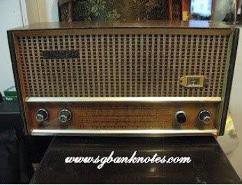
Figure 10: Benthu’s radio singer: Centre of entertainment, information, and education. Family members came to understand the world through radio feeds aired on the antique. It served its purpose well. It was also a centre of controversy and envy between grandchildren. Lifting it from Grandpa’s bedroom was by grade and not the fact that one is able. Tuning stations was left to family members closest to grandpa, his sons, and daughters. At no time did Dokiso, or Masozi, manipulate nobles of the precious device for a station of choice. Benthu’s other asset of value was a sewing machine. It was a very reliable tool for patching torn clothes. Rodrick, George and Mapopa were all taught how to operate the machine. Just like radio, a sewing machine was also a rare possession in communities around Maluza village. As a brand, Singer produced a variety of products that we as villagers were not able to make a link. It never occurred that Radio Singer and Singer sewing machine were products of the same parent manufacturer. If you had one of the two, you owned the village. If you had both, you were adored and respected. Resourceful Benthu had a radio, a sewing machine and a Humber-make bicycle, a rare find across villages. Photo: D. B. Nthengwe/2017 (Archive)
Benthu has a head, heart and soul. He employs his head to deal with matters of the heart and issues of the earth. Even without a formal education, Benthu is very well versed in world affairs. In his lonely days, the radio keeps him updated about the word around him. He is well informed about the political history of his country, Malawi. On the international scene, he closely follows apartheid (black repression) in South Africa and the Israel-Palestine conflict in the Middle East. In admonishing his grandsons, Joseph and David, he refers to them as Palestinians. Benthu likens himself to Israel. Bad versus good. He says this in an unprompted good humour, but means it.
Music stimulates emotion, mood and feeling of a listener. Of his radio, no matter how ear-catching the song can be, Benthu rarely dances to music. Seated under his mphungu, the most he can do is to shake head and toe to Izintombi ze Simanjemanje, melodies of South Africa. The Mahotela Queens and Soul Brothers thrill his heart. What he lacks in dance, he provides in eloquence in discussing critical issues. In fact, all Benthu’s children take after their father. They don’t make attractive dancers, but they are eloquent. Their mother Erness dances only to exorcise possessive spirits in a ritual of Vimbuza.
Benthu enjoys a good brew. The old man sits the whole day on the same spot gobbling up alcohol. Rarely does he visit the bathroom. When he does, he staggers not, nor fall over. The only give away that Benthu is in another cloud, are his long narration of family, dragging on his words.
When inebriated Benthu has a knack of discussing his family and roots hours on end. He is the Fidel Castro of the family. Cuba’s Fidel could speak for more than 12 hours in one sitting, so does Benthu. In effect, Benthu is the institutional memory of his clan. Seated under his mphungu, Benthu deftly explains his family’s history and roots from his fore fathers down to his generation and beyond. He is the encyclopaedia and bible of the Village.
Benthu evokes the spiritual side of his life to balance heart and soul. Benthu is a regular church goer. One Sunday morning, the man accompanies his two impeccably-dressed wives, Erness and Dyness. They are on their way to Mwitha church within Echilimbeni School, some 10 kilometres away. He is pulling his black Humber bicycle by his right side. The prayer house is called Mwitha under the Church of Central Africa Presbyterian (CCAP). CCAP was established in 1926. The three make their way in when the church service is already in progress. The preacher is one Phangula. On seeing Benthu and his two wives, the preacher ceremonises, “some of you come to church to show off. You are not here to listen to the word of God…” he thunders. Benthu takes offence at this message. It is the last Sunday he ever walks through the church door.
Benthu is not a lost sheep. Jesus looms large in his life. Outside of the church, he remains a believer and bears an apron of humanity. He tells his grandchildren inspiring stories from the Holy Book. Particularly sticking, is one of Joseph and King Pharaoh of Egypt. Benthu probably names himself Joseph, after the spiritual Joseph of the bible. He explains and analyses the story of Joseph interpreting the king’s dreams. Benthu recites this biblical story with reverting gusto, it sticks.
Moments with Grandchildren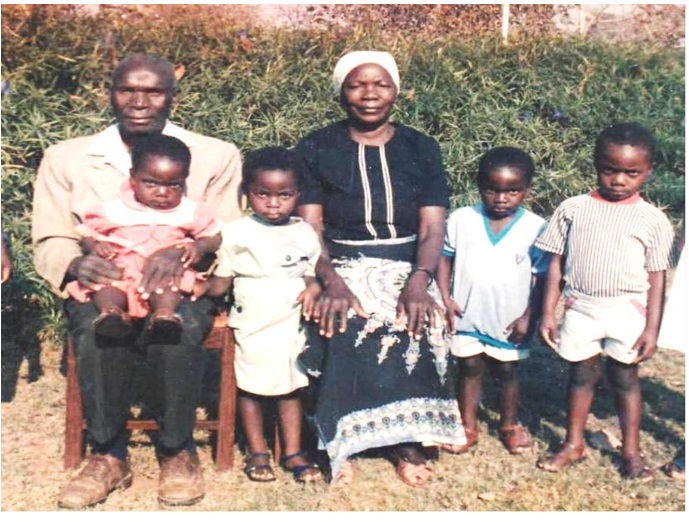
Figure 11: Nthangali Joseph Gibson Benthu Nthengwe, with his wife, Erness Chiwoni Nyirenda, surrounded by grandchildren: Both Benthu and Erness make unintended, but laughable blips that send one’s ribs cracking. Photo: E. M. Nthengwe/21st March 2023 (Archive)
In his aging days, Benthu has hilarious moments with his grandchildren from both, paternal and maternal sides. During light occasions, the old man pokes fun at his grandchildren in the most loving of ways.
Young Alick is Chiseseka, or Petapeta, kupembuzga nkhumupa chisungu. Apparently, when Chiseseka barricades himself, weeping inside the house, he can only be soothed by handing him a young lady to cuddle him. The story is that, when elders notice chief Chiseseka (Chief Tembwe of Zambia) is weeping, they initially think he is hungry. So, they prepare food with vegetables. Chiseseka doesn't eat the food. They come back with another plate, but this time full of meat. Still, Chiseseka doesn't eat.
One elderly village connoisseur who knows the ways of Chiseseka better, proposes to hand the possessed man a young lady. The crying ceases. The next time Chiseseka appears in public, the randy man is all smiles, rubbing his palms with glee. The manner in which juvenile Petapeta (Alick) sobs, invokes Benthu’s memories of chief Chiseseka. Alick is the first born of Dokiso Nthengwe and Sam Chigwangwa Nyirenda. He gives Gomezgani the name Kanjerekamo (one or lone seed) for being the only boy in the siblings of five. Benthu nicknames sister to Gomezgani, a Nyamutokatoka. Thokozani has a habit of distracting Benthu when feeding his pigeons (Nkhunda). Every time Benthu casts maize grain for the birds to pick, the granddaughter picks grain and throws them away to the displeasure of her grandpa, hence the name Nyamutokatoka. Gomezgani is second and Thokozani is third in the family of Nash Mapopa Nthengwe and Kate Soko.
Mahara is Kamupangachi Timoteyo wasungwana bakamupa mazuba. Benthu names him so, apparently after a village gentleman with an eye for ladies. Nyakaluwa is given to as a nickname to Temwa. Benthu says of Temwa as being a drop-dead gorgeous (beautiful). Nyakaluba is a village beauty in the days of Benthu, in Maluza village. Kaluba is Senga and Tumbuka for a small tender flower. Mahara is third and Temwa is fourth of Rodrick Chiliro Nthengwe and Ivy Kumwenda.
Joseph is Sikapombe for his height and light in complexion, resembling Kapombe Mtonga. Kapombe (Sikapombe) is husband to Kajimonkhole Mkandawire, one of the elder sisters of Yandula Chindere Mkandawire. Kapombe is father to Benthu through marriage. Yandula is mother to Benthu. Joseph takes the name after his grandfather, Joseph Benthu Nthengwe. Benthu nicknames Donald a Chimimba, or Chinthumbo, for his bloated belly, even before he is ten of age. Joseph is third and Donald is fifth in the Dokiso Nthengwe and Sam Chigwangwa Nyirenda family.
Yandula is Bimbinya for carrying a hefty rear even before adolescence. Yandula, named after Yandula Chindere Mkandawire, is child number seven of Dokiso Nthengwe and Sam Chigwangwa Nyirenda. Webster is Mseuka after the name of a brother to Dyness Kawoli on the maternal side. Benthu nicknames Stayi as Dekanya, referring to her pot-like round head. Webster and Stayi are third and fourth in Alfred Chikomeni and Neggie Lusale family.
Grandchildren too have moments with Benthu and his wife. One is treated to several unintended gaffes, especially with names and words. Benthu pronounces Johannesburg as Jonazibeki, Pretoria as Pitoriya. The name George, his son, is Kajolo, or Joroji. Miki for Mike, another of his son. George is Benthu’s eleventh son in Erness, and Mike is his third son in Dyness.
Another classic one is when he is mocking people who have not been in school, ‘Olo B mukumumanya? Do you even know the letter B? he mocks.’ When Benthu is pissed off about something, he says of you, ‘Demu bagala’, for a ‘damn burglar’, or ‘demu fulu’ for a dam fool. When he is totally incest or outraged, he says of you, ‘bladi fulu,’ for a ‘bloody fool’. When he says ‘demeti’, he wants to say ‘damn it’.
When the old man wants to caution, he reverts to a foreign slang, ‘Basop’! Basop translates as ‘watch out! The expression is derived from Afrikaans language of South Africa (Pas op!). This expression is commonly used by those returning from Boer farms and mines in South Africa. Because the phrase is frequently used, it has become a household idiom, expression of caution for many communities across countries of Southern Africa.
Benthu brings back from Chibalo (South Africa) several metal trunks and suitcases, in which he stores clothes and his other valuables. He says of one, ‘putumeti.’ The strange name refers to a suitcase. Sometimes he would advise his grandchildren in the Zulu language, ‘Indoda iyazibonela.’ The phrase is the equivalent to saying ‘a man has to face life.’ But Benthu also cautioned that mazaza gha kuswa chaka jembe likukhala. It literally means excessive force robs you of even the little you have left in you. Old gaffer often throws up such cautionary advice when you are challenged.
A famous classic description of deceitful people is ‘kalimilwongo’. The put-down word implies that a person is of double standards, or duplicitous. One of low class and low life.
Of missteps by his two wives, Benthu used sarcasm by calling them (bina Kapera). Kapera is a village from where Benthu married, whose community he despised for their brazen slues. Benthu would rebuke his wives as bina Kapera or nzeru za kwa Kapera.
His wife Erness, presents a load of laughable gaffes too. The memorable one says of you, ‘Imwe mukujiwona kuti ndimwe ajukutedi ?”. For do you think you are educated? When grandma has reached her boiling point, she thinks she is insulting you by shouting the word, ‘SERIOUS! Grandma often bursts out when you have broken a water calabash. At times she scoffsby calling you a kayino, someone who is mentally deranged.
Breakfast is not the norm in the Benthu family, the essential first meal of the day is occasional. When it happens, it is either porridge, or black tea with scones. Grandma would ask, ‘Kasi mwalya burakafesi’? Have you eaten your breakfast’? It is the word burakafesi for breakfast that cracks one’s ribs with laughter. Christmas is pronounced as khisimisi.
During the other light moments, Benthu tells inspiring stories to his grandchildren. He tells one particular story about wildlife with zest. It’s about sunset. A herd of buffalos, having done with the day’s grazing, descends on a river to wash down the gut. At that time of the day, slick underwater creatures lurk in the shallow waters for a catch. Having gulped enough litres of water, the formidable herd retreats ashore. They all make it but for one bull that is stuck in the water, unable to move out. Try as it could, the animal could not lift its legs out of the deep murky waters. Unaware, the slickest of the underwater predators, the crocodile, has firmly latched its jaws on one of the bull’s front legs, hoofs dipped into the waters. Usually, the giant reptile holds on to its victim for long hours waiting for it to wane in fatigue. When that happens, the victim wants to sit or lie in shallow waters. This gives leverage to the crocodile to pull its prey deeper into the waters. Once under water the victim animal suffocates before giving up its life.
The other buffalos have long galloped away. With the bull locked in a tug-of-war with the crocodile, a lion tiptoes up behind it. King of the jungle closes in on the bovine, springs upon it and digs its fangs and front claws in the fatty rear. Caught between the most ruthless underwater predator and the offshore heavyweight, the bull groans for its life in futility. Naturally, and desperate, the lion attempts to pull its day’s prey out of the waters, but the predator’s jaw-grip under the muddy waters is a fierce counter force.
After several such attempts, the king of the Jungle musters up enough energy, to lift not just the bull, but also the crocodile, clear out of the water. The force of the lion is such that the crocodile’s limb and body dangle across the sky, in an arc, towards dry land. In consequence of the excessive force, the lion twists and breaks its neck. The jungle king dies. The bull’s hip joints are dislocated. The bush bull also dies from its multiple and bloody injuries. The giant water reptile also dies from the hard landing on the riverbank”, Joseph Gibson Benthu Nthengwe concludes his tale.
The moral of his story is that, power, if applied in excess, can be destructive. Even though we are too young to digest most of the instructive stories, it is grandfather’s considered philosophy to start drip-feeding his grandchildren with nuggets of wisdom as preparation for the future. Benthu would advise, Mazghazgha gha kuswa chaka, jembe likukhala (courage breaks a hoe handle, the metal hoe stays put). Pas op!
14. POLITICS OF THE DAY (1965-1994)
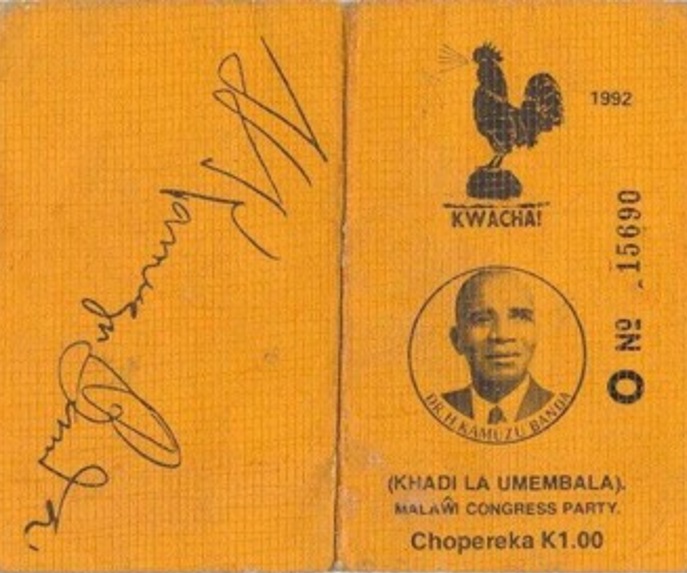
Figure 12: Malawi Congress Party (MCP) card: The MCP card functioned as an ID of loyalty. Travel, entry into a market, enrolment into school and access to medical services, required one to possess an MCP card. Benthu loathes the forcible buying of the party card. A Party card is renewable every year. Benthu evades buying a card by saying, ‘I am not in work. I am sickly and weak.’ Benthu finds looking after his grandchildren and buying a party card for them, is a drain on his already meagre pocket. And yet, failure to buy or possess one is misconstrued as rebellion and ungrateful to the Ngwazi who ‘broke the stupid Federation of Rhodesia and Nyasaland’. Photo: D. B. Nthengwe/December 1992 (Archive
A self-exiled London doctor arrives in Nyasaland in 1958. Hastings Kamuzu Banda is to lead the political struggle to independence in what was then a British protectorate. The population welcomes Kamuzu Banda, [in] famously revered as the Ngwazi. Clutching a fly whisk, the Ngwazi proclaims two things: “Break the stupid Federation of Rhodesia and Nyasaland, and give my people their freedom.”
With such a highly-charged political statement of intent, the country gains independence in 1964. Poignantly, anyone holding opposing views is regarded as ungrateful to the Ngwazi. You are a member of the Malawi Congress Party (MCP) not by choice. Dissenting voices are swiftly and violently crushed.
Benthu lives long enough to witness the rise and fall of the Ngwazi. For more than three decades, Malawi is dominated by a repressive one-party rule of the MCP. For these many decades, the country is under the one-man rule of Hastings Kamuzu Banda. Under such a repressive atmosphere, Benthu, like many others, is not free to exercise the right to divergent political opinion or views.
Benthu is not involved in the frontline politics. However, he is not intimidated by the repressive regime. He does not promote or support MCP extorting behaviour through the forcible sale of a party membership card. As one way of surviving, Benthu masterminds’ persuasive tactics to avoid a political backlash. He cleverly avoids buying the party card by throwing up a myriad of excuses. One classic has the heads of his tormentors’ spin in sympathy, is around his health and age.
“I am old and sickly,” Benthu bemoans in a low suppressed voice, adding, “every year, I visit hospitals to ‘mend my poor health.” Benthu further persuades the insisting MCP youth leaguers, “look at my grandchildren…they need soap. They need school fees. They need clothing. When sick, I must send them to the clinic.”
With a household of ten, ten party cards must be bought: Benthu himself, two wives, three children, and four grandchildren. Having made his case seated under the Mphungu, Benthu pulls out cash but for one card that is to represent each family member, including himself. Benthu directs his other salvo of words looking into the eye of the MCP youth leaguers. They dawn intimidating red shirts and khaki trousers. The youthful men look almost shoeless in their red patapata (flip-flops).
“I am not working. So, where do you think I will get the money to buy party cards and pay for all these other expenses?”
On hearing a slew of complaints and having received the money for the one card, the youth leaguers walk away, convinced and satisfied.
The one thing Benthu appreciates of the Ngwazi, is, “Vinthu vyasinthako wuwo naka munthu aka. Mazuba ghano madoda ghanandi ghana bachi pa msana. Things have somehow changed with this small person. Today every man puts on a jacket on his back.” It is a statement of appreciation, despite repression.
Subliminal resistance to repression is deep and infectious among the population. Consequently, in the first-ever democratic elections of 1994, out-of-touch MCP and the self-styled Ngwazi, lose to proponents of multi-party democracy. After 99 years of a life, the diminutive, deep-voiced, the Ngwazi, dies on Tuesday, 25th November 1997.
Having witnessed the coming, rise and fall of the iron-fist and president for life, the Ngwazi, old age catches up with Benthu. He withdraws from active social interaction. He leaves any such undertakings to his two wives or any other senior member of the family.
15. CONVERSATIONS WITH BENTHU
‘If you want to cross the river in the rainy season, make friends with the owner of the boat in the dry season.’ (Kenyan Proverb)
Figure 13: Nash Mapopa Mahuza Nthengwe, A.K.A Professor (1960-2012): Why do the good and the young die soon? Building bridges between people epitomises the short life of Nash Mapopa. Endowed with empathy, Mapopa combines the traits of a pacifier and a peacemaker. Mapopa’s other name, Mahuza, summarises the character of the man. M: melody, the song of life. A: approachable, constantly meeting new people. H: honest, something you hold dear. U: uncanny, the way you know what to do. Z: zip, the quickness in your step to respond! A: adaptable, whenever things change. A skilled negotiator of Benthu and Erness, Mapopa is their 12th child born in 1960. Mapopa finishes high school at inner city Bwaila, with the heartbeat of his father and mother. Fresh after finishing school in Lilongwe, Mapopa joins the government somewhere in 1985. Working in the department of Human Resources, Mapopa indelibly touches heart and mind of every colleague, young and old. On Saturday, 3 November 2012, Mapopa dies in less than 48 hours of falling ill. He is aged 52. Death robs a man the family looks up to as the torch bearer of mankind. He leaves behind his brothers and sisters, a wife and five children. Mapopa’s untimely death is difficult to unwind among family, colleague and friend. Soft spoken Mapopa is cherished in the heart of many. Sarcastically, the death of Mapopa on third November occurs the day when his first daughter, Fyness, is to enter into marriage. Tears dry, not for late Mapopa! Mapopa translates as ‘wilderness.’ Indeed, his demise leaves a wilderness in the heart of many. To dye at 70 of age, is forgivable. Below 70, is unfortunate. At 52, is a life cut short. Lala Kahle Mapopa (‘sleep well Mapopa’). G. Nthengwe/13th September 2023 (Archive)
A conversation is like opening a door into a castle. In it you find a wine cellar, a study room full of literary works and artefacts. A prayer room is not far off either. In these spaces, one discovers man’s worldly desires, quest for greater cognition, solace and redemption. Simply, a conversation opens a window into the aspirations and fears of the individual. Benthu is the walking castle.
Munguza and Chikomazgango bear six daughters. Munguza dies of unknown causes, while Chikomazgango is shot and killed during the raging Zoa war in Malambo. Of the six daughters, Yandula Chindere is the lastborn. She marries Mundalira Nthengwe. The remaining five sisters, each marry Chiti Botha, Yobe Mkandawire, Mhlawumo Nyirenda, Fumbawowa Chavinda and Kapombe Mtonga. Mundalira and Yandula Chindere bear five children, one of whom is Joseph Gibson Benthu, the focus of this biography.
In conversations with the other family members, Benthu rarely discusses his father, Mundalira, nor his grandparents, Chowo and Khalapazuba. He does not also discuss the parents of his mother, Munguza Mkandwire and Chikomazgango. The people Benthu does not dwell on are a locked castle. The family does not know much about them.
The only known children of Munguza Mkandawire are daughters. For that reason, Munguza does not have any traceable bloodline. Or, it may be that, Munguza’s male children left to get married elsewhere under matrimonial arrangement. For bearing daughters only, Munguza Mkandawire does not have any traceable bloodline.
In conversations, Benthu ostensibly discusses relatives on the maternal side with fond memories. These relatives are sons of elder sisters to his mother,Yandula Chindere Mkandawire. Peculiarly, and probably for good measure, Benthu prefers to involve his kith and kin at arms’ length. In conversations, Benthu often claims that some of his immediate relatives in the village attempted to take his life. Furthermore, Benthu often clashes with some of his relatives over ideology. Benthu puts his children into school. His village peers are pushing their children into marriage. Benthu works hard to feed his family. His relatives’ plant seeds of discord. Benthu admires achievers. His village contemporaries shun achievers. Benthu holds a set of values for which the old man is prepared to part ways with anyone. For Benthu, anything else is an aberration from the norm.
Inconsequence, Benthu prefers the sons of the elder sisters to his mother, more than his direct relations. Benthu’s antipathy is evident in fostering his children for their education away from the village. As in the Kenyan proverb, Benthu establishes a network of friendly relatives to assist with achieving his goal. So, which are the castles Benthu chooses to unlock, and why?
Chiti Botha:
Ngayithi Mkandawire, one of the elder sisters of Yandula Chindere, marries Chibumira Botha. They have several children, one of whom is Chiti Botha. Yandula Chindere is mother to Benthu, resulting in Chiti Botha and Benthu to be Brothers through their mothers. The parents of both fled from the Zoa war in Malambo, now eastern Zambia. Ever since, Chiti has been an integral part of the Benthu family. He has been dependable in handling Benthus family affairs, from weddings, disputes, to funerals. Ironic is that Chiti and Benthu die within hours of each other on the same day, Thursday, 27th December 2001.
Yobe Mkamdawire:
Marries another elder sister of Chindere. His son Gulupa Adamson Mkamdawire takes custody of Longolani, Benthus first born. Longolani is able to finish his standard six of old, thanks to the benevolence of Adamson Mkamdawire.
Rabani Gondwe:
Enock Nyirenda and Yiliphe Nyirenda are brother and sister. Enock is father to Erness, wife to Joseph Gibson Benthu Nthengwe. Yiliphe marries Chivwama Gondwe. They have several children, one of whom is Raban Gondwe. Yiliphe is aunty of Erness. Benthu and Raban are, therefore, in-laws. Rabani plays a pivotal role in the education of Rodrick Chiliro Nthengwe. Rabani takes on Chiliro in 1962, when the young lad is hardly 5 years of age. Chiliro makes it to the Chancellor College, the University of Malawi. In conversations, Rabbani Gondwe and his family are greatly appreciated by Benthu for the sacrifice.
Khongono Chavinda:
Fumbawowa Chavinda marries Tembani Mkandawire, one of the elder sisters of Yandula Chindere Mkandawire. Khongono and Chakufwa Chavinda are Fumbawowa’s sons in a family of four. Through their mothers, Chakufwa, Khongono and Benthu are effectively brothers. Khongono has several children, among whom, are two outstanding trailblazers of education. They are Baidon and Joshua. In our tradition of relations, Children to Chakufwa and Khongono relate to Benthu as their adada (father).
Bidon Chavinda qualifies as a medical assistant and a dentist. He runs the Madede dispensary attending to the sick. The medical assistant-cum-dentist is popularly known across communities as Doctor Bidon Chavinda. The dispensary he runs is a pay up public service. The local doctor accords special attention to Benthus medical needs, and to any of his family members. They many times get treated without paying a dime. All would end in (mukawatauzge adada. Greet my father). Such is the goodwill of Baidon Chavinda towards Benthu.
While Baidon cures diseases, his younger brother, Joshua, heals ignorance in people. Joshua is the last born in the Khongono family. He qualifies as a school teacher. Joshua rises to head Echilumbeni Full primary School. By his position, his father Benthu and family have unfettered access to school services. It is this pot-bellied Joshua who cheerfully receives and enrols Benthus grandchildren into primary school. The grandchildren are Alick and David. They are Dokiso’s sons who have just arrived from Livingston, Zambia. Dokiso is Benthu’s third born child. Joshua is fond of David in whom he picks out ‘exceptional command of the English language.’
Conversational research reveals that the Botha, the Nthengwe, the Nyirenda, the Mtonga, are Senga from Malambo in north-eastern Zambia. But who are the Chavinda in the castle. Where do they come from? Interestingly, the Chavinda reportedly migrate from Sudan. They are not Bantu. They are Nilotic . The Nilotic are people indigenous to the Nile Valley who speak Nilotic languages.
The Chavinda are a strain of one of the many Nilotic groups. On their way down South, the Chavinda settle on the hills of Tumbukutu in Tanzania. From Tanzania, they move on to settle at Bolelo of the Nkhamanga Kingdom in what is now Rumphi. Bolelo is a settlement on the edges of Mzimba, the Ngoni land. When they migrate from Sudan, they are not known as the Chavinda. They pick up the name Chavinda from conquering other tribes along the way from Bolelo in Rumphi. Otherwise, their identity clan name is Daire Msopa Msopengulu, or Kumwenda. But because they are good fighters, their leader, Kalepule Kumwenda, names himself Chavinda, akavinda alume anyakhe, meaning, ‘the conqueror of fellow men.’ The Kumwenda, now the Chavinda, reportedly conquer the Ngoni around what is now Mtwalo in their encounters with the ruthless warriors from South Africa. It is this name Chavinda that gains traction as they move further down South, defeating other tribes along the way. As they conquer territories and defeat occupants on the way, the Chavinda are also skilled hunters.
From Mtwalo, the Chavinda trek further west to Kafukule. At Kafukule, they don’t settle permanently either, they head southwest and settle on the foothills of Khulamayembe, a hilly area that is now part of Zambia. Not long after, they retreat back to settle along South Rukulu River, where they are found to day. The village is called Ndakala. Marriage is a binder of communities. By tying a knot with Fumbawowa, Tembani Mkandawire binds the Senga from Zambia and the Chavinda from Sudan.
16. DEJAVU
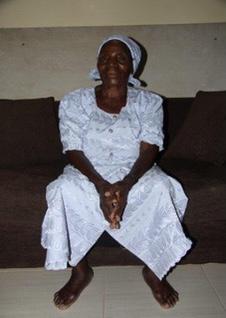
Figure 14: Dokiso Meselina Tiwakomole Nthengwe: Dokiso is born in 1944. She is the third child in the Benthu family. Around 1961, Dokiso marries Chigwangwa Chibinimbi Sam Nyirenda from Kamphata of Chama, in north-eastern Zambia. The mother to Sam is Chananga Mtonga, a sister to Maluza Mtonga. Chananga is a step-sister to Benthu. In their relation, Dokiso Nthengwe and Sam Nyirenda are cousins who marry within the same bloodline. Children of Dokiso and Chigwangwa are nephews in Maluza. In the Senga tradition, the chieftaincy is passed down to nephews. With that family connection, children to Dokiso are heirs to the Maluza, Kamphata and Tembwe chieftainies. As it is now, Dokiso is the defector holder of the Benthu spears and those of her grandfather, Enock Nyirenda of Ntchalinda Village. Dokiso inherits the Benthu spears from Longolani, her brother, the firstborn of Benthu. Her husband Chigwangwa dies in 2006 counting 45 years in marriage. Photo: D.B. Nthengwe/December 2013 (Archive)
One sunny day, the Senga villagers of Maluza are merry-making. In the midst of carousing, a familiar face shows up out of the blue. He is Sam Chigwangwa Nyirenda from across Malambo in Zambia. Chigwangwa has travelled from Kamphata village in Malambo to visit kith and kin at Maluza village in Malawi. Chigwangwa often parachutes in and out of Maluza Village, insidiously darting his cousins. On this day and as Villagers get inebriated, Chigwangwa deploys his charming idea. Late in the afternoon, Kajolo (George Nthangali), Masozi and Dokiso walk towards the road that marks the boundary between Nyasaland and northern Rhodesia, now Malawi and Zambia respectively.
Kajolo and his sisters walk away from the prying eyes of the Villagers to reach the dirt boundary road, a short walk from their fathers’ homestead. The three approach a vehicle where Chigwangwa is already ensconced. Innocent Kajolo escorts the sisters to the waiting vehicle before saying bye-byes to Dokiso. That is the last Kajolo and Masozi see their sister Dokiso in many years to come.
The year is around 1962 when Kajolo is probably aged five. Kajolo confesses to having a vague recollection of what happened on that afternoon. What Kajolo did not realise, is that Chigwangwa has eloped his sister for a wife.
The episode is not without controversy, which rumbles on throughout Benthu’s family life. Benthu is in fact profoundly displeased by this marriage. The fall out between the two men is palpable.
Dokiso and Chigwangwa are in fact cousins. Their relation starts with Kapombe Mtonga marrying Kajimonkhole, elder sister of Yandula Chindere. Subsequently, Mundalira Nthengwe marries Yandula Chindere. This makes Kapombe and Mundalilra to become brothers in marriage.
Kapombe and Kajimoknole bear one child they name Yakhobe (Jacob). Mundalira and Chidere bear five children, four males and one female. One of the males from Mundalira is Nthangali Joseph Gibson Benthu. So, Yakhobe and Benthu are brothers through their mothers.
Kapombe Mtonga has a sister, Nthanda Chananga Ncheku. In the years prior, Mcheku marries Alick Petapeta Nyirenda in Kamphata village of Malambo. They bear six children, four boys and two girls, one of whom is Sam Chigwangwa. Sam is a nephew to Yakhobe Mtonga and Benthu Nthengwe, whose mothers are sisters. Dokiso is the daughter of Benthu. The married couple, Dokiso and Chigwangwa, are related, but distant cousins.
With that relation, traditional perception at the time is that the marriage of Dokiso and Chigwangwa is pre-arranged. Some Villagers claim the union is inevitable to retain the worth and bloodline in the chieftaincy of Kamphata in Malambo and Maluza in Mzimba. Chigwangwa has royal blood running through his veins under Kamphata and Chief Tembwe chieftaincies.
Born in 1920, Sam Chibinimbi Chigwangwa does not resist the temptation to travel to South Africa in search of jobs in the mines. In Cape town, Chigwangwa and his elder brother Jotche meet their Sibweni (uncle), Benthu. Chigwangwa and Jotche are nephews to Benthu. In his subsequent travels, Chigwangwa goes to work in Zimbabwe. Not long after, he crosses back into Zambia, in the Rozwi land, just across the deep gorges of Mosi oa tunya, on the great Zambezi River.
On Saturday, 17th November 1855, one Scottish explorer by the name David Livingstone, reaches and names the gorges Victoria Falls, after Queen Victoria of the United Kingdom. The Rozwi know the water falls as Mosi oa tunya, translated as ‘smoke that thunders.’ David goes to name the Rozwi land after his second name Livingstone.
Kalomo is the first capital of Zambia in 1908, but the city shifts to Livingstone and later Lusaka in the 1930s. Livingstone is where Chigwangwa finds a job as a fireman under the city council. It is in this town where Chigwangwa takes Dokiso from the day he elopes her somewhere in 1962.
Benthu’s displeasure of the marriage with the nephew, Chigwangwa, is probably prophetic. Chigwangwa does not help his case either by his disingenuous conduct. Back in South Africa, Chigwangwa picks up carpentry, and Jotche acquires skills in interior home design.
When the two brothers return to Zambia, Chigwangwa settles in Livingstone and Jotche in Lusaka, the new capital city of Zambia. In Livingstone, Chigwangwa takes a job with the city council fire brigade. He is a reliable and skilled fireman. Jotche, his elder brother, is recruited by the American Embassy in Lusaka.
Benthu’s disapproval of the marriage, does little to dissuade the couple, Dokiso and Chigwangwa are blessed with nine children. The first three boys are born in Livingstone. They are Alick, David and Joseph, in the order of birth. Zakeyo is born under a mutatani tree at Benthu’s homestead in Maluza, Malawi. Donald, the fifth bot and Janet, a girl, were born in Livingstone. Yandula, a girl, Zondani a boy and Nthanda, a girl, were born at Kamphata village in Malawi, north-east Zambia. Tragically, Zondani left us after a freak accident in the same year he was born.
Alick, the first born, is named after his grandfather Alick Petapeta (Chiseseka of Tembwe chieftaincy). Janet is named after Chigwangwa’s sister, the first born in Alick and Mcheku. Both Alick and Janet are names from the paternal side.
David is named Mjedu. Benthu’s elder brother, Chanozga, names him so. The name first appears in the Kasumbukila bloodline. Joseph is named after his grandfather Joseph (Benthu). Benthu is father to Dokiso. Zakeyo is named after Benthu’s elder brother. Donald is named after the first son to Jonas Kasumbukila Nthengwe.
Yandula is named after Yandula Chindere, mother to Benthu. Names from David to Yandula are from the maternal side. Nthanda, the lastborn girl. Her name falls on both sides, maternal and paternal. Nthanda is named after Chigwangwa’s mother, Nthanda Mcheku. Names of Nthanda and Mjedu (David) are written in the celestial stars. Nthanda is a star that glitters above others in the western skies. Mjedu is one shining star that shows up in the eastern skies.
Only late Zondani does not bear names from paternal on maternal parents. Dokiso and Chigwangwa bear the nine children between 1962-1978. Chigwangwa counts four wives and 18 children under his belt. Dokiso is his fourth and last wife.
Spouses of yesteryears firmly hold the view that the more the children you bear, the worthier you are. Especially, villagers believe that male children guarantee the social safety net and bloodline of families. In part, it explains why men go into polygamy and bigamy (Bigamy is the offence of marrying someone whilst already being married to another).
When Chigwangwa retires from the fire brigade in 1970, he settles at his Village in Kamphata of Malambo. The retired man brings along a complete toolbox. Tools for his carpentry range from a chisel to a clump, a hand plane to a sow, and everything in between. He puts his trade to profitable use. He makes furniture, door and window frames and anything to do with carpentry and wood work. But the retired fireman is a lifer. Sam Chigwangwa squanders every penny he makes on mostly brew.
As he advances in age, Chigwangwa remains unguardedly naïve at heart. He procrastinates on his parental duties. His children sleep rough and walk about half naked. They are poorly fed and when ill, they are left to own fetor devices. Contrast this behaviour to Benthu’s, one understands parental procrastination.
A strange behavioural deviation from the norm, occurs during late afternoon meals. The hunger-stricken family already struggles to put food on the table for the children regularly. In most cases, they scramble over a meal that is served once, only in late afternoons. With such stack reality, when the only meal of the day is served, Chigwangwa first feeds his many dogs a massive chank of the meal. The equally many but starving children, look on helplessly. Poor kids are an afterthought. Blatantly negligent behaviour of this latitude, angered Dokiso and her nemeses to the belly.
Oftentimes Dokiso is hugely let down by the husband’s inexplicable cavalier conduct. She sometimes gathers her children to live with her father Benthu. The grandchildren intermittently shunt between Malambo and Maluza. The conduct of the nephew-come-son-in-law to neglect his children becomes the source of deep family disquiet, acrimony and friction.
“Iwe Dokiso… ichi ntchi nthengwa yayi. Chisweni chako ntchimunthu chara… (Dokiso…? This is not a marriage. Your husband is void integrity.”) That would be how Benthu often queries and admonishes his daughter, Dokiso. But each time Dokiso settles such queries from her father, stubborn Chigwangwa always sneaks back for the dogged love of his wife and that of not the children. This behaviour often unnerves Benthu. The conduct is exploitative and impugned provocation. There are times like these when things do not end well for poor Dokiso. In 2005, Chigwangwa suffers from a terminal brain attack (stroke), which paralyses him partially. On 22nd August, 2006, Sam Chigwangwa Chibinimbi Palimatundu Mundakalyanga Nyirenda, passes away at 86 of age. He is survived by two wives and 18 children.
Heritance (Fumu Yikuvwala Nkhazu. A Chief Clads In Rags) Benthu Often Advises
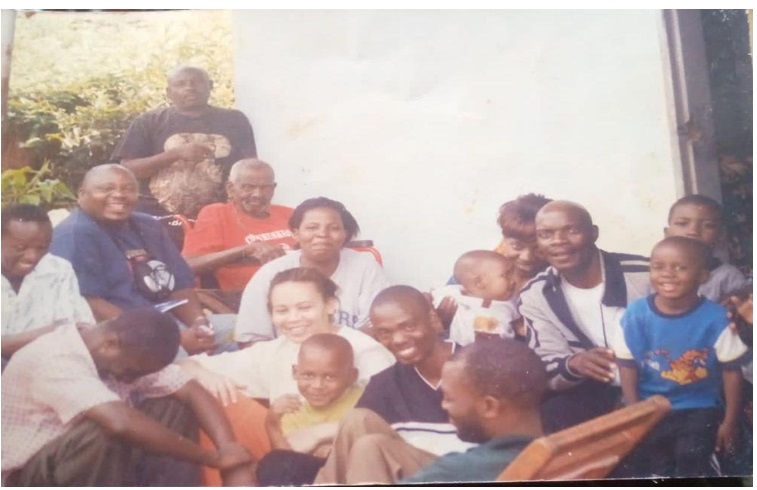
Figure 15: Spotting a red T-shirt, is Sam Chigwangwa Chibinimbi Palimatundu Mundakalyanga Nyirenda (1920-2006). Seated on his right, are Chigwangwa’s sons from his fourth wife: David, Zakeyo and Joseph. In order of their birth, they are second, fourth and third, in Dokiso Nthengwe. Dokiso is Benthu’s third child. Seated in front are granddaughter Elizabeth of Biyad from his third wife, Lucy Chibanga. Biyad is the second child of Chigwangwa and Lucy. Next is Candice, granddaughter of Jotche, Chigwangwa’s elder brother. Alick, Chigwangwa’s first born in his fourth wife Dokiso. Following is Isaac, Chigwangwa’s son from his second wife Rachel (Rakelo) Mkandawire. Other are relatives of Chigwangwa and family. The gathering is in Lusaka, the capital city of Zambia, 2005. Photo: Z. Nyirenda/23rd September 2023 (Archive)
The unique position of Dokiso and Chigwangwa in the Benthu family necessities special attention. Dokiso is Benthu’s third child. Chigwangwa who marries Dokiso, is a nephew to Benthu. Dokiso and Chigwangwa, are therefore, cousins. In the Senga tradition, it is not uncommon for cousins to marry. As an instance, Chanozga Nthengwe and Maluza Mtonga marry their cousins. Benthu himself conjures up one such scenario. He proposes a plan in which his 12th son, Mapopa, is to marry Wayicha, a direct cousin.
At the time, Benthu and Erness are advancing in age and weakening in strength. The couple desperately needs the support of young and fresh hands in their son Mapopa and his wife to be. Mapopa rebuffs the suggestion. He counter argues that he is still in school. Young Mapopa is, meanwhile, pursuing his secondary education. Benthu’s plan is dies on the waters. But the marriage of Dokiso and Chigwangwa is out of active Village conspiracy.
Chibinimbi’s mother is Nthanda Chananga Ncheku. Her husband is Alick Nyirenda. Both are Senga by ethnicity from Pondo, in Malambo of Chama in the now north eastern Zambia. Wars over land and grazing rights force the Senga to migrate from Malambo towards the east. Nthanda Chananga Ncheku and her husband, Alick Nyirenda, are children who remained in Malambo after the Zoa war. Their parents and relatives are among those who are forced to migrate and settle west of what is now Mzimba in Malawi. They are several ethnic groups, distinctively Senga from Malambo of Chama, Tumbuka of the Nkhamanga Kingdom, now Rumphi, and the Ngoni of what is now South Africa. The Senga and Tumbuka meet, and eventually clash, at that time Ngoni warriors are fleeing Shaka Zulu incursions. In times past, Chama, Chitipa, Rumphi and Mzimba are deemed one territory.
Unlike the Ngoni tradition, a nephew inherits the chieftaincy in the Senga and Tumbuka ethnicities. The children of Chigwangwa and Dokiso are the rightful heirs of the Maluza Benthu Group Headmanship. They are in the bloodline of nephews. These children are also heirs to the throne of Group Headman Kamphata and Chief Tembwe.
As we prepare this write up, previous and current crown holders of Kamphata and Tembwe chieftaincies have been and are direct nephews to Chigwangwa. The current Kamphata is Chatayika Kamawumba Kumwenda. Chatayika is son of Janet Nyirenda, a direct sister of Chigwangwa Nyirenda. The Headman ship of Maluza Nyirenda, Maluza Mtonga, Kalovya Nyirenda and Chimsewu Nyirenda also respect this tradition of succession. Under Maluza chieftaincy, succession follows the patriarchal system since the 1940s.
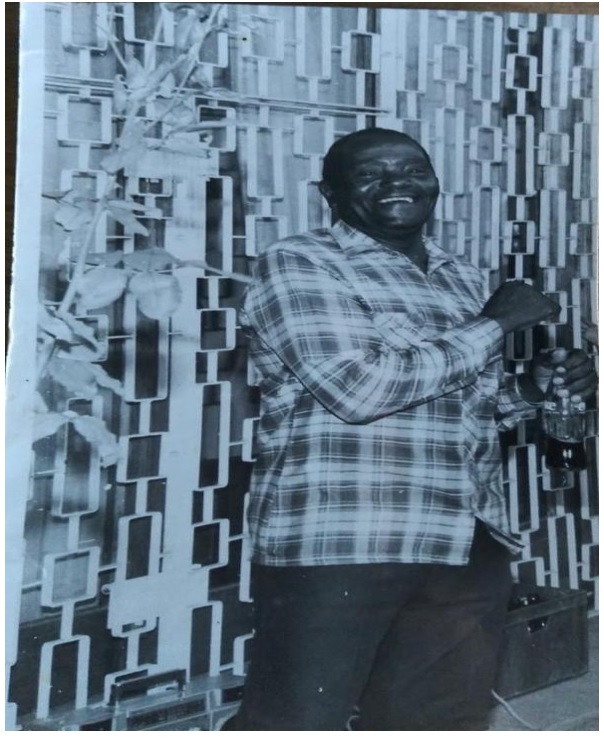
Figure 16: Jotche Silverman Nyirenda (111918-2003): Jotche is the elder brother of Sam Chigwangwa in a family of five. The others are Mackey, Janet, and the lastborn, Doris. They are children of Alick Nyirenda and Mcheku. All five are nephews to Benthu Nthengwe. Sam Chigwangwa is husband of Benthu’s daughter, Dokiso Tibakomole. C. Nyirenda/23 September (Archive)
17. BLIND FAITH
(Some names in this chapter have been deliberately withheld, or altered. The people concerned are very close relations to Benthu, the focus of this biography).
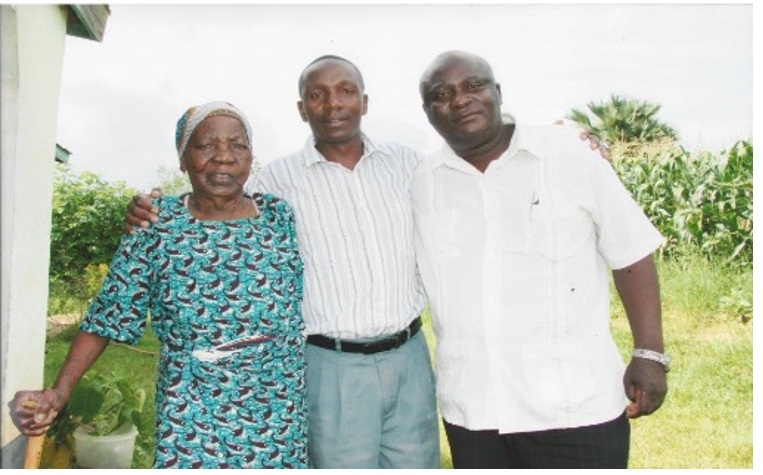
Figure 17: (L-R) Erness Chioni Nyirenda (Benthu’s wife), Alick Nyirenda (eldest son of Dokiso and Chigwangwa). Nash Mapapo Nthengwe, 12th born of Erness and Benthu. Erness and her husband Benthu, are a target of malice in the Maluza village. They weather accusations of witchcraft. Mass hysteria grips villagers that dekhani from witch finder Simbazako would instantly kill anyone practicing witchcraft. Erness and Benthu are a couple of steel. The couple does not take baseless accusations lying down. On the day Erness is doused in dekhani spell, she defiantly walks in her crop field to pick and eat from her produce. Erness is widely expected to drop dead after eating. Shamefully, Erness does not die. Erness shows her conspirators that she and her husband are not a wizard and a witch. Photo: D.B. Nthengwe/22nd December 2008
Little known impoverished Buzi, is a village in central Malawi. The settlement is within a miscellany of largely Ngoni people under Traditional Authority Kasakula, Ntchisi district. Buzi happens to be the Centre for demystifying life puzzlements, the village from which one Simbazako rises to national fame. Simbazako is a reputed witch finder and healer. The witchdoctor unmasks sorcerers, or people practicing witchcraft (fwiti). In extreme cases, the superman can eliminate a suspect by his powers.
In the Chichewa language, Simbazako is a combination of two words: simba, verb, ‘to talk’; and zako, a possessive pronoun, ‘yours.’ The equivalent in the English meaning is ‘mind your business’. In Senga and Tumbuka, it is ‘manyatwako or Manyavyako’. At the time of writing this chapter, Simbazako is still alive at his Buzi village. Retired, and in his late 80s of age, the medicine man must be looking forward to his last day.
In the 1970s, the voodoo man is fiercely popular. So popular that his fame reaches Benthu’s Maluza village in Mzimba and beyond borders. The popularity of mystical Simbazako is coincidentally spreading at the time when the people of Maluza are beset with poverty and deeply divided over accusations of witchcraft.
In response, a band of three men from Maluza conspire to approach Simbazako. It happens in the late 1970s. Their main motive is to cleanse Maluza village of the perceived witchcraft. The three musketeers also seek to understand why fortune only fell to a selected few. Certainly, the accusers have people in mind they want eliminated.
Exploiting a network of uninformed villagers, the three mobilise resources from hard-up men and women. The fearless men consciously go as far as brainwashing villagers about their misfortune. In their unshaken belief, somebody is killing people in the village, people don’t just die naturally. On these unproven grounds, the high-powered delegation dashes to see Simbazako in Ntchisi.
Determined to do something about village puzzlements, the men’s resolve to catch the suspects is unmistakable. The buoyed trio brave some 400 kilometres from Maluza to Buzi village in Ntchisi. The season is around the drizzling month of March, just before harvest. Buoyed with malice, men from Maluza walk a short distance from Ntchisi BOMA to reach Buzi, the Jerusalem of their redeemer.
At Buzi, pilgrimage makers from Maluza arrive to meet the popular and dreaded man. On the day the pumped-up men step in the little-known village, Buzi is replete with men and women from across Malawi. They are seeking answers to puzzles of death, barrenness, or other perceived misfortune.
Upon stating their case, Simbazako counsels’ men from the north, “this, what you are taking home, is dekhani. Apply on the head of your suspects.” The voodoo man then goes on to assure the three, “a witch behind any death in the village, will instantly die. Those who use witchcraft to grow crops, will surely die too, immediately they eat from their yield.”
The Maluza conspirators pay the revered Simbazako an undisclosed sum of money, bounty that is extorted from the already hard-pressed villagers. The three men take dekhani, instructions and assurances to heart.
The juju the delegation receives in exchange, is in a disuse tin containing a black oily substance. Dekhani translates as, ‘be calm.’ The daring pack of three, raises eyebrows to anyone who lives in Maluza village in that year. Intriguing is that the enemy is in the house. Self-appointed emissaries whose real names have been withheld, are direct relatives of Benthu. A titled man, a school drop-out publicist (Chimeme) and a cholla boy (the authority’s executive assistance), happen to be members of the high powered delegation which goes to seek answers at Simbazako’s Buzi.
On return back in Maluza village, armed with dekhani, the restive titled man subpoenas every household in the village to assemble at his home. Warning is that anyone who does not heed the call, or refuses the dekhani spell, is indeed behind death and misfortune befalling people in the village.
Duped but scared, ragged village men and women queue up to take the spell, just to prove that they are victims of malicious rumour. While others make frantic calculations to escape from the village in fear, steel Benthu and wife Erness stay put, unmoved by the threat. Perhaps to the shock of many villagers, the couple even heeds the directive. Benthu and his wife Erness have long been prime suspects of witchcraft.
“I know, these malicious failures are after me. I am that witch behind those dying in this village.” Benthu pauses, before asserting, “these traitors also accuse me of using ghosts of dead people to produce enough yield.” Benthu pushes back accusations In protest, “I use wits and strength to grow crop. Nothing else.”
Simbazako mercenaries then move on to apply dekhani on the heads of the assembled elderly women and men, but the exercise is hugely selective, it targets only the elderly. In broad day afternoon light, Buzi mercenaries then turn to the high value suspect. Methodically, mercenaries apply oily dekhani on the head of Erness. Intense anxiety grips anticipation, Erness is not expected to take and eat anything from her crop field, or dies.
"Mukuti ine na Benthu ndise bafwiti. Ndise bafwiti cha. Lekani nimulongolani. kuti ndise bafwiti cha! You accuse Benthu and I that we are witches. We are not. Let me prove to you!" Erness protests her innocence defiantly. Black oily spell visibly streaming down her head, unshaken Erness boldly walks into her crop field. Cuts a sweet can, chews on it. She also collects fresh corn to eat at her homestead. The drama play out is breath-taking.
Disappointing for many, Erness still stands walking, does not drop to her death. The scene unfolds in full view of the anticipating onlookers, including the ambassadors of doom. As days go into weeks, Erness and Benthu are exonerated of all malicious claims. Shamed conspirators put up a laughable, but disgraceful show. Naturally, we are born. Naturally, we die!
Not long after, in the early 1980s, another witch finder makes an attempt at the Benthu family. The man is famously known as Kamuli, from Jumbamo, a village located just across South Rukuru River. Kamuli is reputed for cleansing villages of witchcraft. But the attempt is foiled by Benthu’s sons, Longolani and George. On hearing the news that Kamuli is on the way to search Benthu’s homestead, Longolani and George set the police on him. Kamuli is bundled and detained. Unlike Simbazako, no word of Kamuli has been heard ever since. Belief is that the three restless men who approached Simbazako collude again to get Benthu.
What boldens witch finders is entrenched poverty and a sense of denial among the majority rural. For the most part of the century, the majority of Malawians are still shackled in poverty and denial. Caught in mass hysteria, the people of Maluza are not spared. Poverty is a relative phenomenon. However, levels vary across situations. Daring men like a pack of three extort families who feed from hand to mouth, or survive out of a begging bowl. The scourge of laziness is patently marked on the face, pulling them in every direction. Most do not even send children to school, like Benthu does. The ability of the uneducated to question and analyse arising issues is almost nil. On top of this smashing poverty, the underprivileged are daily bombarded with misinformation, disinformation, malicious information and brainwashing. In blind faith, the down trodden will rally around and support anyone promising to catch people behind their daily misery, even as it is a blue lie.
Vile manners of the three men only go to fuel division, while undermining unity among communities. Even in this era, most communities in Malawi suffer from intergenerational contagion about myths. More than half a century into independence, it remains the norm to point a finger at others, even as it is their own making.
The bane of HIV and AIDS is a living example. The killer virus is given oxygen to spread by blaming death on suspected, but innocent relatives. It is denial that sons and daughters are killed by somebody else, rather than from contracting HIV which leads to AIDS and Death. Made worse by nondisclosure of the cause of death in hospitals and at funerals.
After all, a Malawian does not die a natural death, the dead are killed by somebody else. Acceptance only comes by the incredibly staggering numbers of the dying from the killer virus. Benthu’s rallying call, "Lekani ukwakwa na uzgaghali. Mupelekenge matenda kwa awoli binu..." Avoid philandering. You will contaminate infections to your wives.” Denial, backed by malice, is the triad’s world.
Astonishing is that none of the hideous three men in denial about dying has educated even a single child. Not surprising, controversial goons are not contrite and are unapologetic about their divisive behaviour. Impunity and denial continue to manifest in present Maluza, further tearing families apart. No hard evidence has come forth that people who take dekhani die instantly. Insightful and intuitive Benthu, is a victim of his own success.
Tribulations of a life.
18. END OF AN ERA
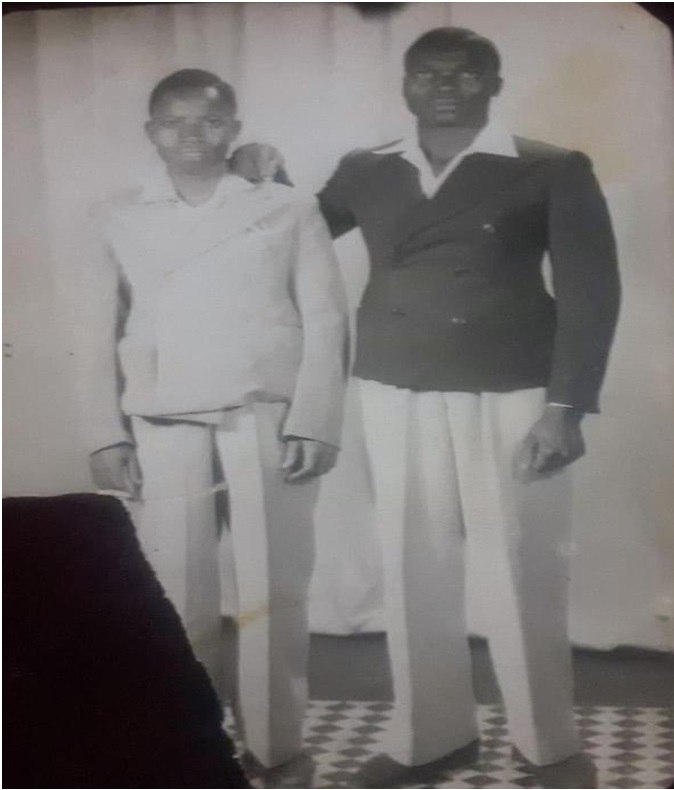
Figure 18: Nthangali Joseph Gibson Benthu Nthengwe (R) and his friend, Chalawira Mjumira, in South Africa:Joseph Gibson is the father and founder of the Benthu family. The man has left a legacy, no other person in his family can claim to have achieved. The title Benthu is now a dynasty, it runs through the bloodline of the Benthu clan. Born in 1914, Benthu departs from his village at Maluza to work in South Africa in 1939. At the time, Benthu is looking scruffy, walking on bare foot and in ragged clothing. On return from South Africa somewhere in 1941, he dons expensive wear, lights up a cigarette and wears a line up to his hair. He is the first man to bring home a bicycle that mesmerises his community. Photo: N. Msimuko/15th September 2021 (Archive)
In 1914, a baby boy named Nthangali is born in a family of five, four boys and five girls. Their father and mother are Mundalira Nthengwe and Yandula Chindere Mkandawire. Nthangali later names himself Joseph Gibson. In the later years, he assumes the name of Benthu, by which he becomes known throughout his life.
The first owner of the name Benthu, is killer of god Kalukumbiri of the Senga in Malambo territory. Benthu is the name of Mundalira’s brother. Mundalira’s brother dies in Malambo at Chizimba village, north-east Northern Rhodesia, presently Zambia, while the rest of the family migrate to Lupamazi to join their inlaw Thomas Mbale (Kalovya) that married their aunt Tiza Nthengwe.
Mundalira and five of the siblings are descendants of the Senga in Malambo. The parents are Chowo Kasumbukira Nthengwe and Njabanthu Khalapazuba. The couple dies at Chizimba village in Malambo in Chama District. The years of demise are unknown.
Nthangali, now Benthu, is born in suffocating poverty and illiteracy. In his community, males dress in a Chitewe of animal skin. The Chitewe is dressed from the waist, leaving the upper body bear. Another clothing is a Kamphatata, napkin shaped attire. Benthu denies using a chitewe in his childhood. But does not mention using a Kfamphatata
Females dress in a wrapper of Nyanda. Nyanda is made from the outer layer of a Chiyombo root. They cut the dig out from the ground. The outer layer is debarked and scrapped of the rough skin. Extracted membrane is pummelled with a flat stone to temper and widen it. Castel oil from castor bean (Mono) is applied to further soften pummelled tissue. Nyanda covers a woman’s body from the waist below in a shape of a skirt. Another piece of Nyanda is wrapped around the chest to conceal the breast area.
Washing Nyanda uses a tuber of a wild plant called Chamunkhwele. The tuber is rubbed against Nyanda to wash the wear. The tuber produces a white soapy substance that deterges stain of dirt from Nyanda, or any clothing. Rinsing is with water. Once dry, mono oil is reapplied to retain its soft texture.
Caked in red soils of Katondo, children under 10 play naked in the open. Male children are introduced to wild hunting before their age. Chitewe, Kamphatata and Nyanda are common dressing until in the late 1960s when cloth from cotton is widely available.
Communities drink unclean water from open well, swamp, stream, or river. Bathing is behind bush designated as Bafa for bathroom. Toileting is in open air under the cover of bush. Families are largely food insecure. Game meat and wild fruits supplement their diet. Mortality rate among children under five is acute, attributed to poor diet and extreme levels of illiteracy. In the late 1800s, until in the early 1900s, education is out of discussion for most households. In the end, Benthu and his people are destitute and glaringly vulnerable.
When Benthu is probably between seven and 15, he grows to hate the habit by village elders sending him for water to drink. Men seated under a tree, chewing fried maize obviously dries out body fluids. Being the youngest, Benthu is on constant call to serve elders water to drink. So, each time Benthu sees elders preparing a clay frying open oven (Dengele) on fire, he disappears on unwanted errands. Young Benthu does not also participate in hunting sprees, nor digging for rats in dry crop-free fields. Benthu is also not keen on setting traps to catch prey.
When Benthu reaches 25 of age, he is relieved to join the queue of men heading to work in the mines in South Africa. The journey requires meticulous preparation. Men weave a rucksack of straps made from a Chiyombo tree or animal skin. The rucksack is spacious enough to fit in a light small clay pot, a small gourd (supa) and wraps of dry mushroom and pumpkin leaf. A small pack of cooking flour is also part of the carry on. The grain of life, salt, is added on. Kafusa sticks for lighting fire are starched on the corner of the rucksack. The stick is light, soft, straw-like bush growth. It burns easily when dry. A hand made knife is recommended. A hard wooden walking stick is also required for hauling a rucksack on the shoulder. The clay pot is filled with a portion of salted Chimphonde (African salt butter). Chimphonde is prepared by pounding fried and salted groundnuts. Oil from the nut can keep Chimphonde for more than a year without getting stale, suitable on long journeys. The party can be eaten raw, or used as a tenderiser in dry food stuff of meat, fish, mushroom and vegetable.
Travellers to South Africa like Benthu prepare and carried the chimphonde and dry vegetables, a vital food ration throughout the journey. Preparation for the journey is a highly guarded secret undertaking. Only the wife, mother and father, are aware about it. They too stay religiously mute. Children are also kept in the dark.
Men on the trip do not say byes to kith and kin in fear of bad omen from incantation. Some close relatives and other villagers come to learn about their absence two to three weeks into the journey.
On the day men start off, only their wives are painfully aware. Journey makers usually set off before dawn. The clay pot travellers carry is for cooking meals on the way. Meals are a dish of hard porridge from maize flour, dry mushroom, or dry pumpkin leaves. A calabash is used for collecting and storing water which they use for cooking with, and drinking. A cooking stick is improvised from small branches of bush. Plates are plucked wide leaves. The knife is for cutting soft tissue, either of trees or dry meat.
Benthu’s maiden journey in 1939 is in the company of two headstrong men. Benthu’s elder brother, Jonas Kasumbukira, and a relative, Chikhawonga Guga Mzimba Nyirenda. When they make off in 1939, Benthu leaves behind his young family of Erness Nyirenda and baby Longolani. Jonas leaves behind his wife Jenala Nyirenda and three young sons. Chikhawonga separates from his wife Chipulura Nyirenda and young girls.
Jonas and Chikhawonga are already familiar with the long treacherous journey. The three men set off in the quiet of night heading south. Through thick bush, travellers follow animal tracks leading southwards. On clear still days, wind air and position of the sun, make for useful guide to cardinal directions. The trio of Benthu, Jonas and Chikhawonga make several stopovers either to rest, or feed on their packed meal from their rucksacks. On the way they pick on wild fruit from the bush as supplements.
Most critically, they pick dry dung of buffalo and Elephant for lighting fire on the way. Deep into the wild, camping is usually by the river side. Under a leafy tree, the three men gather around to prepare the meal, usually just before dusk. Wood is gathered to make a fire for cooking, or to warm the bodies. Fire is made from collected dung and Kafusa sticks to warm hand, body and feet. The three men take turns using the Ienskara' method to light a fire. Dung or fine scrapings are obtained by strong rubbing of two pieces of well- dried wood, which then alight due to heat caused by intense friction. Cooking begins when fire is ready. Dry mushroom or pumpkin leave cook before tenderising with chimphonde butter. Hard porridge is cooked separately.
After the meal, satisfied men wash it down by drinking water. The day is done and gone. Sleeping is on fresh leaves which they use as mat. Bodies lie under the stars in open air. The only protection is themselves and natures mercy. Fire is left to glow to scare away vicious animals.
On the next day, before dawn, they start off again on a fresh journey. They are now miles deep into the unknown. Camping and decamping are the journey’s life routine. In the jungle, the three men are only seconds away from death.
“We avoided people more than wild animals,” Benthu says of the journey. Not all days end well. Occasionally, they come face to face with poisonous snakes like green mamba. Often times, serpents would be up in the tree under which the three men are taking rest.
“My brother Jonas had an eye for spotting snakes. He springs up to gently alert, ‘there is a snake up in the tree’,” Benthu tells of the scare. “Snakes scare me. So, I run. But I did not know where. Around us, is all bush, nothing but bush,” Benthu recalls. His brother Jonas and Chikhawonga, take to killing the snake. “When done with the serpent, they shout for me to return. But I am still tensed up from fear,” a smiling Benthu narrates.
Not all days are dry and sunny to allow them make headway on their gruelling journey. On some days, skies open. Dark clouds unleash heavy torrents of rain that pour down on their bodies. Rains stall the three men from making further strides into the distance ahead. Water from rain is a relief from heat and thirst. Freshness from rain, signifies a fresh start into their journey.
The three file-walking surrounded by jungle sounds. The roar of a wild cut and rants of an elephant, shake the three men to the belly. Chirping and vocalising birds, rekindle hope. The pack of three carries on cutting through the southern parts of Northern Rhodesia green lush. With the load handheld on the heads, the men trudge and wade through swamp and flowing river. Weeks in counting, they reach the Zambezi River crossing at Chirundu and Luangwa village setups.
The rolling murky blue waters on the mighty Zambezi, daze and scare the 25-year-old. The Zambezi springs from Mwinilunga District of north-west Northern Rhodesia, close to borders with Angola and Congo. Luangwa and Zambezi meet at the confluence on the border with Southern Rhodesia at Chirundu and Luangwa towns respectively.
Luangwa is the tributary of the Zambezi River. The Luangwa rises in the Lilonda and Mafinga Hills in north-east Zambia, near the border with Tanzania and Malawi. The crossing is around the confluence of Zambezi and Luangwa Rivers. The meeting point is at the borders of Northern Rhodesia, Southern Rhodesia and Mozambique.
Zambezi flows east into the Indian ocean. Crossing is made possible because Zambezi is less forceful around the confluence. The three men are assisted to cross into Southern Rhodesia on a rickety kayak (floater). The Zambezi floater of the time is made from stitching together straw of reeds, bamboo and stick. The water transport is a flat open surface without walls.
Once on the other side of the Zambezi, Benthu, Jonas and Chikhawonga are sure of reaching their final destination, The Union of South Africa. The Zambezi crossing is half way the journey. Decamping, a river size of the Zambezi and crossing on the floater are the first for the father of one.
By now, their food ration is nearly depleted. Weighed down by physical and mental fatigue, the three camp for the umpteenth to take some rest again. They are now deep into Southern Rhodesia, Zimbabwe.
Benthu recollects another surprise episode somewhere in Rhodesia, “Chikhawonga was good at negotiating. He would leave us behind at our camp in the bush to venture into nearby villages. He returns with new supplies of food and water. I am not sure how he did it.” Fresh supplies are a lifeline to the three exhausted men for the days to come until they reach South Africa.
More than three months, covering 2200 kilometres on foot, the three men finally reach their dream land. Miners are housed in what they call hostels where the three are received. In the union of South Africa, a new life of struggle begins.
When Benthu steps into the new land for the first time, Adolf Hitler’s second word war has just broken out. Benthu has a vague recollection of Hitler’s threat to the world, ‘I will have breakfast in London. Lunch in South Africa’.
Back in Maluza village, the young man escapes the cycle of poverty. So, Hitler’s threat to overrun the world is not welcome news to Benthu’s ears. For youthful Benthu, the entire experience is a first: brutal and merciless jungle crossing; crossing the Zambezi on a rickety floater; and, now, life in a foreign land.
In the face of Hitler’s unwarranted threat, the three men separate to look for jobs. They link up with a network of relatives and compatriots from back home. After, each one looks for a job either in the mines, eating houses, or on the farms. Some try their luck in the homes of white owners, or eating places like restaurants. Employment opportunities are usually found in the mine and farms run by Boers.
Jobs are readily available to foreign labourers. Opportunities open up because native black South Africans boycott work demanding an end to apartheid. At the time, apartheid discriminates against blacks, disproportionately favouring the white minority. Under the infamous apartheid, pejorative slurs like Keffer and racial violence are a fact of life for non-whites. Blacks are denied the right to a dignified life.
Being a new arrival, Benthu has a mountain battle to climb. He does not speak any vernacular, nor the official Afrikaans language. So, aside facing a repressive white rule, Benthu needs to peak up the vernacular and official Afrikaans in the shortest time possible. Basic pleasantries are vital to learn in order to fit into the wider society.
Benthu is also an undocumented economic migrant. For him to find a job, he needs a ‘Pass’ to allow him navigate town and city. In a country where black people are overly policed, the piece of paper opens up opportunities and avoids daily inconveniences from police spot checks.
Miners and new arrivals are housed in what they call hostels where the three are received. In the hostels, Benthu learns how to use kitchen and laundry appliances. For the first time, he learns to turn on a water tap, use a toilet seat, turn on lights, use kitchen apploiances and such like these. He has to adjust to the new type of food, away from chimphonde, hard porridge and dry mushroom. Yet another first.
When he ventures into town for the first time, crossing a tarred road and cutting a bus ticket are challenging for the man from the village in Nyasaland. Even under escort, Benthu stands panic-stricken, not knowing what to do. What dazes Benthu the most, is the ubiquity of the people and skyscrapers.
When he first visits the shopping Centre, Benthu is lost in constant loud sounds of people, music and moving vehicles. Benthu develops ambition for soft jobs in the city. He avoids working in the mines. The fear is that mines collapse and trap workers underground. Sometimes trapped workers die several hundreds of metres below the surface. Dangers of working in the mines push Benthu to seek jobs in houses of white patrons, restaurants, or on farms.
Cooking is not for men in conservative Nyasaland, or Malawi of today. Against tradition, novice Benthu picks up a job of waiter at a restaurant in Johannesburg. It is a busy place which keeps Benthu on his feet, serving meals for breakfast, lunch and dinner. Benthu prefers to take the heat in the kitchen than working underground in predictably dangerous mines.
Working in the kitchen and dishing out meals is furless dangerous compared to the under-ground. In the kitchen, agile Benthu swiftly picks up a vital life skill, making spice flavoured sauce, stew and soup. Under the heat from the kitchen, Benthu is fit all day long and part of the night. Intense heat exhausts him and he has short nights of sleep. Heat, exhaustion and lack of sleep, do not deter him.
Settled on a job in the restaurant, Benthu begins to feel nostalgic. Overwhelmed by absence from family, he decides to write to his wife back home. The letter Benthu writes is instructive and calls for a response. The message opens with, “Odi AnyaNyirenda.” The salutation signifies a distance of absence. The introduction is humble. It also says, ‘I am still alive.’
Simply, that’s the gist of the message in his hand written letter. Anything else in between, says of the safe of arrival. Specifically, the letter inquires of how well the wife and family he left behind is doing, but he does not mention anything about his struggles in the new land. The end of the letter says, ‘Mukhale makola. Tizamukuwonana sonosono. ‘Stay well. We will soon meet again,’ signify many things. Loss, homesickness, love and a sense of urgency. More than that, the message intends to restore hope in the wife and family Benthu has left behind.
Benthu stamps and posts the letter. But the snail-mail takes months to reach his wife back at home. A reply takes equally long to reach the husband in South Africa. Erness does not read, nor write, so she engages the services of a villager to read and reply to the husband. Contrastingly, modern day job seekers travelling by road to South Africa, communicate to families via WhatsApp messaging throughout the journey and upon arrival.
In between the letter to his wife and a reply, Benthu’s lifestyle takes on a new face. He dons new clothes and lights up. Benthu learns to iron clothes and polish shoes. He is well kempt with a line-up to his haircut, fashionable in the new land. Improved dressing and the stylish looks, take him to a photo studio. The photos Benthu takes with his friends are safely kept with the thought to take them back to his wife in the village.
Several months on, a job offer appears on a Boer’s farm. Benthu attempts to secure the job, but he is found wanting in his education. The farm owner minces no words. “Gibson, I know you really want this job. But you can’t read, write, or speak English,” the Boer tells Benthu that the job is not suitable for him.
After the reality bewilders Benthu. He folds his hands and reluctantly walks away, feeling inferior and deeply aggrieved. After the reality blows Benthu away, he returns in the kitchen to continue serving meals to white patrons.
The experience deeply pains the Kasepuka na Kasungwana class dropout. Understandably, over ambitious Benthu is frustrated, because he lacks basic English language skills – read, write and count. Benthu Falls, But does not fail. The experience pushes him to rethink. Benthu picks up the pieces looking into the future.
About a year or more, the sojourner begins to muse about going back home to his family. Benthu purchases metal trunks to store ware of clothes and other valuable collections. Chindere’s son buys a bicycle on which to carry his cargo. He learns to ride a bicycle in South Africa. Journeying back home takes him more than three months. The landscape is an upslope towards the north. Benthu pushes his laden bicycle covering some distances. For the most, he hires labour from the local natives on the way to push him up.
When Benthu finally touches home, he is received without-pouring sighs of relief. Added to excitement, are purchases Benthu brings home. The once scruffy Benthu, now wears new looks in his new clothes and a fancy hairstyle. What strikes villagers the most, is the bicycle, a cranky two-wheeler. Benthu is the first man in the village and across communities to own a bicycle. These people depart the village on bare feet. Undocumented sojourners return from the land of plenty, donning expensive attire that include footwear. Benthu’s notable imports to the village are a mattress, warm beddings, a set of three-legged cast-iron pots, on top of the bicycle.
Benthu’s brother, Jonas Kasumbukira and their relative, Guga Mzimba, each retain back in the village. The year of retain is unknown. Now in the village, bagged anger and pain wail up in him. The single most burning issue is to educate his children, but Longolani is still too young to be put in school. Still, he recast his life values and priorities.
From this moment on, Benthu works hand and foot to prepare for Longolani when the son comes of age. In the meantime, Benthu develops a hard-line approach to everyone and anything to do with his dream. He runs and dominates inside and outside family affairs. So, in all subsequent travels to South Africa, and, later, the copper country, Zambia, top most on his mind is about girding up his family looking ahead.
The early signs of a man in serious distress from his troubled past, is a face-to-face encounter with Dokiso Tibakomole, his third child.
The conversation: “I remember, one day, my father asking me, why don’t you mould pots? I answered back, why did you stay long where you went? My father did not reply.”
Perhaps what tongue in cheek Dokiso does not read into her father’s questioning, is tension from his failure to get a job desired so much back in South Africa. he lacked English language skill. Benthu does not wish to see any child sit idle. His mother Yandura Chindere is potting clay pots at this moment of questioning. Dokiso is not in school on valid reasons. Benthu expects that Dokiso is, instead, acquiring a life skill from her expert grandmother. So, Benthu is not amused to see young Dokiso not keen on mastering her grandmother’s pottery skill.
When some of his children reach school going age, Benthu goes to foster them with his relatives.
The hardliner’s children often turn up to complain about cruelty in foster homes. Poor feeding, enslavement and inappropriate clothing like shoes, are some of their grievances.
Benthu is an instinct natural thinker.
Benthu: ‘Have you thought of why you are there?’
Child: ‘Yes father. I am there for school.’
Benthu: ‘Then put your heart and mind into books, not into how you're being treated.’
Benthu silences his whining children in this way. But he is inwardly conflicted between school and welfare.
Benthu, ‘my children felt like I didn’t love them. But if I had lowered my guard, they would be uneducated like me.’
On one occasion, Benthu drifts into Zambia, when his son, George, returns home on his school holiday. George recalls telling his mother that he no longer wished to return to where he was fostered. In turn, his mother, Erness, warned his son that when Benthu returns, she would be in hot waters. Erness pleaded with his son to return by all means. George could only oblige.
So, sons and daughters enjoy comfort today, not for their brilliance in school. The children kept looking back at their father’s words. Poor kids then push hard to escape a backlash from the old man.
Throughout his life, the man gambles to manage his resources and family by reading people’s minds to realise his dream. It is the only way he could realise his dream.
Home and away battles with Benthu are drawn in sand. He loses some, but wins many. When he is done with job seeking, he faces other challenges. Some of the fights he loses, only go to renew his energy and do not dampen him. He takes lessons and pride from other fights he wins. The first bout he loses is in South Africa when he is denied a job, but rises up again.
Later in life, he fights to force his children into school, or to bring them back in line. The hard reality explains the stringent handling of Longolani and his siblings. Benthu faces up home-grown battles with resolve and tenacity. In the village, the strong man fearlessly parlays away accusations of witchcraft and mendacious behaviour to protect his family.
Cut the old man a slack. He puts his life on the line, snaking through perilous jungle. He survives the hardships of working in a foreign land. He passionately persuades his children, ‘get to work hard in school. You will never be like me.’ He feeds and alleviates crushing family poverty.
When Benthu gloats to his tenth born Rodrick Chiliro, ‘son, I have achieved what I purposed in life,’ he means it with seated pride. Benthu’s gloating is also nuanced, ‘I have fought my fight to the end. Yours has just begun.’ All life ticks in flashes of events. At twelve noon on Thursday, 27th January 2001, Benthu’s clock of life ticks to a stop.
Benthu’s parting last-day thoughts play out bare. The man of steel and his two wives share one wish, that the children live in harmony. In his final days, Benthu is a lonely man at his homestead, especially during the late 1990s. All his contemporaries have passed on. He is left with his wives, Erness and Dyness. His daughter Dokiso, too, is around from her failed marriage.
By now, all his other children are in professional work away from the Village. You can tell a dying horse by its last kicks.
sound disk, Benthu tells of the same old stories about his family flaws and mishaps. At times, Benthu speaks to himself, without anyone around him. In reminisces, he stabs his right index finger in the air as though there is somebody in front of him. He is by now a senile octogenarian and his health is in terminal decline.
In 1997 and 1999, frail Benthu reals from two fatal blows. Alfred Chikomeni, the second child in Dyness, dies mysteriously in 1997. Benthu’s second wife, Dyness Kawoli Nyirongo, follows in 1999, or, as some traditionalists say rather poetically, lays her hand on the ground. She is 79 of age in the year of her passing. Tellingly, the departure of Dyness Kawoli marks the beginning of an end to the Benthu era. It is not long before a dark cloud fills the skies over Maluza village and across territories.
Until now, in what could be his final parting words, Benthu repeatedly says to his children, "pala anyinamwe wadangilako? Mumanyire nkhanila kuti ine nane nizamukhaliska yayi. Should your mother depart before me, know this, I too will not leave long.’ It is a blinds-pot, Benthu is unable to fathom.
Making these remarks, Benthu has already identified his final resting place. He says, “when my life is over, bury my body at Manquba.”
Manquba is a short walking distance from his present homestead. Now overgrown with bush of mango and wild trees, the place is where Benthu lives with his mother Yandura Chindere until she dies in 1955. Most of his children with Erness and Dyness are born at this designated Manquba for his burial.
On Thursday, 27th December 2001, a thunderous dark cloud melts down without any silver lining. Benthu is idly seated in his house. Without warning, a gale lips-off the roof of his home. Unable to pull on, Erness takes the dazed husband in her lap. She tries to resuscitate her long-life love from the shock. It is too little too late. Lung and voice of the Benthu family, shutdown. At about noon, Nthangali Joseph Gibson Benthu Nthengwe, breathes his last. Benthu dies lying on the laps of his Erness at 87 of age. The man of steel loses a battle for his life. Symbolically, dying on the laps and in the arms of your love, is a beautiful ending most couples wish for, but it is a rare occurrence.
64 years in marriage, Erness is left to process and grieve the unfathomable loss of his darling husband, Benthu
Not long after, the inevitable happens. Ailing Erness faces what all parents dread. She buries her own first-born son Longolani. Losing and burying your own child can be heartrending. On Monday, 2nd March 2009, Longolani Samwanga Tyson Nthengwe, answers God’s call
About eight years of Benthu’s passing, on Saturday, 3rd November 2009, Erness Chioni Nyirenda fails to outlive her grief. The strong lady, Erness, walks on a non-return journey. Erness joins her husband, Benthu, in eternity. The demise of Erness seals the end of the Benthu era. The Benthu family left behind, will remember the deceased parents long into memory.
The departed are buried with all their ills. To the fallen, none but good!
19. THE BLOODLINE
The Benthu Nthengwe Bloodline
Figure 19: Penjani Emmanuel Nthengwe: Born on Friday,11th April 1977, Penjani is the veritable holder of the Benthu title. The April Man is first son of Austin Longolani and Joyce Nqube Nzima. Longolani is the first male in Benthu and Erness, the founding couple. Longolani and Joyce, are, therefore, the first family of the Benthu Nthengwe clan. Penjani assumes the title of Benthu, following the passing of his father. The transfer of authority is in line with the patriarchal tradition that the clan adopts in Mzimba. The ceremony by the grandfather’s side on the day of interring Benthu, settles the matter over the title. When the Senga arrive in Mzimba from Malambo, they discard the matrimonial in favour of the patriarchal system. Photo: P. Nthengwe/18th September 2023
A tree resembles a patriarchal set-up in a family. The trunk represents mother and father in a family unit. A branch of a tree represents male children. Male children hold the root and retain the family bloodline. A leaf represents female children in a patriarchal family. A leaf dries up and drops away from the family tree.
Females marry away to form other family trees elsewhere. They do not hold the root, nor retain the heritage of the parent trunk. In a patriarchal set up, a male marries and brings the wife to his home. Out of which, male children retain the bloodline of the family.
In contrast, in a matrimonial civilisation, a man leaves his parents to his wife’s home. When the married man bears male children, they too leave their village to be married elsewhere. In a matrimony, a family does not branch into a family tree, leading to a flat genealogy. The trunk parent of the Benthu clan is Joseph Gibson Benthu and his two wives. Benthu marries Erness Chiwoni Nyirenda from Ntchalinda, and Dyness Kawoli Nyirongo of Kapela. All three are descendants of the Senga Ethnicity from Malambo, north-east Zambia. Benthu’s is a patriarchal tradition, so that Erness and Dyness leave their homes to join their husband in Maluza village.
The name Benthu is not a chieftaincy, but a title in the family of his clan. The name evolves into a title by circumstances. Benthu is punishment to the owner of the name for killing god Kalukumbiri of the Senga people. Benthu is Mundalira’s elder brother in Chowo and Jabanthu Khalapazuba. Nthangali Joseph Gibson, names himself Benthu after the name of Mundalira’s elder brother.
Benthu becomes a title after the new holder, Nthangali Joseph Gibson, earns recognition. Measured reasoning, appropriate social skills and informed communal interface, are Benthu’s life badge of honour. Clarity of thought about life, is another rare quality of the man.
Benthu’s achievements and successes further assert the name to become a distinguished title. Eighty-seven years in counting, self-titled Benthu dies in 2001. On the day Benthu is interred, elders perform a brief ritual for Benthu’s first grandson. The grandson under the spotlight is Longolani’s son, Emmanuel Penjani Nthengwe.
Hand on spear, Penjani stands by the head side of his grandfather’s grave. The ritual underscores that the young heir will be the next inline when his father falls. The firstborn male of Benthu, Longolani, meanwhile, accedes to the title. Within a week of Benthu’s demise, his son Longolani is formerly handed the title. The ceremony at which Longolani assumes the title is called Kusuka Mikondo, cleansing the spears. By the ceremony’s name, Longolani receives Benthu’s spears. The performance is a symbol that the authority is formerly conferred in him.
Longolani passes on in 2009. Successively, it is Penjani, the first son of Longolani, who assumes the Benthu title. Since Penjani leaves far away from the village, the heir does not formerly receive the spears, as is should be the norm. The spears are instead, left in the custody of Dokiso, sister to Penjani’s deceased father. With Longolani gone, Dokiso is the eldest daughter after her late brother. The spears are only handed to Dokiso to retain the authority in the village in which the crown belongs, and for safe keeping.
In hindsight, the founding father, Benthu, does not enjoy the same funfair accorded to his son. Being a patriarchal system, the title of Benthu can never be transferred to the younger brother of Longolani. That can only be so, if Longolani does not bear males. In that case, Benthu’s second son, Rodrick Chiliro, is next in line. The rest of the males fall at the end tail of the official titling. In a situation where Benthu does not father males, the title would be transferred to the first male in the second wife.
The patriarchal tradition openly discriminates against women. No daughter of Benthu, of Longolani, or of his male siblings, can inherit the title of Benthu. In theory, if Benthu did not father male children, or followed the matrimonial tradition, he would have died with the title. The title of Benthu would then have ceased to exist.
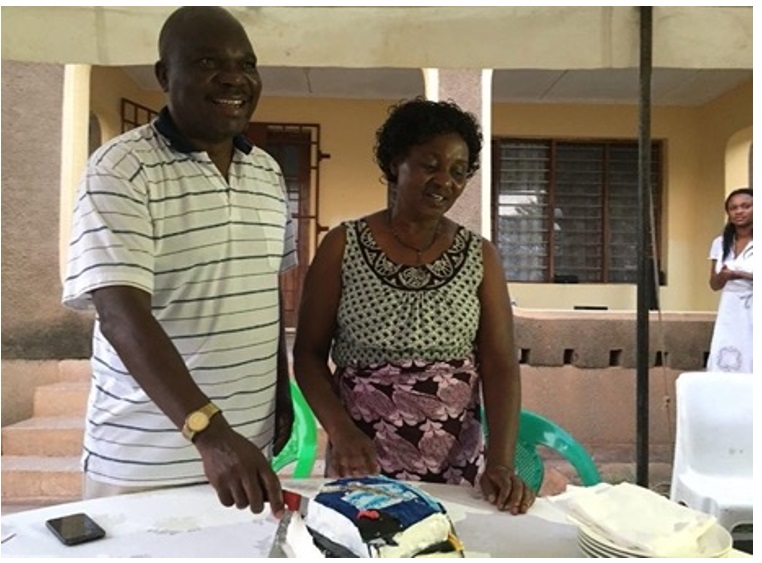
Figure 20: Dr Rodrick Chiliro Nthengwe and his wife, Ivy Kumwenda: In the event that Longolani bears no male children, his younger brother, Rodrick, would inherit the title of Benthu. Photo: D.B. Nthengwe/December 2013 (Archive
The Kasumbukira Nthengwe Bloodline
Father and founder of the Nthengwe clan is Chowo. Chowo is also the first known Kasumbukira. That is in Malambo of present Zambia, former Northern Rhodesia. Chowo and his wife, Njabanthu Khalapazuba, die in Malambo. They leave behind six children, one of whom, is Benthu, killer of god Kalukumbiri of the Senga people. The other sons are Mahuza, Kanyung’unyanga, Nthangali, Mundalila, and two daughters, Satumbwa and Tiza Tiwonelepo. Chowo is grandfather to Joseph Gibson, the new Benthu. The Zoa conflict forces the remaining Nthengwe clan and compatriots to flee towards the south of Chama in Northern Rhodesia and settle in the Lupamazi basin. This is west of what is now Mzimba.
Way back in Malambo of Zambia, the marriage tradition is matrimonial, so that nephews are heirs of the chieftaincy. Upon arrival in Lupamazi basin, they joined their aunt, the first Tiza Nthengwe that married Thomas Mbale (Kalovya). Here, they were probably influenced by the Ngoni culture, there is a noticeable departure to succession, from appointing nephews to following the bloodline.
In 1912, Kernel Brown is Commissioner of the British Overseas Military Administration (BOMA) at Lundazi of Northern Rhodesia. Commissioner Brown negotiates with the community to relocate from Lupamazi Basin. The community is asked to settle in the no man’s land towards the east. The area is within the boundary between Northern Rhodesia and Nyasaland. On the side of Nyasaland, sits Maluza village, a village that still exists to this day.
Under the Maluza chieftaincy, on assuming the patriarchal system, succession is now through the kinfolk. Now settled in Maluza of Mzimba, Mundalira Nthengwe of Chowo, marries Yandula Chindere Mkandawire, with whom they bear five children, four boys and one girl. The first born is named Jonas. Son Jonas becomes the second Kasumbukira. Inheriting Kasumbukira is husband to Jenala Nyirenda. Like Mundalira and Chindere, Jonas and Jenala bear five children, four boys and one girl. Because the first boy, Donald, dies in South Africa of old, the title Kasumbukira is passed down to his younger brother, Wilson Chindundu. Like Benthu, Kasumbukira is inherently a title, and not a thrown. Gradually, Kasumbukila graduates into a sub village within Maluza. The fourth and current sitting Kasumbukira is late Wilson Chindundu’s son, Donald Nthengwe. Donald takes the name after Chindundu’s late eldest brother, Donald.
In the early years of 2000, Longolani, the first-born child of Benthu and Erness, quests to break away from the main village of Maluza. He coins the breakaway, Kasumbukira-Benthu Village. Limited land, against the exponential population growth of the Nthengwe, pushes Longolani to initiate the process.
Rogue encroachers are another reason. Flying accusations of witchcraft in the greater Maluza, is yet another. The move by Longolani to seek separation from Maluza, provides insight into how the initial expansive Mudadada fragmented into subchiefs.
The Nthengwe in Maluza are effectively a part of Kalovya village just across the boundary into Zambia. Historically, the Nthengwe clan in Maluza territory hold no stake, nor can they sit on its chieftaincy. Theirs is Kalovya Chieftaincy just across in Zambia.
20. MPHUNGU YA BENTHU: The Centre of Authority Fails To Hold

Figure 21: George Benthu Nthengwe: In an impoverished setting, constructing a mphungu is a tedious undertaking, particularly its roof. Works demand wit and physical strength. Preparing and sourcing materials from the forest requires mastery and leadership, at which George is un equalled. He does so with roofs of granaries (Nthamba/Nkhokwe) and pigeon stay (Chikunda). Thatching corn roofs requires special skill too. George builds the first mphungu for the family where Benthu, his father, presides. George looks back in history with gratifying pride. George Benthu junior is the 11th son of Benthu and Erness. On completing his high school education at Dedza Secondary, George joins the public service at the Auditor General’s Office on the 9th of June 1981. The Office is in Lilongwe, the political capital of Malawi. After a solid 37 years of a professional work life, George retires as a gifted auditor on the 30th of November 2018. G.B. Nthengwe/13th September 2023
What stands out within Benthu’s homestead is a round thatched hut, they call mphungu. The mphungu is a centre that is inherently assigned a myriad of sanctioned roles. The corn-structure provides ready shade to the family throughout the year. At the start of each day, son, daughter, or grandchild, file in to pay their morning homage to the old man, Benthu. Such pleasantries mark the beginning of the day for everyone. The all-wood, roofed in thatch, mphungu provides a controlled atmosphere of intense listening to advice and counselling. Light moments and casual conversations also take place under this roof. Meals are sometimes taken and enjoyed under this hut.
Late night fire side stories are shared under this roof. The mphungu is also the reception Centre for visitors of all status, young and old, rich and poor. The shelter represents a functional court house under which disputes are settled, and cases are determined. All life gravitates around this shelter. The hut is simply a hinge that holds the village together. Effectively, the mphungu is the centre of authority from which family members receive directives and draw wisdom.
Do the family behind carry on Benthu’s legacy? Two decades after his demise, Benthu resurfaces from his resting place to evaluate the status quo. Back in the day, Benthu’s well forested immediate neighbours are Mwale and Xhakide homesteads to the immediate south. On the southwest is Kalovya of Wuzgani Thomson Nyirenda, on the Zambia side.
The road which marks the colonial border separates Benthu and Kalovya. Chambuzi Nyirenda village straddles between the northwest and northeast. Close by to the east is his brother Chanozga and sons of his other elder brother, Kasumbikila. Further east across Mtemera valley, is Maluza Mtonga village, where his closest associate Guga Mzimba and his wife Chipululura have a home. Another village of Lunda Lusale is situated to the south-east of Benthu’s homestead.
Smaller settlements are strown within the densely forested geographical ring. All of them share an area of 15 squire kilometres. The villages of Mwale, Xhakide, Kalovya, Chambuzi, Chanozga, Maluza and Lunda, lie 10 kilometres west of South Rukuru River.
Benthu discovers that his contemporaries in these villages are all gone. The marked-out area was once densely forested with wildlife of almost every animal and plant species. Benthu and the surrounding communities lived off this land, forest and wildlife.
A real-life occurrence happens to Benthu’s eleventh child at his tender age. George, whose name his father Benthu regularly mangles up to pronounce as Kajolo, or Joloji, is deeply troubled by a childhood encounter. Young George develops a strange obsession to always watch vehicles passing through a boundary road, about five - hundred metres west of Benthu’s homestead.
Vehicles rev to and from Lundazi and Chama on the Zambia side. “Out and alone, I started clearing bush that obscured the view to the road, with the excessive energy that I exuded. Half way through, I stopped, hoping to continue the following day,” George reports his wild dream. Early on the next day, Benthu summons son George to query him, “Why are you cutting down trees?” George tries to explain his childish reasoning, "I want to be seeing vehicles passing." George meets his father’s anger. Benthu sternly orders his son to immediately stop the thoughtless action. “It was deeply painful to see my dream shattered in this way.”
As a young lad, naïve George is unaware of the sources of people’s livelihood to the community, one of which being the forest. Unknown to George, his father is looking far into the future.
Today, George imagines that if regressive thinking prevailed at the time, villagers would not have trees for their livelihood. In his working adult life, the shuttered childhood dream comes back to haunt George in flashbacks. As an auditor, the job takes him through country sides. In his travels, he sees endless acres of land devoid of trees. Then George begins to appreciate that his father was farsighted. Even at that time, Benthu envisions the survival of people on nature’s providence and the need to protect land from all its detriments. Benthu is mindful of land rights and the preservation of the forest around his Maluza village.
“My father taught me a life lesson of generations,” George confesses. And yet, the present generation throws caution to wind about the future of their bloating families. Wanton illegal lumbering and logging for commercial use, has rendered the forest near extinct.
Hardly two decades after Benthus’ departure, is the destruction and disruption of the ecosystem remarkably palpable. One cannot grow land. Yet the population has increased against the same size of land that Benthu inherited at birth in 1914. The fertile arable land supports crop production. In his time, Benthu produced corn in abundance, groundnuts, beans and millet. The arable land also supports cowpeas, jugo beans(zgama), kamkaya, pumpkin, gourd(maswela) and cassava, no chemicals were required to grow all these crops.
The virgin forest retained a variety of wild fruits that people and wild animals fed on regularly, during and after the rain season. Looking back, the forest was replete with edibles of Kabeza, Masonjolo, Mahoto, Mbula, Futu, and a variety of others. Not anymore. Nature no longer provides for the community. Delicacies like caterpillar, essential herbs and wild fruits have disappeared (caterpillars have resurfaced in 2023, but not at the same scale as previously).
Bearing testimony to the wanton deforestation, is one of Benthu’s grandsons, Webster Nthengwe. Webster is the third child of Alfred Chikomeni Nthengwe and Neggie Lusale. Chikomeni is Benthu’s second child in his second wife, Dyness. Webster makes a maiden journey to his village in July of 2023, counting fourteen years of absence. “I was about to cry to see what was once a thick forest plundered in this way,” Webster recollects. The troubled son turns to his mother, Neggie Lusale, “Where are fruits like Futu of the season?” More than a decade of self-exile, the primary school teacher resurfaces at home in the month of July when most wild fruit should be in season. A shocking and saddening response from his mother, Neggie, says, “Mwana wane! Makuni gha futu kuno ghalikumala?” My son, Futu bearing trees are all gone.”
The jaw dropping reality prompts Webster to strongly deplore reckless logging. He blasts unregulated burning of wood for commercial charcoal. He warns that if nothing is done, Maluza risks to turn into a land devoid of precious trees and animals. A father himself, Webster makes a Clarian call. ‘Regreen and rewild to regain biodiversity that connects people with nature. Preserve and protect the standing forest.’
Sounding a warning horn, and not tackling the thread head-on, amounts to blowing hot air. Whether call is by George, Webster or anyone else, the truth is out there. Systemic failure of leadership at village level, has left the country bristle looking grey. Benthu’s departure from Maluza, has the canopy of green lush no longer live up to its adoration.
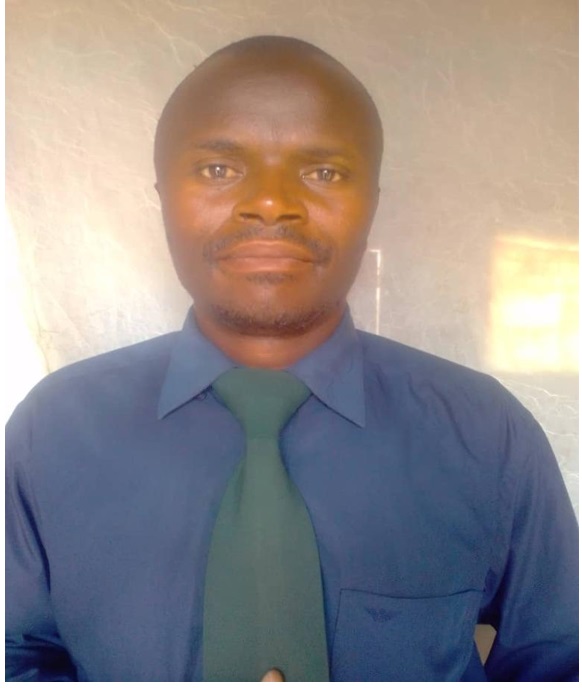
Figure 22: Webster Nthengwe: Self-exiled Webster is third child of Alfred Joseph Chikomeni Benthu Nthengwe and Neggie Lusale. Alfred is second child in Benthu’s second wife. In July of 2023, Webster decides to end his exile life. He travels to visit his village after 14 years of absence from home. The Kasungu based is shocked to find that the forest is plundered and wild fruits are no more. A father-cum-teacher calls for immediate action to preserve trees that are still standing and replant open spaces. Benthu’s vocal grandson strongly condemns loggers and charcoal makers. He believes the practices lead to wanton deforestation. The young man and likeminded green campaigners need to do more than just TALK. The stance to sound a warning horn, and not tackling the threat head on, amounts to nothing. Think Maluza. Plant trees. Make Maluza green again. Photo: W. Nthengwe/02nd October 2023
Benthu’s phantom staggers out of his grave. Dusts off himself. He zips through the village he left in 2001 to appraise himself of the change. After wandering around, Benthu is not surprised with the population boom. But some aspects of the changes in the village shock him.
Parts of the land have been parcelled out by some unscrupulous family members. To his further shock, Benthu notices encroachers working his land unchecked. Irregular use of land, has left the once green area, empty of trees. Wild game has been poached and driven further away. Even armies of monkey can no longer be seen around. Pollinating bees and other vital insects, are in decline.
Benthu stands in the middle of the village probably looking for his mphungu, once the centre of authority.
“Dokiso, chalo mwachita nacho uli? Dokiso, what of the land and forest?”
Dokiso attempts to expose encroaching rogue elements and family member’s greed to monetise everything, not to mention land. But she is disrupted.
“Adumbu bako wali nkhu? Where are your brothers?”
“Adada, alongosi kuno bakwizako apo na apo. Father, my brothers rarely visit the village
The question calls out his surviving sons to fill the void that Benthu left behind. His son George recalls Benthu cautiously asking him to stop work in the city. The father holds unbending faith in George to protect family land and property. Benthu argues, George is plucky and head strong to lead.
Confident Benthu does not doubt that plucky son can face up to village hardship and it’s toxic environment. “I am not sure how correct that was.” Doubtful George remarks. Understandably, George and his all-male siblings are trapped in amenities of city life. With most potential elderlies either away in town, or deceased, the village is crying out for leadership.
But before Dokiso could finish, the phantom man blares out again, “Mphungu yane yili nkhu? Where is my Mphungu?” Dokiso replies, “Mphungu yinu bali kuyika pa Watisi apu. They moved your mphungu to WhatsApp.” “Ni nkhuni uko? Where is that?” he asks, this time sternly. “Eh…” and in a split second, Dokiso looks around to find Benthu is gone.
Dokiso wakes up from her sleep in-sweat. She is overwhelmed by fear from the hallucinating about her father’s ghostly appearances. “Adada bangwiza. Nangubawona. My father was here, I saw him”, Dokiso whispers to herself in between trembling and short breaths. Dokiso imagines that her father has returned to his resting place a very depressed ghost of authority. Certainly, he must be. The command centre of authority, mphungu, no longer holds.
Virtual Mphungu Ya Benthu
Twenty (20) years after Benthu’s demise, an attempt is made to revive Mphungu ya Benthu on virtual text message and voice digital platform called WhatsApp. The virtual mphungu ya Benthu is established in March 2021. The platform has members of the Benthu family in the upwards of 40 participants. The majority are grandchildren.
When Benthu passes away in 2001, he is survived by nine children, 73 grandchildren and several great grandchildren. There is a digital divide. Some among the WhatsApp generation of grandchildren are not on the platform; others do not own a phone.
All of his surviving children are in Malawi. Some of his grandchildren are elsewhere within Malawi, in Zambia and South Africa. Others can be found in Namibia, Uganda and Europe. In furtherance of Benthu’s values, the WhatsApp group seeks to connect every one of Benthu’s family member.
The purpose is to unite everyone in the Benthu bloodline and his extended linage. The WhatsApp grouping also wishes to provide moral support and solidarity to each one of us when and where needed. Group members desire to celebrate or mourn together.
It is a substitute out of nostalgia that may not have the same effect, but one thing is true, it connects and unites Benthu’s family members.
The hypothetical question is, what if all digital platforms did not exist? How else would the clan rebuild another mphungu ya Benthu? The only sure alternative is to go and rebuild non-virtual mphungu ya Benthu back in the village.
21. THE LEGACY OF BENTHU
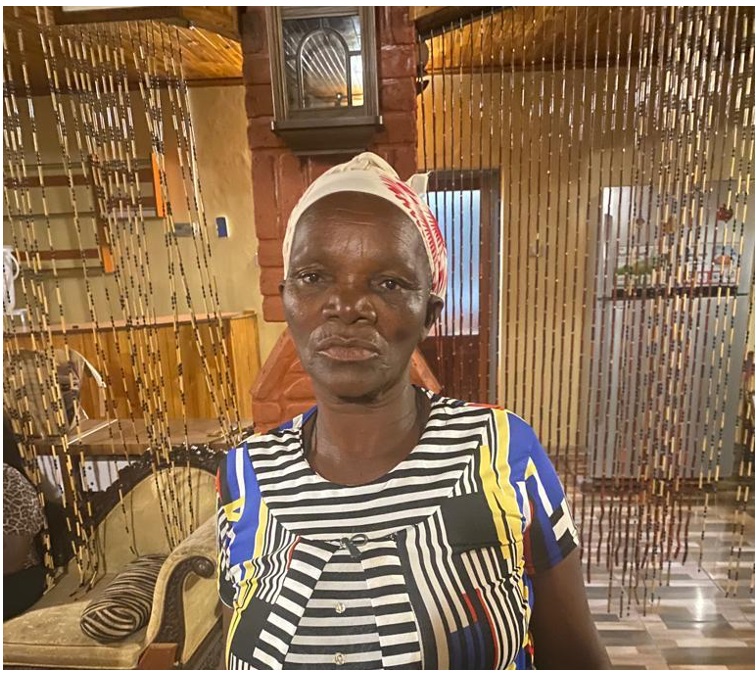
Figure 23: Norit Masiya Nthengwe: Norit comes out a person of a few words. She is the fourth and last child of Benthu’s second wife, Dyness. Born in 1955, she enters into marriage with Haswell Tindi in 1970. The couple is blessed with seven children, five girls and two boys. Sadly, in 2014, her husband, Haswell, dies after 44 years in marriage. Having lost three of her siblings, Norit is the only child left in Dyness. Widow Norit lives on at Chibwana Tindi, the village of her marriage in Bulala of Mzimba. Photo: M. Chavinda/13th July 2023
A turning point in Benthu’s life is after he travels on foot to the then Union of South Africa. the year is 1939. Crushing poverty and blinding illiteracy drive Benthu to venture out. It is in this foreign land where the narrative to the legacy is born. The legacy is captured in the efforts he makes around building and protecting his family.
Poignantly, Benthu’s efforts are met with tides of obstacles and tribulations. For the most, the charisma with which Benthu deals with obstacles further define his life. When he takes a deep dive into the world of unknown, his sole purpose is to alleviate the crushing poverty back in the village. In his search for a job to better his life, he meets with the first obstacle. Benthu is found wanting in education. The experience marks a turning point in his life.
Benthu is a father of one, and hardly 25 years of age, when he first ventures into the Union of South Africa. In that year, his first child, Longolani, is hardly out of the woods of birth. It is between 1939 and 1943, when ambitious Benthu is denied a job on a farm in South Africa. Benthu lacks English language skills. He is unable to read, write or count in English. The rejection sends Benthu to recast his values and priorities.
In an attempt to make up, Benthu now firmly prioritises the values of education which turns into his legacy project. The sobered-up man first places his brother’s son in school, unaware of other holdups that lie ahead. Intuitive Benthu sends Menard at Mzambazi Catholic Primary. Menard is son to Benthu’s elder brother, Jonas Kasumbukila.
On one still day, mother to Menard calls Benthu out. Dare-devil Jenala Nyirenda walks up to him. “If my son dies where you are sending him, you will dry and eat his meat,” Menard’s mother cautions bitterly. A seething Benthu retorts sharply: “Do you dry and eat the meat of those who die in this Village? If so, then you will dry the body of your son and eat its meat.” Jenala is left with a dry mouth. Tongue-tied.
Benthu has developed a kind of enigma that is difficult to discern or perceive. What Villagers don’t understand is that Benthu has eyes squarely set on educating every child. Behind this resolve, is the rude awakening back in South Africa. He is now unshakably resolute on sacrificing anyone for education, whatever the cost.
Some happenings are premonition to future omens. Not long after the rebuke from Jenala, Benthu peddles to Mzambazi apparently to visit Menard at school. Incidentally, Benthu arrives to news that Menard is suspended. The Catholic white fathers (Abambo) tell Benthu that Menard is mischievous. A damning report accuses the boy that he is suggestively flirting with school girls.
Surprised but bold, Benthu challenges the school authorities: “Father…, in your mind, does this boy look to you that he has developed lust for girls? If your mind says so, undress him… See if this boy is mature enough to bed girls.” With that pubic lecture, the school authorities hang their heads in shame. Benthu goes on to lash out at the fathers, “My boy is being used as a pimp to lure girls for some teachers and older school boys.” Benthu pauses in wait, and goes on, “What do you say to the information that I have gathered?”
Benthu gets no reply, but revs on, “These randy minds use the boy to run their dirty errands.” Taken aback by the serious accusations, wordless white Fathers apologise to Benthu without much ado. The matter is resolved in Benthu’s favour, hence with. Menard is not found guilty. The suspended boy is re-admitted in school. However, Menard soon pulls out and does not go far with his education. It is difficult to change engrained attitudes. Later as a polygamist, Menard does not even attempt to educate his own children.
So, it turns out that Menard is neither guilty, nor innocent either. Words are like seeds. They grow in spaces where they land. The nasty and satirical exchange of words between Menard’s mother and Benthu stick indelibly. The encounter becomes a life lesson that keeps playing throughout Benthu’s life. It is a warning for his immediate family members.
When his first son, Longolani, reaches school going age, Benthu fosters him at Ntchalinda Village just across South Rukuru River, to the east. The foster Village is Benthu’s parent in-law... Ntchalinda is where Benthu marries his first wife, Erness Nyirenda. Compared to Maluza, Echilumbeni Primary School Longoloni attends, is a shorter walking distance from Ntchalinda,
The period is in the late 1940s. But the decision to foster Longolani away does not sit well with Queen mother Yandula Chindere. Chindere is emotionally attached to her first progeny. When Longolani’s grandmother later learns that the grandchild has been sent away behind her back, it becomes a source of Chindere’s depression. Not long after, Queen mother Chindere dies in 1955.
One other ghastly day, Benthu takes a ride when he deviates to visit his son Longolani at Ntchalinda. When Benthu enquires of his son, he is told that Longolani is grazing sheep. Outraged, Benthu demands: “What about school? Longolani is supposed to be in class at this hour of day…” The conversation ends there. Benthu goes to fetch his son. He bundles him up on his bicycle. Son-in-law dashes off in fury.
Somehow, there is a silver lining in the dark clouds. Despite the disgraceful incident, Benthu prepares to foster Longolani to son of Yandula Chindere’s sister. The foster family is Adamson Gulupa Mkandawire, at Mzambazi Catholic School. Longolani excels at Mzambazi into a teaching profession.
A leaf does not fall far from its tree
Culture and parental influence play a huge part in shaping a child’s conduct and character. One can draw parallels between Benthu and his firstborn Longolani. Father works hard to educate son. In turn, son helps siblings with their education. Father is a polygamist, and so is son in his later life. Father enjoys good brew, so does son and others in the family.
As it is, the name Longolani translates as ‘point, or show, or lead. Good intensions can sometimes pave the way to misfortune. When Longolani changes jobs in controversial circumstances, the family set up changes too, but not the dream. With Longolani gone, Benthu’s dream is shattering before his eyes. The five children he supports with the education return to their father in the Village. The idea that you can educate one child to educate others, is a fallacy. The idea is ominously fading in the face of Benthu.
Benthu now stands in a dilemma against the call of his life to educate every child. The sudden departure of his son Longolani is a cause for concern and consternation for the Benthu family.
With everyone back in the village, responsibility falls squarely on Benthu to do the heavy lifting of educating his children alone. But unshaken Benthu develops an epiphany to carry on. He does not relent. In response, Benthu uses his intuition and family links to foster some of his children to carry on with their education.
As backup to adequately meet the needs of all under his care, Benthu doubles down the back-breaking work of tilling the land. Armoured with unbending resolve, Benthu hustles through to realise a dream he hatches in South Africa.
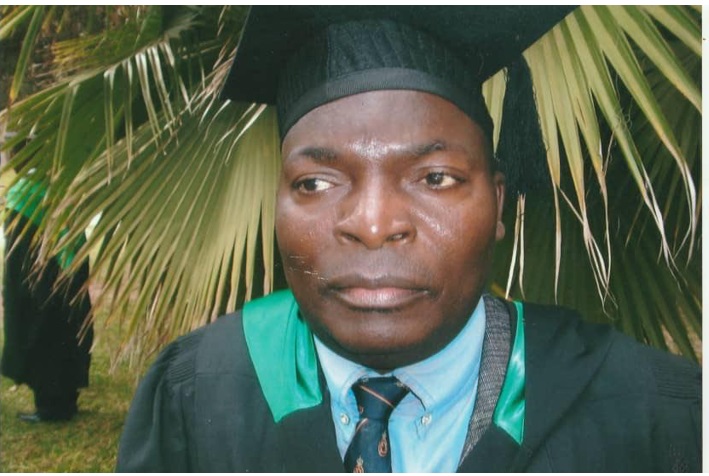
Figure 24: Visoul Kamphamba Chindere Nthengwe: Spirited Kamphamba is born in 1962 to Benthu and Erness. He is a twin with Omi. They are the 13th and 14th children in the family. Being a twin, his family handles Kamphamba with utmost sensitivity, tinged with empathy. Kamphamba takes after his father in his habits. The son is not ravenous for food. Kamphamba is peaky about what to take, even if its sizzling meat. A mix of beans and nuts (Mndavwa), is his childhood favourite. Primary education is at Echilumbeni and Mbalachanda model. Driven by destiny, Kamphamba and his nephew David, miraculously get selected to Mzimba Secondary in 1983, through 1987. Left hander by misfortune, Kamphamba excels to Domasi College to pursue studies in teaching in 1998. In 2013, Kamphamba obtains a bachelor’s degree in social sciences at Mzuzu University. A genius at mathematics, Kamphamba continues to teach in private schools, mentoring students aspiring to enter tertiary education. The all-cheerful man retires from the government in 2017. A soccer fun, Kamphamba roars for Nyasa Bullets, formally Bata Bullets. UK’s Manchester United, pulsates his heart. Outside work and football, the man is a political activist, fighting for social justice and democracy. Photo: V.K. Nthengwe/13th September 2023
Teaching the teacher
One scorching October morning, another testing school incident plays out unannounced. The 1980s’ Malawi has not banned corporal punishment in schools. Kamphamba and his nephew, David, report slightly late for their classes at Echilumbeni. The year is 1982, and the two are in their last primary grade (Standard 8). Having endured some 15 kilometres to and from the school. The teacher on duty that morning is fearlessly rough.
“Those who arrived late this morning come in front of the class,” the teacher booms. Late comers troop forward as instructed. Clasping a wooden cane in hand, the teacher angrily orders the guilty-looking pupils to approach him one by one. With a fallowed-face, he strikes three strokes in the palm of each late comer. Kamphamba and David also take their turn. Caning is piercingly painful.
On return home, David reports the whipping to his grandfather, Benthu. “What?” Benthu enquires in disbelief. “Na Chimphamba wuwo?... And even Kamphampha too?” When he is told in the affirmative, Benthu froths at his mouth, infuriated.
The next day, as uncle and nephew take lessons, Benthu arrives at school on his Humber bicycle. Wearing a grim face, Benthu summons the school head to explain the actions of his teaching staff. Seeing red, Muhana sends for the suspected teacher for an emergency meeting.
“Did you whip pupils for coming late yesterday”? Head Muhana enquires. “Yes, I did,” admits the teacher. “How do you whip a frail Kamphamba? Benthu accosts the staff member angrily. “Don’t you see that Kamphamba is already dead? The boy uses only one hand. And that is the hand you want to kill?”
At that, the headteacher realises that the matter is not a small one. He cautiously interjects to apologise to Benthu. Mhana promises the incident will never ever happen again. “I will have word with my stuff in private,” Muhana succumbs. It is the last Kamphamba is ever touched or punished for anything.
Malawi bans the use of corporal punishment in 1994. The ban comes after the country switches to democratic rule in the same year. The new law is, however, not supported by the school authorities across the country. Teachers attribute increased indiscipline in school to the ban. They also contend that the ban contributes to constant decrease in the student pass rate at primary and secondary levels.
‘Garbage in, garbage out,’ proponents of corporal punishment argue. However, the argument does not stand up in a constitutional democracy.
Benthu’s battles do not end with the school authorities. Back in the village, Benthu fights home grown bouts born out of malice and accusations of witchcraft. Benthu bears the brunt of Village scorn and ridicule for his unpopular decisions.
At his lone homestead (chilindo), some Villagers accuse Benthu of being a sorcerer – fwiti. Unable to match his wits and character of hard-work, some accuse him of using ghosts of dead people to produce bumper yield. Callous minds even attempt to eliminate Benthu by contaminating his drink. He survives the attempt at his life. But surfers’ chronic abdominal disorders throughout. Even with this lifetime ordeal, he does not revert to the Sangoma.
That is one thing that sets Benthu apart from the rest of the villagers. Some blinded people in the village take to Sangoma houses to treat diseases, or to pinpoint the source of a misfortune. Benthu sends members of his family to a modern clinic to seek medical help when they are taken ill. Benthu, meanwhile, does not flinch in the face of village hostility. The man of steel nerves does not always turn another cheek to aggressors. There are times when he responds to accusations unsparingly. When Benthu wags his finger at you, run for dear life.
Anyone who crosses the redline meets his wrath including his own children. He responds to aggressors with grit - resolve and strength of character. Even more, Benthu despises mendacious people, laziness and cheap talk. He hates mediocrity
A firm in people’s licence to opinion, Benthu is, at any other time, a unifying voice. When there are misunderstandings, he brings people together through dialogue. Families rocked by in-fighting and are seeking to reconcile, run to Benthu for his wisdom.
Benthu attempts to arbitrate fairly and impartially. Such is the life of Benthu in a community of riddles.
Despite years of battling, hustling and jostling, Benthu’s heart of giving is undaunted. Even though he lives in a lone homestead (chilindo), Benthu embraces the philosophy of giving. With that giving heart, he is unsparing of those who come to him for help. Surplus grain goes to help hunger-stricken families. Benthu generously provides for the frail and destitute gratis, when they approach him.
One weekend, Benthu displays an act of empathy towards one needy school boy. A telling encounter of a lasting lesson, is to his grandchild, David. Kamphamba and David are attending their last primary grade, Standard 8, a self-boarding at Mbalachanda model.
Joining uncle and nephew is an equally worse off village boy by the name Zebron Lusale. From time to time, Zebron does not contribute to the monthly school food ration. This bothers David so much that he sheepishly protests to Benthu, his grandfather.
In a very simple, but humbling response, grandfather says, “Imwe a Devi (David)? Munyinu mulyenge naye. Wali nga ndimwe... [David? Eat with your friend. He too, is like you].”
The paradox to the protest is that, David is cared for, not by his father. So is Zebron in the home he lives. An old dog does not scratch ground for no cause. Benthu pursues a hard-line approach for well-considered reasons. Sweat from hard work, combined with a good rapport, pay out huge. Benthu excels in the education of his children.
The power to read into the future is prophetic (masomphenya). His thoughts are a foreteller of what is to happen in reality. Almost all of his children are educated and in professional work. Some are retired and settled away from the Village. Benthu explains the other reason for giving his children an education. In his foresight, the hardliner prophesises that his children cannot build and live together in one Village. He reads into his children’s conduct as independent individuals. Suffice to say, Benthu’s children live in relative comfort.
In this context, Benthu is extraordinary and incomparable among his contemporaries. Years of straggling to shake off poverty and illiteracy, make Benthu stand with his head high. Never give up hope and dream, someday, the door will open. The leap Benthu makes into the unknown deep blue sea, nets him some fish, but not the whale he was after in South Africa.
A celebrated defender of the children’s right to education, the man is the embodiment of the Benthu philosophy: take full control of your life affairs, if you are to succeed. Shun detractors and foes, but remain focused on your goal. Depend on each other to achieve individual or collective success. Be a mentor of others. One must provide, protect and value family. Be generous too.
Families draw lessons from the man as a counsellor and a teacher, or a mwarimu in Swahili. Benthu is skilled at making friends with the owner of the boat in the dry season, so that he can easily cross the flooding river in the rainy season.
The Wiseman advises to never break wind in public. People will remember, not your good works, but the pollute you leave behind. For a man of this pedigree, and enduring history, no volume of words can capture the full legacy of Benthu. In part, Benthu’s way of life is the legacy family members take with them, presumably. The family forever remembers him as such. Benthu lives on!
22. BINA KALOVYA (THE KALOVYA CHIEFTAINCY-ZAMBIA)
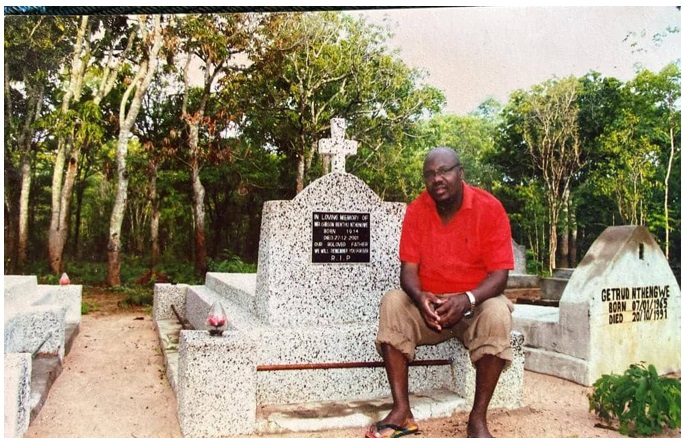
Figure 25: Benthu’s tombstone: The topside of benthu’s tombstone is inscribed with the words Bina Kalovya. Simply, the nthengwe are the Kalovya. Seated on the Benthu’s tombstone, is one of the Benthu’s many grandchildren, David Benthu Nthengwe (Nyirenda)Photo: D.B. Nthengwe/December 2013 (Archive)
Outside the memorial, Benthu’s tombstone bears another engraving, ‘Bina Kalovya’. The words translate as, ‘The Kalovya’. On the eve of unveiling Benthu’s tombstone, his son Longolani inscribes the words on wet cement, ‘Bina Kalovya.’ It is a veiled statement of intent.
Longolani’s words forecast the succession of the Kalovya chieftaincy to the rightful heirs, the Nthengwe clan. But, many decades on, the historical link to the Nthengwe is mired in controversy.
Chowo Nthengwe and Njabanthu Khalapazuba bare six children; Benthu (killer of bird kalukumbiri), Chimusewu, Kanyung’unyanga, Mahuza, Satumbwa and Mundalira.
Tiza Tiwonelepo Nthengwe, the sister to Chowo Nthengwe, marries Thomas Mgufu Mbale. They bear four children, two boys and two girls; Nthayo, Mateyo, Zakaria, Rhoda.
Kanyungunyanga marries the daughter to Mgufu Mbale, Nthayo Mbale, and they bear one child whom they name Margret Nthengwe.
In the interim, Thomas is appointed first care taker (Mulinda Musumba) of Kalovya Headmanship. Tiza Tiwonelepo Nthengwe becomes a widow. Thomas Mbale dies in 1915. She later befriends Chimsewu Nyirenda, the son to Headman Maluza. They bear one male child, who they name Wuzgani Thomas Nyirenda.
Death strikes in the Chowo and Khalapazuba family. Thangali Kanyung’unyanga dies. He leaves behind a wife, Nthayo Mbale and one child, Margret. Kanyung’unyanga is third male child after Chimsewu and Benthu in Chowo and Njabanthu family. He marries his cousin Nthayo. His younger brother, Mundalira, inherits Nthayo Mbale, so that Mundalira has two wives. His first wife is Yandula Chindere Mkandawire. Nthayo Mbale and Thomas Mgufu Mbale are direct relatives (daughter and father). Mundalira and Nthayo bear four children; Jairos, Samson, Pyayira and Chetani (Gindiloni). All are boys. One girl (for Nthayo) is from Kanyungunyanga.
When Kalovya Mbale passes on, Mhlanga temporarily inherits the Headmanship, but abdicates. He too is a son in-law in the Mbale clan. When the throne falls vacant again, elder brother to Mundalira, Mahuza, requests Yandula Chindere Mkandawire to submit one of her sons to take over the Kalovya throne.
Mahuza is the fourth child, and Mundalira is lastborn male of Chowo and Njabanthu Khalapazuba. The Queen Mother refuses to name any of her sons (Kasumbukila and Joseph Gibson) to take up the throne. Yandula Chindere, instead, proposes a nephew to Chowo and Njabantu but uncle to Samson and Pyayira, Thomas Wuzgani Nyirenda last born son to Tiza to be the Kalovya. Wuzgani is a nephew to the Nthengwe.
At that time, the matrimonial practice of passing down authority to nephews is firmly respected. That Yandula Chindere is consulted to nominate the next crown, says of her authority in the communities around. She is a recognised de facto Queen, being the first wife to Mundalira. Kalovyaship is upon the children of Nthayo since Nthayo is the firstborn child of Tiza and Thomas Mbale.
This history is the reason why the Nthengwe are referred to as Bina Kalovya (The Kalovya). The Nthengwe can also seat on the throne without any one objecting because they are the grand children of Kalovya.
Initially, Maluza and Kalovya villages share one territory, same culture, same language and same traditional values. What separates them is the colonial boundary that runs from Chama to Lundazi of Zambia. Kalovya is on the Zambia side. Maluzas are across the border on the Malawi side, east of Kalovya.
The Nthengwe have always been in Kalovya land with Thomas Mbale since the first migration from the Bemba land to Chizimba area in Chama territory, Northern Rhodesia, now Zambia. Initially the Nthengwe are called the Nkhata, but later change their surname to Nthengwe after the abomination of killing their god Kalukumbiri. The second internal migration is when they flee the Zoa war from Chizimba to southwards of Chama District to the jungle of Lupamazi basin. Lupamazi is a perennial river that runs from the North-eastern part of Zambia through Malambo territory towards the west.
The war draws along the Ngoni brothers; Mpezeni who settles in the eastern Province of Zambia, Mbelwa and Mpherembe settle in the south of Northern Malawi. In 1912, Lundazi is administered by one Kernel Brown under the British Overseas Military Administration (BOMA). Brown and Kalovya reach agreement for the people to relocate from Lupamazi basin upwards, in the eastern direction, within Lundazi territory. The new settlement is in the no man’s land between Northern Rhodesia, now Zambia and Nyasaland, now Malawi. Lundazi is a border district in the eastern Province of Northern Rhodesia and Mzimba of Nyasaland. The relocation of the Kalovya People is to allow the creation of a Game Park for animals in the Lupamazi basin.
After Zambia gains independence in 1964, one of the factions of the Nthengwe (children of Nthayo and family of Wuzgani Nyirenda) migrate back towards the Lupamazi river. The other faction, the children of Mundalira Nthengwe and Yandura Chindere, remain in the no man’s land, under Maluza Village in Malawi. To date, the Chindere family remains at Maluza village
Donning a cream white bangle of ivory, Wuzgani Thomas Nyirenda passes on in the late 1990s. The throne then falls to Pyayira Chiyunga Nthengwe. Chiyunga is third male child of Mundalira Nthengwe and his wife Nthanyo Mbale.
The official installation of Chiyunga to the crown stalls for several years for unexplained reason. Chiyunga dies. The Kalovya headmanship is transferred back to the Mbale as care taker Group Headman (another Mulinda Musumba). Mbale is temporarily installed because potential heirs are either too young, reticent, or away from the village. Mgufu Mbale, grandson of Thomas Mbale and Tiza Tiwonelepo Nthengwe, take on the seat of Kalovya. Mgufu later transfers the seat to Chiyunga’s assistant as caretaker, Tyson Phiri.
In fact, Phiri is from Gomani Village of Zambia. He is an out-layer of the Kalovya family tree. Phiri is also not in the family trees of the Mbale and the Nthengwe.
Wrangling over the Chieftaincy crop up under the reign of outcast Phiri. Phiri is deposed from the seat of Kalovya. Ntchawaka Mbale son of Mgufu is, instead, installed. Wranglings rage on and deposed Phiri is reinstated to the throne. In 2023, further wrangling persists to simmer. The Chieftaincy is again up for grabs. Now the Mbale and the Nyirenda demand that the thrown be transferred back to the Nthengwe, where they believe it belongs.
Behind the push to right the wrong, is William Pyayira Gonam’bawa’s son, Felix Ntchito Nthengwe. Pyayira comes from the second family in Mundalira Nthengwe and Nthayo Mbale. There are a number of potential heirs, Felix is one of them. But the reality on the ground dictates who the next heir will be.
A Mulinda Musumba is appointed for various reasons. One of them is that the potential heirs are too young, or have died before their time. The other is that some are too scared of the accompanying witchcraft to the throne. Some abdicate the chair by deliberate choice. Some qualifying members are deemed unfit for the position. Others like Benthu, are deeply consumed with educating their children to be bothered by accolades of a Chieftaincy. Lethargic attitudes are also a common cause among potential heirs.
Dogged by fresh wrangling, the vacancy is referred to paramount Chief Kambombo. Chiefs Tembwe and Chikwa, together with the paramount authority, have been drawn in to settle the disputes over Kalovya inheritance.
Paramount Chief Kambombo oversees five chiefs, Tembwe, Chikwa, Lundu, Chifunda and Chibale. Kalovya, and such other local authorities fall under Chief Tembwe within Chama territory. As it is, succession to the Kalovya Chieftaincy stands in deep freeze, at least for now… Are the Nthengwe up to it?
The current composition of Kalovya as a village, can be traced to Wuzgani Thomas Nyirenda and Thomas Ruben Pyayira Gonam’bawa Nthengwe. Wuzgani Thomas marries NyaGamba. Their children are, John, Zyanga, and Tiza. Wuzgani is later offered a younger sister to his first wife, nyaGamba. The offered younger sister is what the Senga call mbirigha, or hlanzi in in the Ngoni tradition. The children in mbirigha are: Chimika, Kamwantche, and Elita.
In the old tradition, it is allowed that a sister can be married to the same man, either as support, or gift for the good works of the son-in-law. At times, that happens as compensation for the loss of the first wife, or when the first wife is unable to bear children, or even when she is too old. When the first wife is incapacitated by illness, a mbirigha is offered to the man.
On the flipside, this tradition is not extended to a woman when the opposite is the case. Even so, when the woman is assigned a man, the pairing is shrouded in secrecy, not even the husband is aware.
Not ironic, the sons of Wuzgani Thomas Nyirenda appear to have been side-lined from the Kalovya chieftaincy. This is probably because their father, Wuzgani, is a nephew in the village, therefore, not deserving the seat following the adopted patriarchal tradition.
Pyayira’s children; Njabantu, Nchito, Yikhira, Tiza and Jane have also been side-lined by the use of Mulindamusumba system. And yet they are the direct grandchildren of Nthayo Mbale and are potential heirs to the Kalovya Chieftaincy. Wuzgani’s firstborn, John Nyirenda, should otherwise be the next heir and so is Felix. As alluded to, Felix falls under the Mundalira Nthengwe family. The Mundalira and Yandura Chindere faction of the Nthengwe live within the no man’s land side of the border. The no man’s land juxtaposes the Kalovya Chieftaincy on the Zambia side. It is the Nthayo faction of the Nthengwe that is in Kalovya together with Wuzgani’s children.
The 976-kilometre land boundary between Malawi and Zambia is first established as an internal British colonial border in the late 1800s. The creation of the boundary between the two countries was after the scramble for Africa at the Berlin conference, in 1884. The impact of the European conspiracy, can still be felt into the new millennium.
In southern Africa, Malawi, Zambia and Zimbabwe, are some of the countries that fell under the British colonial rule. The boundary that runs from Chama to Lundazi is official road that cruelly dissects what are initially one people.
23. THE DAVINCI CODE TO CHIEFTAINCY
The Davinci Code to chieftaincies is painstakingly traced in the DNA of four men and their four wives: Chowo Kasumbukira Nthengwe and Njabanthu Khalapazuba; Mhlawumo Nyirenda and Wayitha Mkandawire; Kapombe Mtonga and Kajimonkhole Mkandawire; and, Mundalira Nthengwe and Yandura Chindere Mkandawire.
The chieftaincies described hereunder, family dynamics and family relations are deeply tangled and too complex to unravel. Multiple migration, intermarrying and in-breeding make it enen harder to segregate family relations. Yet these people are integral to what this research attempts to unpack. Unravelling the complex relations is like attempting to crack the Davinci Code to the Holy Grail.
The Senga Migratory HistoryThe first Maluza is Kamuvwi Mkandawire, whose bloodline cannot be traced. Kamuvwi is a Tumbuka, a descendant of the Nkhamanga Kingdom from Rumphi, north of what is now Mzimba. By then, the Nkhamanga Kingdom stretches south into Mzimba.
Historically, the Senga are migrants from Malambo in Northeast Zambia. In the aftermath of the Zoa war, the defeated and desperate Senga, flee and arrive at Mjinge, in southwest Mzimba. They later move on to Ng’onomo from Mjinge before settling at Kasito. They continue to Chimkholongo of Kaseka Nyirenda, around Kamteteka, in Luwanjazi.
At Kaseka, the Migrants split up. Chibamatondo Nyirenda remains at Kaseka. His blood brother Kambuka Nyirenda treks north, along the South Rukuru River, where they find the already settled Ndakala Chakufwa Chavinda. When they arrive in the area, they caucus and agree with Mbuzi Nyirongo.
Mbuzi Nyirongo is a titled man in the Ndakala village of the Chavinda. It is this Mbuzi who allocates land to the Senga stretching from the borders of Ndakala to Kambwiri, towards the northwest. Here, the Senga find Kamuvwi Mkandawire as the presiding Maluza. Kamuvwi incorporates the Senga into his fold without resisting.
When the Tumbuka and the Senga converge at Maluza, in the greater west of Mzimba, they are a mix of integrated Senga, Tumbuka, and, later, migrants of the Ngoni ethnicity. Maluza and Ndakala share a boundary with Katete Kaluwafuko to the east and Mwasoyo to the southwest. Mwasoyo is now part of Zambia, but the source is in Malawi. Years on, Maluza cedes part of the land to Wabenya Lusale of Lunda. Maluza Mkandawire also gives land concessions in west of Kambwiri to Chiti Botha. The ceding of land to Wabenya and Lunda is calculative strategy. It is a way of fencing off land from the invading Ngoni warriors.
The years of immigration and the subsequent demarcations of the land are unclear. A wild assumption is that it all happens in the second half of the1800s. What is clear is that Maluza is, at the time, the overall chief of sub-chiefs/Village men and women within the demarcated land. Subsequently, Maluza is one village they name Mudadada for its extensiveness. The village is bound together by family links that start in Malambo of Zambia and Rumphi in Malawi.
Succession To The Maluza ChieftaincySuccession to the throne is by the death of a sitting chief. Ascendency to the throne under the Senga ethnicities is initially through the nephews. As years pass, however, succession is through the bloodline. The shift is probably influenced by the patriarchal Tumbuka from Rumphi and the Ngoni who trek from South Africa toward the north. As nephews, the Nyirenda and the Mtonga subsequently ascend to the Maluza throne through matrimony.
The Holding Pillar Falls ApartHistory reveals that Maluza and Ndakala chiefs are initially dominant and respected across many communities. The Madede chief of the Ngoni find Maluza and Ndakala already established in the area, but Madede gains recognition by the Ngoni conquest of the Mzimba territory as a whole.
By and by, the Maluza chieftaincy begins to weaken by breaking up. Internal feuds over land, vain wranglings over chieftaincy and accusations of witchcraft begin to glare their ugly head. In these raw societies, death does not occur naturally. Those who die are believed to have been killed. These unfounded accusations do not settle well with some of the accused families. Troubled, the Mudadada begins to break apart into smaller units of clusters.
The breakaway family clusters establish their own sub-Villages. Benthu is probably one of the first men to break away from the independent republic of Mudadada. But the Benthu family does not establish a chieftaincy independent of the main village. Some of the breakaway families establish own villages and elect leaders in line with the adopted patriarchal tradition. Chimsewu village under Chimsewu. Kolovya Village under Kolovya, Maluza Mtonga/Nyirenda village under Maluza, Kasumbukila under Kasumbukila authority, and many other Mudadada breakaway settlements.
The 1st Era of The Maluza Nyirenda ChieftaincyThe first Maluza, Kamuvwi Mkandawire, dies. The year Kamuvwi dies is unknown. Kamuvwi’s first grandchild, Mhlawumo Nyirenda, inherits the Maluza crown, to become Maluza Nyirenda. Mhlawumo, is a nephew in the Maluza village. Mhlawumo is husband to Wayitha, daughter of Munguza Mkandawire.
Mhlawumo, now Maluza Nyirenda, is an in-law to Yandula Chindere Mkandawire. Outside Wayitha, Mhlawumo marries several other wives. Maluza Mhlawumo Nyirenda, passes on. The year of his demise is unknown. In the aftermath of his death, elders in the village convene to identify the next Maluza. They recognise the first nephew, Sam Chigwangwa Nyirenda, as next in line to the throne.
Chigwangwa is son of Nthanda Chananga Ncheku and Alick Petapeta Nyirenda. Mcheku is the only direct sister to Kapombe Mtonga. Kapombe and Mundalira Nthengwe are brothers through marriage. Mcheku is aunty to Benthu.
Chigwangwa marries Dokiso, daughter of Benthu. In this mix of family relations, Chigwangwa and Dokiso are related cousins. The marriage has direct implications to the Maluza throne in favour of Chigwangwa Nyirenda. Chigwangwa is the first nephew in the village who should be Maluza before Maluza Mhlawumo Nyirenda. But Chigwangwa turns down the offer citing pressing circumstances back in his village at Kamphata. Those in the know say that Munguza Mkandawire and Chikomazgango are husband and wife who die in Malambo. Munguza dies of unknown causes, while Chikomazgango is shot and killed during the Zoa war. The remaining members of the Munguza and Chikomazgango family migrate to the Nkhamanga Kingdom, fleeing the Zoa armed conflict.
In Nkhamanga, six daughters of Munguza and Chikomazgango decide to trace their brother, Maluza Nyirenda, in the Ngoni land of Mzimba. The family of Munguza Mkandawire and Chikomazgango arrives in Maluza village. Among them is the lastborn, Yandula Chindere and five of her elder sisters. They settle and integrate in Maluza. The brother-sister relationship to Maluza Nyirenda has its roots in Malambo of Zambia.
The 1st Era of Tulundi Maluza MtongaKajimonkhole, another daughter of Munguza and Chikomazgango, marries Kapombe Mtonga. Kajimonkhole’s younger sister, Yandula Chindere marries Mundalira Nthengwe, so that Kapombe Mtonga and Mundalira Nthengwe are brothers in marriage.
By extension, Kapombe Mtonga is father to Benthu. Ngayithi marries Chiti Botha. Tembani marries Fumbawowa chavinda. The other unknown sister, marries Yobe Mkandawire. The marriage tradition at the time is matrimonial, so that Mundalira, Mhlawumo and Kapombe, are in-laws in the Maluza village under Kamuvwi Mkandawire.
In 1945, Maluza Mhlawumo Nyirenda dies. Kajimonkhole Mkandawire, sister to Wayitha of Mhlawumo Nyirenda, recommends Yakhobe Tulundi Mtonga to be crowned Maluza. The nominated heir becomes Maluza Mtonga. Yakhobe is nephew to the now late Maluza Mhlawumo Nyirenda.
By now, the patriarchal system has anchored its roots. When death occurs of Maluza Tulundi Mtonga (Yakhobe Mtonga) in the early 1960s, the mantle is passed down to his son, Friday Mtonga, following the adopted patriarchal system. The succeeding Maluza, Friday Mtonga, dies in 1978.
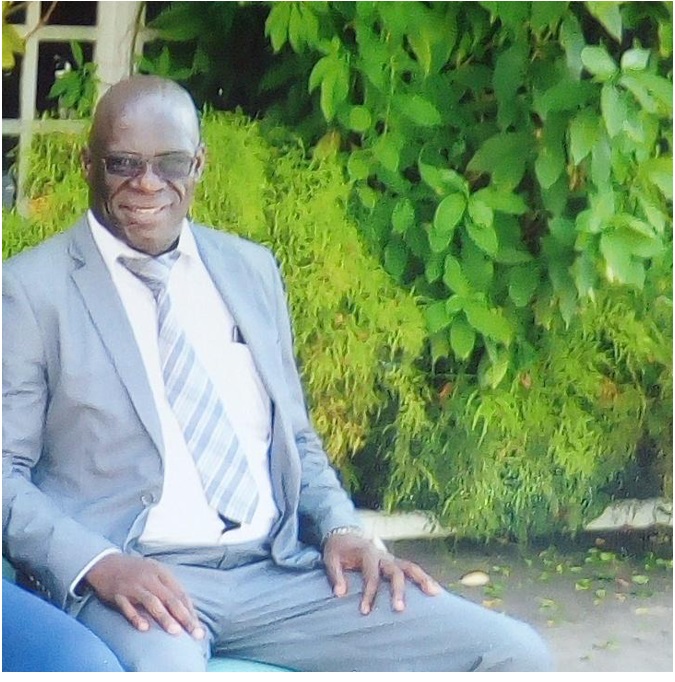
Figure 26: Yakhobe (Jacob) Mtonga: Son of late Maluza Friday Mtonga, Jacob should be the next heir after his father’s passing. Photo: J. Mtonga/ 21st December 2023
The 2nd Era of Maluza NyirendaAfter the departure of Maluza Friday Mtonga, village elders propose Wiseman Vyeyo Nyirenda to temporarily (Mulinda Musumba) take the seat of Maluza. By now, succession to the throne is through the bloodline of the Maluza Mtonga.
The decision to choose Wiseman Vyeyo Nyirenda as caretaker of the seat, is since Friday's children are too young to inherit the throne. The handpicked Maluza grows into the 90s of age, and is incapacitated on the throne.
In his final days, age renders Vyeyo delusional and psychotic. At one stage, Wiseman Vyeyo is spotted roaming the graveyard. At another time, the nonagenarian is found naked in the nearby bushes. After forty years of rule, Vyeyo dies on Saturday, 25th August 2018.
Figure 27: Wiseman Vyeyo Nyirenda (Y0D 2018): Gobbling up a calabash of brew. When death occurs of Maluza Mtonga (Yakhobe Mtonga) in the early 1960s, the mantle is passed down to his son, Friday Mtonga. The succeeding Maluza, Friday Mtonga, dies in 1978. After his departure, village elders propose Vyeyo Wiseman Nyirenda to temporarily take the seat of Maluza. Inherently, succession to the throne is through the bloodline of the Maluza Mtonga. But decision to choose Vyeyo Wiseman Nyirenda for the seat, is since Friday's children are too young to inherit the throne. The handpicked Maluza grows old and is incapacitated on the throne. When he dies on Saturday, 25th August 2018, the village headship is controversially handed over to his son, Yakhobe Kiwi Nyirenda. Jacob Kiwi Nyirenda is the sitting group village headman of the Maluza set up. Photo D.B. Nthengwe/26th December 2008
The 3rd Era Of Maluza NyirendaWhen Vyeyo Wiseman Nyirenda dies in 2018, the village headship is controversially handed down to Vyeyo’s son, Yakhobe Kiwi Nyirenda. The father of Wiseman Vyeyo is Kachepa of Mhlawumo Nyirenda, the second Maluza. Vyeyo’s mother is Lindani Botha. Being the grandson of Mhlawumo, Vyeyo is not far off from seating on the throne, except that succession has by now shifted to Yakhobe Mtonga bloodline.
There is a twist in the tail of the already fractured Maluza Chieftaincy. The current Maluza village is ruled by two people of the same family. Kachepa Nyirenda marries two wives, a NyaBotha and a NyaPhangula. In his first wife, NyaBotha, Kachepa fathers’ Wiseman Vyeyo. In his second wife, NyaPhangula, Kachepa bears another son, Flyton Kaliko. Through Kachepa, Wiseman Vyeyo is elder brother to Kaliko, same father different mothers.
Wiseman Vyeyo father’s Yakhobe Kiwi Nyirenda. Yakhobe, is, therefore, son to Kaliko. When Wiseman Vyeyo dies, the chieftaincy is passed down to Yakhobe, who rises to the title of group village headman. Kaliko, his father, becomes the village headman of Maluza. In this arrangement, Kaliko reports to his son, Yakhobe. In a patriarchal system, it should be the other way round, being males of almost the same age. Still, it is rare in a patriarchal system for a son from the second wife to take up the position of a village headman.
The cock up comes about when Yakhobe Mtonga, the actual heir of Maluza, abdicates the position of a group village headman. Yakhobe Mtonga, son of late chief Friday Mtonga, is approached to take up the group headman position of Maluza. Yakhobe declines without elaborating. But from history and following the patriarchal system, and after the death of Wiseman Vyeyo Nyirenda, the throne should retain to the rightful owner, Yakhobe Mtonga. Clearly, the Wiseman saga over the Maluza chieftaincy is far from over.
A Twist In The Tail Of Maluza ChieftaincyA further unsettling twist in the succession of the Maluza chieftaincy concerns Sam Chigwangwa Nyirenda. After the demise of the sitting nephew, Maluza Mhlawumo Nyirenda, elders first approach Chigwangwa as the next heir to the throne.
The Maluza throne falls vacant at a time when Chigwangwa has just lost his elder brother Mackey, at Kamphata, in Malambo. With his elder brother gone, it falls to Chigwangwa to inherit the property that is left behind, including children and widows. The prevalent pressing circumstances, force Chigwangwa to turn down the offer of a Maluza. The decision does not in any way imply that Chigwangwa abdicates the throne. Circumstances do not just allow. Chigwangwa’s children in his wife Dokiso, daughter of Benthu, are certainly next in the succession of the throne. This is a debate for another day.
Kasumbukila-Benthu Chieftaincythe second Kasumbukila. The crown is subsequently passed down to Wilson Chindundu Nthengwe to become the third Kasumbukila. The fourth and current Kasumbukila is Donald Nthengwe son of Wilson Chindundu Nthengwe.
The headmanship is now called Kasumbukila-Benthu under Maluza group Village headman. Succession of this chieftaincy is by the death of a sitting crown. Death and dispersion of male heirs are threatening the existence of the Kasumbukila-Benthu chieftaincy. The few potential male children through whom the bloodline of the chieftaincy is retained, are too distracted to mind about the future of the throne. One hopes this is a temporary phase of events.
In fact, the Kasumbukila-Benthu Nthengwe clan currently on the hems of Maluza, actually falls under the Kalovya chieftaincy.
Kalovya Headmanship: Founding Father of Kalovya ClanTiza Tiwonelepo Nthengwe, is sister to Chowo and in-law to Jabanthu Khalapazuba. Tiza marries Thomas Mgufu Mbale. Their children are: Nthayo, Mateyo, Zakaria, Rhoda.
i. Nthayo Mbale marries Kanyung’unyanga Nthengwe and have one child: Margret Nthengwe
ii. Nthayo is inherited by Mundalira Nthengwe. Their Children are: Jairos, Samson, Pyayira (William), Chetani (Gindilon)
iii. Mateyo marries three wives: the first wife is nyaNyirenda of Chimphamba village. The second wife is NyaNgulube of Msazulwa village. The children are: Kattie Mbale. Mateyo marries the third wife, Nyamkandawire of Buli Welachoto village. Their children are: Chiwoto; and Chiwulunga.
iv. Rhoda Mbale marries Ngimba Manda. Their children are: Matafali; Tembani; Alesi. Matafali, marries Kettie Mbale, a direct cousin. His marriage with Kattie is after he separates from his first wife Nyakumwenda. Tembani marries nyaMafuleka. Alice marries Botha, a brother to Gotingo Botha.
v. Zakaria Mbale: Information has it that he went to Southern Rhodesia, marries and dies there.
vi. Kattie Mbale marries Matafale Manda, a direct cousin. Their children are: Movya; Agnes; and Tembani.
vii. Wuzgani Thomas Nyirenda: Somehow, Tiza Nthengwe separates from her husband because of death of Thomas Mgufu Mbale. She lives with her in-law Yandula Chindere Mkandawire. It is here where Tiza met and befriended Chimsewu Nyirenda. Recall that Chimsewu was son to Maluza Mhlawumo Nyirenda. The Tiza and Chimsewu child was Thomas Wuzgani Nyirenda. Wuzgani Thomas later became Kalovya. Wuzgani Thomas Kalovya married NyaGamba. Their children are, John, Zyanga, and Tiza. Wuzgani is later offered a younger sister to his first wife, as mbiriya (gift). Their children are Chimika, Kamwantche, and Elita
Chimsewu Nyirenda Headmanship: Founding Father of Chimsewu clanChimsewu is another break away Chieftaincy from the greater Maluza. Maluza Mhlawumo Nyirenda had several wives with many Children; Mchilankhuto, was the first Chimsewu while Dimbiri was the second Chimsewu.
The name Chimsewu comes by because the village is installed by the roadside, now the official boundary between Malawi and Zambia, from Chama to Lundazi. Chimsewu is on the Zambia side in an area called Chipyuzi. While the birth name is Dimbiri, the nickname is a fanny roll out, Kasunga Mpombo Pala wanya namise wagona nanjala, [The keeper of the rectum, when it opens bowls, you sleep hungry].
Maluza Mhlawumo Nyirenda marries several wives. Some of his children are: Mchirankhuto, the first Chimsewu, Dewa, Gawira, Dimbiri, the second Chimsewu, Wandeya and wadeka kavwakawo.
i. Mchirankhuto had the following Children: Phekesi, wife to one Mwale. Yesaya, father to Kaparamazayi. Emele, offered as a gift (mbiriya) to Mwale of Phekesi. Emele is direct sister to Phekesi.
ii. Dewa Marries Kavwakawo Botha. Their children are: Berita; Elina; and Nelisi. Dewa marries the second wife, Lindani. Their children are: Lufeyo; and Grace. Dewa marries the third wife, Leah Mvula: their children are Kalinegi, Saulo, Mgeme, and Kambombo
iii. Dimbiri marries Stere Ng’uni and their children are: Newulo, David, Samson, witness, and Tamanyawaka Deliwe. Newulo is Husband to Sinayi of Fannie Chitira Nthengwe. Fannie Chitira is daughter to Mundalira Nthengwe and Yandura Chindere. He marries a second wife, Jessie Zimba. The known child is Nelson.
24. DUSTY MONDAY-MONDAY
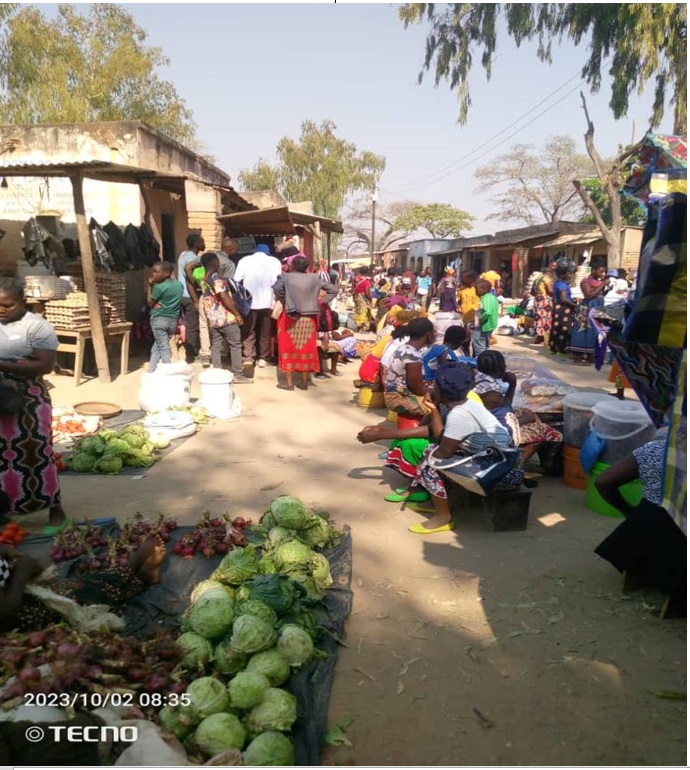
Figure 28: Madede Market: Throughout the 1970s and the first half of the 1980s, Madede is served by one shop, belonging to Matyas Lusale of Lunda village. Present Madede is bustling with a market and shops. The market day is called Monday-Monday, because it falls on every Monday of the week. Photo: D. Chavinda/02nd October 2023
On the outskirts of the vast Mzimba territory, lies a booming rural trading hub. The popular dusty market is situated somewhere on the west banks of the Rukulu River, mid-west Mzimba. The upcoming town lies some 25 kilometres South of Mbalachanda Rural Growth Centre, and at least 30 kilometres west of Euthini, the seat of Chief Chindi Jere. Vuvumwe bridge on South Rukuru River connects communities on the east and west of the highlands.
The market in question juxtaposes Inkosizana Madede Nzima and Inkosizana Ndakala Chavinda. The two traditional authorities are under the rule of the Ngoni Chief Chindi Jere. The Madede-Ndakala area extends up to a radius of approximately 20 kilometres.
In fact, Madede area is a confluence of the Senga, Tumbuka, Ngoni and Nilotic ethnic groups. The Senga migrate from Malambo of Chama, north-eastern Zambia. The Tumbuka are from the Nkhamanga Kingdom in Rumphi, northwest Malawi. The Ngoni trek from South Africa fleeing from Shaka Zulu persecution. The Nilotic group of the Ndakala are descendants from Sudan. Other ethnicities in the mix are from within the country.
Benthu’s Maluza of the Senga is located on the arable soils bordering Zambia, 10 Kilometres west from where Inkosizana Madede and Ndakala reside. Communities of Madede and Ndakala are settled on the higher grounds, overlooking the water body of South Rukuru. The perennial South Rukuru River provides a critical lifeline for grazing animals, crop production, fishing and water for general use. The river is also a source of leisure, mainly hippo watching, swimming and binge jumping (Kamthabwithabwi). The abundant reed straws on the river are used for weaving baskets and knitting sleeping mats.
What is a dusty market hub, is popularly known as the Madede Trading Centre. The so naming of this Centre does not sit well with Inkosizana Ndakala who claims to have arrived in the area first.
Historically, communities around what is today a thriving market, are pockets of villages trapped in poverty and illiteracy. The advent of Religion and education in the early 1900s, are the origins of a facelift to the communities around. The Christian faith dominates in the area at the fall of the 20th century. Presbyterian Church was established in 1926. Gradually, more churches establish presence, from Jehovah’s Witnesses, to Zionists, all in the name of Jesus Christ. As the Christian faith anchors and spreads its roots, so does education.
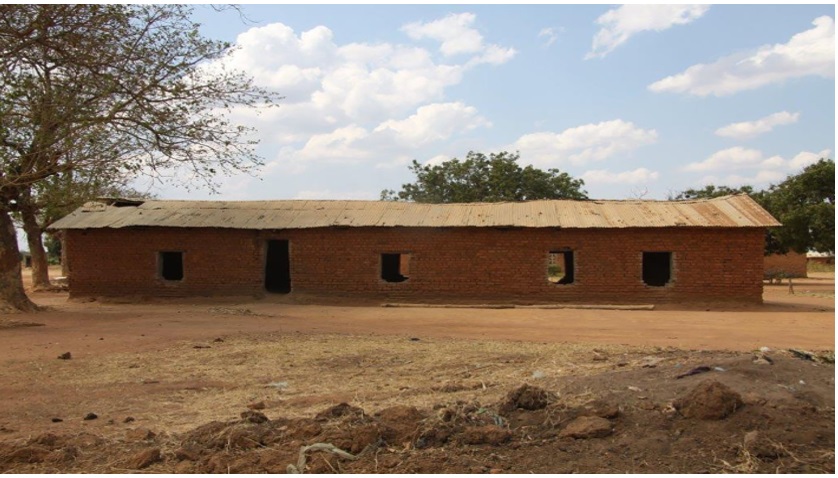
Figure 29: Mwitha Prayer House. Church of Central Africa Presbyterian. CCAP, a protestant church, was established in 1926. It is probably in this church where Benthu walks away after seemingly being attacked by the priest. Benthu and his two wives walk into the church impeccably dressed. On seeing them, the preacher apparently says, “some of you come to church to show off. You are not here to listen to the word of God…”. This Sunday is Benthu’s last to ever attend church. Photo: D.B. Nthengwe/24th December 2008
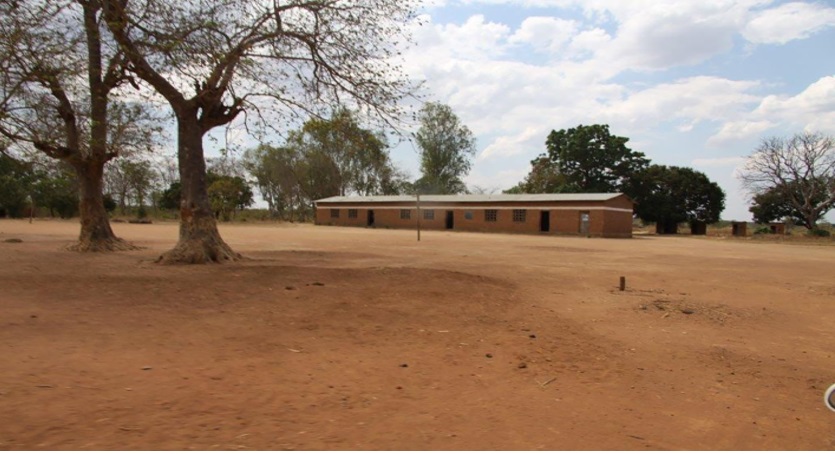
Figure 30: Echilumbeni full primary school with grades from 1 to 8. The facility was established in 1904. At that time, classrooms are a ramshackle of poles and grass. Classes are from Kasepuka naka Sungwana (little boy and little girl) to Subs-A and B. Ever since, Echilumbeni has produced a countless number of students who either end up in secondary, or tertiary levels. Most of them are productive members of the society, working either in teaching, medical, security forces, legal and many other established sectors of the economy. Benthu, his children and grandchildren attended classes at Echilumbeni.
The inception of Echilumbeni Primary School in 1904, begins to enrol learners for lessons on a small scale. The facility offers classes from Kasepuka na Kasungwana (Little boy and Little girl) to sub-A and B.
The primary school initially operates beneath a set of trees, or in mere shacks assembled of pole, straw and grass. Teaching is orally and notes are written on sand before the introduction of a chalkboard, slates and notebooks. Eventually, solid school blocks are constructed. Classrooms are built with unburnt mud brick. School blocks are roofed in thatch. Flooring of classrooms is by smearing a thin layer of black mud with hands. Finishing is with a smooth stone (Mbokodo). Entrances are without doors and windows are mere wide openings
In the early 1970s, Echilumbeni gains the status of a full primary school, with classes 1 to 8. By and by, roofs of thatch grass are also replaced to wear corrugated iron sheets. And more, a district council-run clinic by one Baidon Chavinda is later converted into a full fledge state-run health centre. A water borehole is sunk to support the operations of the medical facility.
During the 1970s, a state-run funded parastatal, the Agricultural Development Marketing Cooperation (ADMARC), is established. Smallholder farmers buy farm inputs and sell produce at the established ADMARC.
Benthu optimises ADMARC by selling high-grade legume of groundnuts. With a shade of magenta, shelled nuts are big and oval like in shape. The nuts are sorted in grades. The highest grade is Chalimbana followed by Mwatunde. The smallest in size are Mphapo nuts which are third. The cash crop fetches the highest price at ADMARC. The week Benthu’s first and second grades are selling, ADMARC is sealed off from the other sellers. Benthu’s high-grade of the legume means that he will scoop all the money on that day and subsequently. During that week, ADMARC literally runs out of cash.
"Syaba za kwa dada Benthu zayamba kwiza, Ndalama zamala. [My father’s groundnuts have started selling. There is no money left]". Joshua Chavinda remarks every time he sees Benthu’s bags filled with shelled nuts streaming to ADMARC. This is during the 1970s and 1980s. Undoubtedly, the social upliftment of the people is progressively palpable.
By 2015, the population which is agrarian by heritage, has exponentially grown probably in the upwards of 20,000 residents. Households and entrepreneurs on the stretch between Madede and Mbalachanda are benefiting from a successful rural electrification project. A telecommunications tower has been installed to facilitate communication between families and the world beyond. Mobile money and internet services entail of rural modernisation. Forex bureau transact in Mozambican Metical, dominant South African Rand, US dollar and the Shilling of East Africa. The Kwacha from Zambia too comes in handy by approximation to Madede. Illicit trading between Madede and neighbouring Zambia is rife, but runs unchecked.
More and more shops fill empty space along the main road, trading in building materials and sundry. With the arrival of electricity, welding, illegal music pirating and barber services are widespread. Some of the households and shops are lit from the national power grid. Food and beverage add to the daily aroma of the bustling village town. In the interim, communities witness an increase in the number of Primary Schools, in addition to the initial Echilimbeni facility. Aspiring boys and girl easily access a nearby community day secondary school.
The growing population necessitates reviving the defunct postal services. Plans to establish a police presence are also in the pipeline as a result of the worrying social ills. Porous and unmanned border is another push factor.
People’s common mode of transport has seen an upgrade too, from walking on foot to riding on motor cycles and vehicles. In the 1970s and 1980s, the now scuppered United Transport of Malawi (UTM), introduces a single bus trip from Mzimba BOMA to Mbalachanda via Madede, some 100 kilometres. The bus initially plies the route once a week. Eventually, the National Bus Company increases the trips to twice a week before completely discontinuing scheduled runs in the early 1990s. Inevitably, local entrepreneurs fill in the void left by the National Bus Company. In no time, daily shuttles ferry people and goods to Mzimba BOMA, some 80 kilometres east. Some run similar errands to Mzuzu City, another 80 kilometres to the north east of Madede.
Every Monday is a dusty market day. Popularised as Monday-Monday. The self-organised Market attracts a higgledy-piggledy of traders from within and across the border in Zambia. Goods displayed on the shoulders of dirt dusty main road range from tobacco snuff to fresh farm produce, often scarce diesel, petrol and anything in between.
Dust does not settle even after sunset. Night hours are noteworthy, as pubs and bars cash in on the nocturnal lifers. Guest houses serve night overs. Essentially, such a hustling mentality propels small scale enterprises that boost the otherwise desperate families.
Entrepreneurs face several challenges, nevertheless. When the Kwacha weakens, commodity prices go up against people’s meagre earnings. Incessant power outages and the scarcity of fuel, slow down income generation. Prohibitive electricity tariffs, not only limit access to the power grid, they drive families to forage wood for cooking energy. These are adverse external forces over which entrepreneurs and families have no control.
Hard up and frustrated, youths of age tend to travel to South Africa in search of lucrative jobs. In South Africa, the unskilled majority are into care giving and sanitation services, content with a poverty wage. The propensity towards the lucrative South Africa is hereditary from the forefathers.
In retrospect, the advent of education in the previously impoverished village communities has some families show for its worth. Outside the Benthu family, the Nkowani, Chavinda and Jenda, predominantly lead in qualifying their children through tertiary level. These families are hard-wired about education. Lagging families are playing catch-up to also educate their own.
Coming out of the humble school doors of Echilumbeni Primary since its inception in 1904, are qualified academics in the various fields of study and professional work. Social change and economic emancipation come with dust.
Echulumbeni, (Ngoni for 'thank you!').
25. A HISTORICAL THROWBACK
The historical throwback is an outline of the extended family of Joseph Gibson Benthu Nthengwe. The throwback further explains the family lineage in which Benthu marries in 1937 and 1943. In 1937, Benthu marries Erness Chiwoni Nyirenda of Nthalinda village, east of South Rukuru River. He marries Dyness Kawoli Nyirongo of Kapera village, south of South Rukuru River in 1943.
Recall that Munguza Mkandawire marries Chikomazgango in whom he fathers six girls. When Munguza dies, Chindoka Nyirenda marries Chikomazgango. Chindoka and Chikomazgango bear two children, Yireke and Chidongo. When the Zoa war erupts, probably in the second half of the 1800s, Chikomazgango attempts to escape the violent conflict with the baby on her back. The baby is Yireke. Chikomazgango gets shot and killed. Baby Yireke is wounded but survives.
Separated by the ensuing violence, the whereabouts of Chindoka Nyirenda and his son Chidongo are, hitherto, unknown. Chidongo is believed to have been abducted and probably killed in the Zoa war. The violent conflict is taking place in Malambo of Chama Territory, northeast Zambia. The period is probably within the second half of the 1800s. The conflict is bitterly remembered as the Zoa war.
Instinctively, war victims rescue Yireke and flee to safety in locations between the Nkhamanga kingdom and the Ngoni land. Now in Nkhamanga, and having lost their parents in Malambo, they develop a nostalgia to search for their relatives south of the Nkhamanga kingdom. Yandula Chindere and her elder sisters eventually reunite with their relatives in an area west of South Rukuru River. The years of migration are not known.
Of the six Munguza Mkandawire daughters, the lastborn is Yandura Chindere. Chindere marries Mundalira Nthengwe, parents of Joseph Gibson Benthu. Wayitha Marries Mhlawumo Nyirenda, who later becomes Maluza. Kajimonkhole marries Kapombe Mtonga. Ngayithi Marries Chiti Botha. Tembani marries Fumbawowa Chavinda. The one other daughter marries Yobe Mkandawire of Echizibeni in Euthini. The children of Yandula Chindere Mkandawire and Mundalira, are found under Chapter 20: Founding Fathers and Genealogy (Joseph Gibson Benthu).
Now away from volatile Malambo, Yireke settles and marries Mkandawire of Msazulwa village in west Mzimba. They have the following children: Yobe and Adamson. Yobe marries one of the sisters to Chindere and have the following children: Bisani, Mulinda, Mitiyawo, Melayi, Mathelo and Phelire. Adamson marries nyaGondwe and their child is Francisco. Francisco marries nyaZimba in whom he fathers the following children: Timoti, Mary and Rhoda.
We learn that Chindoka Nyirenda has his wife before Chikomazgango. The name of the first wife is unknown, their only child is Kawitu. Kawitu fathers Kapasi Nyirenda. Kapasi is later crowned Walawatu of Walawatu Nyirenda village. Unannounced, Kapasi Walawatu pays Benthu a visit. The sudden visit of Kapasi Walawatu Nyirenda is premonition for a farewell to his brother Benthu. A few days after this visit, on Thursday, 27th December 2001, Benthu passes away. Ironic, Benthu and Chiti Botha pass away within hours of each other.
Inheritance is also imbedded in names and nicknames, banter and satire. A name to a relative of Yandula Chindere, is Longolani. The name Longolani actually means ‘point, or show or lead’. This name is also passed down to Benthu’s firstborn child. He is a boy born in 1939. The initial bearer of the name Longolani is a notorious hunter. Because he is a legendary at gunning down wild game, he nicknames himself in praise, a ‘Samwanga’. Benthu’s first son Longolani also inherits the name Samwanga. Longolani is hence called Longolani Samwanga Nthengwe. Samwanga as a nickname, can tell of three things: vain pride, pomposity or excessively sociable.
Young Longolani later names himself Tyson Austin, clearly avoiding his father’s name Benthu, for the satire around the name. Recall that the initial bearer of the name Benthu is killer of god Kalukumbiri of the Senga people. Guardedly, Longolani considers the name Benthu a taboo. Recall that Mundalira Nthengwe marries Yandula Chindere Mkandawire, parents to Benthu. Mundalira later inherits his elder brother’s wife, Nthayo Mbale. Chidren in Yandula Chindere and Nthayo Mbale are found under chapter 20: Founding fathers and Genealogy (Joseph Gibson Benthu). Yandula Chindere Mkandawire, dies in 1955. The year Nthayo Mbale dies is unknown
1.b. Chioni Ernes Nyirenda (1924-2009)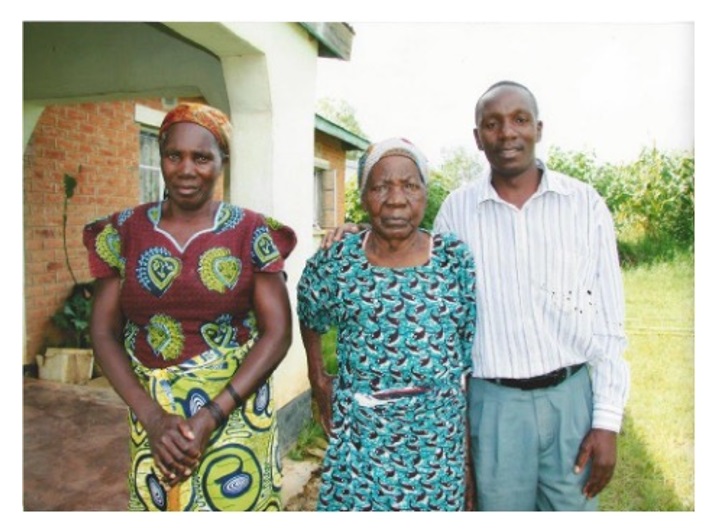
Figure 31:(L-R) Benthu’s 3rd born, Masozi Macrida Nthengwe, daughter of Benthu and Erness. Erness Chioni Nyirenda, Benthu’s wife. Alick Nyirenda, son of Dokiso and Sam Chigwangwa Nyirenda. Erness is mother of the Benthu clan. Photo: D.B. Nthengwe/22nd December 2008)
Who is Chioni Erness Nyirenda? Chioni Erness Nyirenda is the first wife of Joseph Gibson Benthu Nthengwe. The father to Chioni is Enock Chabala Nyirenda. Chioni’s mother is Enala Changatizya Botha.
About Enock Chabala NyirendaEnock originates from Kapera Village just west of South Rukuru River. His mother is Tengwera Kanyimbi Mvula. Enock’s father is Chimbobota Nyirenda. Like Mundalira and the rest, his origins are Kapichira in Malambo, now part of Zambia. His sisters are: Tikhalenawo Sanjika and Yiliphe (AKA Agnes). Enock Chimbobota Nyirenda marries Enala Changatizya Botha. They have the following children in order of birth: Chioni Erness, Kampuni Handloss Layton Changwere Msinda, Kambaningiko Myaluka Mzomere Chimbalachabasi, John, Christina Nyaziba Mlekwa, Tafwauli Wayicha and Tilore Wayilera. Enock has his sister named YiliPhe. She marries one Yakhobe Chivwama Gondwe. Their children are: Rabani, Jona AKA Johnjack, Dongo, Juda, Patrick, Chikomeni and Emelia. The children of Yiliphe and Changatizya Botha are cousins. But because of age difference, they call Erness and her siblings, sisters
Yiliphe’s sons play a critical role in the education of Benthu’s children. In 1962, Benthu fosters his tenth child, Chiliro (AKA Rodrick) with Rabbani Gondwe. Chiliro excel from primary through University education. Jonah AKA JohnJack, hosts Benthu’s eleventh child, George, at Mzambzi for his primary education from 1974. Ever since, the role Rabbani and Jonah play is intrinsically imbued between the Gondwe and Benthu Nthengwe families.
Enala Changatizga Botha
Her father is Chisambi Kanjerama Botha. Her mother is Chiwira Mzale. A relative of Chiwira Mzale is Chimukowora Chajuma Mzale, father to Sandikonda mzale. Sandikonda is son-in-law to Chikhawonga Guga Nyirenda, husband to Chipulura Kumwenda.
Chisambi Botha
Who is Chisambi Botha?
Who is Chisambi Botha? Chisambi Botha is the village Headman for Nchalinda. Nchalinda is located on the east bank of South Rukuru River. Together with Babatoni Village, Nchalinda is a break-away from the main Village of Kapera, west of South Rukuru.
Chisambi's mother is Chenela. He marries Chiwira, in whom he fathers the following children: Racheal Musolo Mukole, Baluwa Mlovi, Enala Changatizya, Mnyaluka Rameke, Yotamo, and Makaliyere Loti Chikayanga. Children in his second wife Chidongo Lusale are: Daniel, Kufasize and Kapafu. In his third wife Chabipa he fathers the following children: Geness (Agnes), Samuel, James and Alesi (Alice).
Relations to Chisambi Botha, Chief Ntchalinda.
The only one brother and relative to Chisambi is Masumba Botha. Masumba marries two wives: one nyaNthengwe from Maluza, and Murichi Mkandawire. In his first wife …Nthengwe, the children are: Paulosi Kadomeka, who is also the Village Head for Babatoni, Jane, Jona, Malita and Eleni. Eleni marries one Longwe whose child is Bismarck Longwe of Jinga Village. In his second wife Murichi Mkandawire, the children are: Fannie, mother to Chekha and Kaleya of Chambuzi Village, Meya, and Jairos. Jinga and Chambuzi Villages and many others like them are close neighbours to Maluza Village. The children of Chisambi Botha and Chiwila Mlekwa Mzale are as follows:
i. Baluwa Botha: Baluwa Botha marries NyaMjumira. The children are: Sajeni; Laisi Kwapulani; Ellah and Malage. In his second wife, Nyakumwenda. The children are: Sundress, Stara, Chapadongo and Hannah. Ellah marries Kalasa Kumwenda. Their children are: Chindongo; Rodwell; Zyangani and Kadiwiti Malaro. Chidongo marries NyaKhunga. Malage marries one Lusale. Their children are: Mekali; and Mpherire
ii. Mnyaluka Rameke: Mnyaluka Rameke does not marry. He dies in South Africa. The year and location of death are not known.
iii. Yotamo Botha: Yotamo Botha marries Faggie Mzale, whose aunty is Chiwira Mzale (sister to her father). Their children are: Chajuma, Tilayi, Vitima Chiliro, who is the current headman as we write this biography.
iv. Changatizga Enala Botha: Recall that the children of Enala Changatizga Bota and Enock Nyirenda are: Erness Chioni; Kampuni Handloss Lyton Changwere Msinda, Kambaningiko Muzomere Chimbalachabasi; Tombozyani, Mlekwa Nyaziba Kanchule Christina, Tafwauli Wayicha and Wayilera Tilore.
v. Erness Chioni: Wife of Nthangali Benthu AKA Joseph Gibson Nthengwe. For their children see under chapter 20: Founding fathers and genealogy (Joseph Gibson Benthu).
vi. Kampuni Handloss Lyton Changwere Msinda: husband to nyaMwale. Their children are: Kamkota; Mhanya; Masozi; Wayicha; Manjawira and Enala.
vii. Kambaningiko Muzomere Chimbalachabasi: Marries NyaBvwemu. Their children are: Llyod; Stere; and Enock.
viii. John marries nyaLusale. The children are: Tombozgani, Yilonde, Newman and Rhoda.
ix. Mlekwa Nyaziba Kanchule Christina (5th January, 1935), wife to John Nyirenda of Kapera Village. Their children are: Lina Moreen Tondo (1956), marries Kingsley Mkandawire of Ndakala village; Nellie (1960); John (1964); Kalumpha (1969); Handloss (1973); Janet (1976); Christina (1979); Selah (1982) and Medson (1986).
x. Tafwauli Wayicha wife to Nevait Nyirongo of Mtanga Village. Their children are, Mitiyawo, Donald, Binele and Komani.
xi. Wayilera Tilore, wife to Chivuvu Chirwa of Gonapachaka Village. She is the lastborn girl child. Their Children are: Lameck, Chiza, Grace, Enala, Selina Flora, Efuness, Marita and Fiskani.
Kawoli Dyness NyirongoWho is Dyness Kawoli Nyirongo? Dyness Kawoli Nyirongo is the second wife of Joseph Gibson Benthu Nthengwe. Like her sister in marriage, Erness Chiwoni Nyirenda, the parents of Dyness Kawoli Nyirongo trek from Malambo and settle at Kapera Village, just west of South Rukuru River.
Dyness Kawoli Nyirongo weds Benthu somewhere in 1943 to become his second love life. Her father is Chimnyama Nyirongo. Her mother is nyaBotha, not clear of which Botha between those of Nchalinda, Kapera and Babatoni. Siblings of Dyness Kawoli are: Bester, Webster Mseuka, Sajeni, Wyness, Elinara, and Matusi. All of these people are migrants from Malambo, Zambia. Children of Dyness Kawoli Nyirongo and Joseph Gibson Benthu Nthengwe can be found under Chapter 20: Founding Fathers and Genealogy (Joseph Gibson Benthu). Voila! - French for ‘that’s it’.
26. FOUNDING FATHERS AND GENEALOGY
(1800s to date) The Nthengwe ClanThe father and founder of the Benthu clan is Nthangali Chowo Nthengwe and his wife, Njawanthu Khalapazuba. Chowo also carries the traditional title of Kasumbukila. Their origin is in the territory of Chama District, in particular, Chizimba village in Malambo, now northeast Zambia. Chizimba village is just across the Kamphemba Tributory or stream that pours water into the Lwangwa River.
The Children of Chowo and Khalapazuba are listed below in order of their birth. Each one of them constitutes a family tree.
i. Benthu (killer of bird Kalukumbiri): Killer of god Kalukumbiri stays behind when others free the Zoa war in Malambo, Zambia. His wife and children are unknown.
ii. Mahuza: Mahuza marries Marita NyaWankhama. The couple settles in the Nkhamanga Kingdom (Rumphi) north-west Malawi. The couple later reconnects with the children of Nthayo Mbale. Mahuza died somewhere between 1958 and 1960. The wife went back to Nkhamanga with the youngest son Chowo. Their children are: Guwe, Mchefya, Chiza, Masozi Tikambe and Chowo.
iii. Nthangali Kanyung'unyanga: Kanyung’unyanga marries Nthayo Mbale, his direct cousin. Their only child is Margret. When kanyung’unyanga dies, his brother Mundalira inherits Nthayo Mbale (see the list of their children under Mundalira and Nthayo). Margret marries one Lusale. Margret and Lusale are blessed with daughters named Welenge and Aida and boys named Brightwell and Hasten
iv. Mundalira Nthengwe: Mundalira Nthengwe marries Yandula Chindere Mkandawire. We do not know when they marry. Their children are: Jonas Kasumbukira, Zakeyo, Chanozga Esau, Joseph Gibson Benthu, and Fannie Chitira. These children are bazukulu (grandchildren) of Chowo Nthenhwe and Njabanthu Khalapazuba. Mundalira Nthengwe DOB unknown- dies 1947.
v.Satumbwa Nthengwe: Satumbwa Nthengwe (one of the two daughters to Chowo) marries one Mchulu at Mwata School in Zambia. Their children are: Sinati, Edesi, Sellina, Tiza Eteki, Robert and Jairos. Satumbwa Nthengwe passes in May of 1975. Sinati: Siniti marries to Chanozga Esau Nthengwe, a direct cousin. Edesi: Edesi marries one Kumwenda in Zindonde Village of Msazulwa. Their only child is Tutumale. Sellina: Sellina marries one Faro Nyirenda of Kapera Village.Tiza Eteki: Tiza Eteki marries one Mumba of Kazibalwe. Their child is Chapasi. Robert: Robert is father to Nthangali Mchulu. Jairos: Jairos is father to Chitatata. The children of Satumbwa are grandchildren (bazukulu) to Chowo and Njabanthu Khalapazuba.
vi. Tiza Tiwonelepo Nthengwe: Sister of Chowo and Mundalira. Tiza Nthengwe marries Thomas Mgufu Mbale. Their children are: Nthayo, Mateyo, Zakaria, Rhoda, Thomas. Nthayo Mbale: Nthayo mbale marries Kanyungunyanga and later is inherited by Mundalira his brother. Their children are (See section under Mundalira above). Mateyo: Mateyo marries three wives. The first is nyaNyirenda of Chimphamba village. The second wife is NyaNguluwe of Msazulwa village. Their child is Kattie Mbale. NyaMkandawire of Buli Welachoto village is the third wife. Their children are: Chiwoto and Chiwulunga. Chiwulunga. Marries in Msazulwa. Their children are: Wisdom, Sokarao in this second wife, Kattie: Kattie marries Matafali Manda, a direct cousin. Zakaria: Dies in South Africa. Family is unknown. Rhoda: Rhoda Mbale marries Ngimba Manda. Their children are: Matafali; Kettie; Tembani; and Alesi Matafali, marries Kettie Mbale, a direct cousin. His marriage with Kattie is after he separates from his first wife Nyakumwenda. Tembani marries NyaMafuleka. His marriage with Kattie is after he separates from his first wife Nyakumwenda.
After Tiza Tiwonelepo Nthengwe, separates from Thomas Mgufu Mbale because Mgufu dies, she befriended Chimsewu Nyirenda. The Tiza and Chimsewu child is Wuzgani Thomas Karovya. Wuzgani Thomas later enters into a Li ozone with Karovya. Wuzgani Thomas Kalovya marries NyaGamba. Their children are, John, Zganga, and Tiza. Wuzgani is later offered a younger sister to his first wife, nyaGamba (mbirigha). Their children are Chimika, Kamwantche, and Elita.
In the old tradition, it is allowed that a sister can be married to the same man either as a gift for the good works of the son-in-law, or as compensation for the loss of the first wife. In other instances, a Mbirigha is offered when the first wife is unable to bear children, or when she is considered too old, or incapacitated from illness. On the flipside, this tradition is not extended to women when the opposite happens. Even so, when the woman is assigned a man, the act is shrouded in secrecy. Tiza Nyirenda of Wuyzgani marries to one Vwemu.
Jonas Kasumbukira NthengweJonas Kasumbukira Nthengwe marries Jenala Nyirenda. Jenala is a relation to Erness Nyirenda. Erness Nyirenda and Dyness Kawoli Nyirongo marry Nthangali Joseph Gibson Benthu Nthengwe. Benthu is the last male in the Mundalira-Chindere family. The children of Jonasi and Jenala are: Donald who dies young, Chindundu Wilson Kasumbukira, Nthangali Menard, Vuzga Partwell Mdhluli, and Ella Nthengwe. Jonas Kasumbukira dies somewhere in 1959.
i. Donald Nthengwe: Donald Nthengwe dies young (year unknown).
ii. Chindundu Wilson Nthengwe: Chindundu Wilson Nthengwe marries Ekesi Zimba (1930-1976) of Chambuzi Village. Chindundu inherits his father’s title name Kasumbukira, so his full name becomes Kasumbukira Chindundu Wilson Nthengwe. Their children are: (i) Donald is named after Donald of Jonasi Kasumbukira. (ii) Ellah, (iii) Alick, (iv) Thomo – marries, but dies young, (v) Suzgo who inherits Thomo’s wife, Kauzyanani – marries but dies young, When Ekesi Zimba dies, Kasumbukira goes on to marry Timanyechi Longwe of Jinga Village (1937-2014). Their only girl child is Fannie.
iii.Nthangali Menard: Nthangali Menard marries two wives. In this polygamy set up, the first wife is Witness Mwale (1932-...2021) and the second wife is Tiluze Khunga. Their children are hereby listed according to their mothers. In his wife Witness Mwale the children are: (i) Msofi, (ii) Tivwale, (iii) Jenala, (iv) Jim (the only boy who dies young), (v) Iddah (vi) Esther and (vii) Elita. In his second wife Tiluze Khunga, the children are: (i) Matthews, (ii) Sandless, (iii) Yandula, and (iv) Nyamazawo.
iv. Vuzya Partwell Mndhuli: Marries NyaKachali. Their children are: (i) Ellen, (ii) Lazarus, (iii) Esau, (iv) Weston and (v) Sinere.
v.Ella Nthengwe: Ella Nthengwe is the only daughter of Kasumbukira the father. She marries a Kondowe of Kanyankhunde at Thundira Village. When Kondowe dies, one Theu inherits Ella in the same Village, Thundira. In the Kondowe husband the children are: Chiliro, Mjedu, Duba, and Nwazi. In the Theu husband, there is a single son, Mavuto.
vi. Zakeyo Nthengwe: Zakeyo Nthengwe marries Sala Botha. A child is born to them named Mathero. Zakeyo travels to the Union of South Africa in search of menial jobs. Zakeyo dies under unclear circumstances in Cape Town, Republic of South Africa. This of his demise is unknown. Back home, his brother, Chanozga inherits his wife Sala. Chanozga and Sala are blessed with one boy and one girl, Zakeyo and Nyifwayawo.
vii. Chanozga Esau Nthengwe: Chanozga AKA Esau Nthengwe marries Esnart Mchulu. Esnat is daughter to his aunt (nkhazi), therefore, a direct cousin. In the tradition of the Nthengwe’s, it’s neither a taboo nor a prohibition for direct cousins to marry. Their children are: Tifwiremo Chikomazgango, Tivwale and Fainne Timanyechi. Fainne Timanyechi marries one man of Zawonse village. Their known child is Margret. Tivwale Chikomazgango marries Kayira. Their daughter is Palenga Kayira. Chanozga Esau later inherits Sala Botha, wife of his late brother Zakeyo Nthengwe. Chanozga Esau dies in 1988 after over 100 years of age. In his inherited wife Sala Botha, he fathers Zakeyo and Nyifwayawo (a girl). Ironic, Chanozga and his grandson Zakeyo, die within hours of each other.
Joseph Gibson Benthu
Joseph Gibson Benthu is born in 1914 at the start of the First World War. In 1937 Benthu marries Erness Chioni Nyirenda of Kapera in Ntchalinda Village. Their children are: Longolani Samwanga AKA Tyson Austin (Tuesday, 29th August 1939-2nd March 2009), Dongo (1942-1942), Dokiso Tibakomole AKA Meselina (1944), Wayilera (1946-1946), Masozi AKA Macrida (Monday.1st September 1947 - Friday, 7th January 2022), Chikomazya (1949 -1949), In 1950, Erness gives birth to still babies (twins), Mkole AKA Elita (Thursday, 12th June 1952), Chiliro AKA Joseph Rodrick (1955), Nthangali AKA Gibson George (Kajolo) Benthu (1957), Mapopa Mahuza AKA Professor Nash (1960-Surtaday - 3th November 2012), In 1962,Twins Omi (girl) and Kamphamba AKA Visoul (1972), and Zinyanga AKA Monica (1969- Saturday, 4th June 2000), she is the lastborn of Benthu and Erness.
i. Longolani Samwanga Austin Tyson Nthengwe (1939 Monday - 2nd March 2009), aged 72: Longolani marries three wives. He marries his first wife Joyce Nqube Nzima of Madede Mzima Village in 1961. Joyce is born in 1945. Joyce suffers two miscarriages before giving birth to Gertrude in 1965. Their children are: (i) Gertrude (Friday, 7th January 1965 - Saturday, 12th October 1991), (ii) Soka (Thursday, 28th November 1968 - Monday, 29th December 2014), (iii) Penjani (Friday,11th April 1977), (iv) Lumbani (Wednesday, 2nd august 1978), and (v) Amon (Sunday, 5th April 1981-1999). Longolani marries a second wife, Suzanna Francisco Makwenda of Sawale Village in Chiradzulu. (They have the following children: Gladys (2nd November 1973): Peter (1975). In 1978, Longolani marries his third wife, Tamalatose Zgambo. Their children are: (i) Chindundu AKA Wilson (Wednesday, 29th August 1979 - Wednesday, 17th October 2007), (ii) Kondwani (girl) 17th June 1982), (iii) Clement (Friday, 24th June 1983), (iv) Chanozga Wongani (Thursday, 26th June 1986), and (v) Chioni (Monday, 13th March 1989). In addition, he adopts three children from his third wife of one Madhlopa. They are: (i) Peter (1971); (ii) Mary (Sunday, 25th November 1973) and (iii) Fannie (Tuesday, 1st May 1979).
ii. Tiwakomole Dokiso Mesellina Nthengwe: Tiwakomole Dokiso, Meselina, is married to her cousin Chigwangwa AKA Sam Nyirenda of Malambo, Chama Territory of Zambia in 1961. Dokiso is the fourth wife. Their children are: (i) Alick (Sunday, 10th February 1963); (ii) David (Friday,16 August,1965); (iii) Joseph (Monday, 25th December 1967); (iv) Zakeyo (Thursday, 20th November 1969); (v) Donald (1970); (vi) Janet (1972), (vii) Yandula (1974), (viii) Zondani (1976 - 1976); and (ix) Nthanda (1978). Dokiso is married to her cousin, Sam Chigwangwa Nyirenda. Mother to Sam Chigwangwa is Nthanda Mcheku Chananga, sister to Kapombe Mtonga. Kapombe Mtonga marries kajimonkhole, elder sister to Yandula Chindere. Kapombe and Kajimonkhole bear Yakhobe Mtonga, who succeeds Maluza Nyirenda to become Maluza Mtonga. Yakhobe and Benthu are brothers through their mothers. By implication, Dokiso Nthengwe and Sam Nyirenda are married within the same bloodstock. Children of Dokiso and Chigwangwa are, therefore, heirs to the Maluza chieftainship. This is for the simple reason that these children are nephews in the Maluza clanship. Unverified rumour is that marriage between Dokiso and Sam, is deliberately arranged. The idea is so that male children from this couple will eventually inherit the Maluza chieftaincy. In the Tumbuka and Senga tradition, nephews inherit the chieftaincy. Sam (1924 -Tuesday, 22 August 2006).
iii. Masozi Macrida Nthengwe (Monday, 1st September 1947 - Friday, 7th January 2022): Masozi Macrida, is married to Palimwazi Medson Mhlanga, of Kandinda Village, Mwata in Zambia (1935 - Sunday, 25th May 2002). She is the second wife in the marriage. Masozi and her husband are blessed with 12 children altogether. Sadly, several of the children die at infancy. These children are: The first-born girl dies: Ernes, Racheal, Yakhosa dies: Annie dies, Tilore Thinkho is born on… 1975, a girl dies, twins Phaskani and Mleza (1978), twins Fumu and Sinya (1990), Sinya (1990-1990). Masozi Macrida Nthengwe (Mrs. Mhlanga) dies after a short illness.
iv. Mukole Elita Nthengwe: Mukole Elita Nthengwe, is married to Austin Nelson Msimuko, of Chindoka Jonazi Village at Loudon, in Embangweni. Their children are: Lucy (Friday, 22nd March 1974), Fannie (Tuesday, 1st May 1979), Nelson (Friday, 6th May, 1983), twins, Fumu and Nyuma (Monday, 13th August, 1984), and Madalitso (Friday, 28th March, 1986). Mkole’s husband is born on Sunday, 14th June 1947, and dies Thursday, 25th January, 2021.
v. Rodrick Joseph Chiliro Nthengwe: Chiliro, AKA Rodrick Joseph, marries Ivy Kumwenda of Ehleni Village in 1978. Chiliro born in 1965 and Ivy is born on Tuesday, 3rd November, 1959. Chiliro and Ivy marry in 1978. Their children are: (i) Thandi (Tuesday, 7th August, 1979), (ii) John (Tuesday, 26th May 1981), (iii) Mahala (Tuesday, 19th July 1983), (iv) Temwa (Saturday, 13th September 1986), and (v) Tamala (Wednesday, 22th June 1988).
vi. Nthangali Gibson George Nthengwe: Nthangali Gibson George Nthengwe. George marries Jean Hlane of Hoho Village. Their children are: (i) Gibson Mundalira (Wednesday, 7th January 1987), (ii) Selah (Friday, 8th April, 1988), and (iii) Macrida (Monday, 9th November 1992).
vii. Mapopa Mahuza Nthengwe: Mapopa Mahuza AKA Professor Nash (1960, Monday - Saturday, 3rd November 2012). Mapopa marries Kate Soko of Kamuwanga Village in Euthini. She is born on Sunday, 1st January 1967. Their children are: (i) Fainnes (Friday, 12th May, 1989), (ii) Gomezgani, (Monday, 23rd July, 1990), (iii) Thokozani (Monday, 21st December 1992) (iv) Enala (Saturday, 16th July, 1994) and (v) Pherire (Saturday, 8th august 1998).
viii.Kamphamba Visoul and Omi Nthengwe: Twin Kamphamba AKA Visoul Nthengwe and Omi (1962. Omi (1962-1972). In 1991 Kamphamba marries Tiyamike Khawuya of Piritu Village in Balaka, Southern region. They have one boy, (i) Magidi (Thursday, 4th June 1992).
ix. Zinyanga Monica Nthengwe (Monday, 3rd March 1969-Monday, 4th June 2000): Zinyanga Monica, is the lastborn child of Benthu and Erness. Joseph Gibson Benthu is a polygamist. In 1943, he marries Kawoli Dyness Nyirongo. Benthu goes into polygamy following the advanced age of his mother, Yandula Chindere. In his reasoning, Benthu thinks that his first wife, Erness, would be better supported in the care of his mother, Chindere if he brings in a second wife. Benthu persuades Chioni Erness to accept that he marries another wife for reasons that he advances. Dokiso (Benthu’s daughter) tells Benthupedia that Erness agreed to the proposal. In days past, it is a tradition to first consult your first wife if you intend to marry the second, third, or even fourth wife. Such a proposal cannot proceed if the first wife does not bless it. Love justice?
The children of Benthu and Dyness are: Vileme AKA Stayi (1944-1965/66), Chikomeni Alfred (1947-1998), Mike AKA Brightwell (1952-August 1989), and Masiya AKA Norit (1955).
Grandchildren of Benthu and Dyness Kawoli Nyirongoi.Vileme Stayi: Vileme AKA Stayi, dies in her adult hood from apropos.
ii. Chikomeni: In 1971, Chikomeni marries Neggie Lusale. Neggie of Lunda Village is born in 1955. Their children are: (i) Olive (Thursday, 25th January, 1973); (ii) Yobe; (iii) Webster (Sunday, 19th November, 1978); (iv) Stayi; (v) Sajeni; (vi); Robert (Sunday, 10th March, 1985); (vii) Rhoda (Sunday, 31st December 1989); (viii) Bester; (ix) Violet, and (x) Overton.
iii. Mike Brightwell: Mike Brightwell marries Margarete Mbewe of Jali, Zomba. Their children are: (i) Donald (Thursday, 29th September 1977); (ii) Lemani (1985); and (iii) Lucy (1989). Mike Brightwell later marries Legina Ruth Chirwa, of Echiwale village; Luviri in October, 1981. Their children are: (i) Abel (Saturday, 31st December 1983); (ii) Dyness (Tuesday, 27th August 1985); and (iii) Chimwemwe (Monday, 21st September 1987).
iv. Norit Masiya: Masiya Norit weds one Haswell Tindi in 1970. Haswell is from Chibwana of Tindi village, Kamchocho in Bulala area. Haswell Tindi dies in 2014. Their children are: (i)Janet (1972); (ii)Tamala (deceased); (iii)Grenar; (iv)Iddah; (v)Chikomeni; (vi)Sekeladala; and (vii)Maliro.
Until his death in 2001, Benthu is the last living boy child of Mundalira and Chindere Nthengwe. Benthu’s children are great grandchildren (bazukulu Choto) to Chowo and Njabanthu Khalapazuba. The grandchildren to Benthu are great great-grandchildren (bazukulu Thengere) to Chowo.
v.Fannie Chitira Nthengwe: Fannie Chitira Nthengwe marries one Chimgoro Nyirenda of Chambuzi Village. Their children are: (i)Katharina Chigobi (Catherine), (ii)Sinayi, and (iii)Chiliro Watson Mziya. Kafarina: Kafarina (Catherine) marries one Nyirongo. Their child is John Nyirongo (Late). Sinayi: Sinayi marries Newulo Nyirenda and their child is Kayera Tisiye. Chiliro Mziya Watson: Chiliro (Watson), marries two wives. In his first wife NyaZgambo, the following children are born: (i) Komani, (ii) Chakufwa and (iii) others. In his second wife, he fathers the following children: (i) Symon, (ii) Mundalira, (iii) Sokalawo, (iv) Masozi, (v) Fanny and (vi) Jane. Kafarina Chigobi, Sinayi and Chiliro Watson Nziya are nieces and a nephew to Joseph Gibson Benthu Nthengwe.
Mundalira’s second wife, Princess Nthayo MbaleWhen Kanyung’unyanga Nthangali dies, his brother Mundalira inherits Nthayo the Princess of Kalovya Mgufu Thomas Mbale (Group Headman Kalovya in Chief Magodi then but later in Chief Tembwe of Zambia). She is also the first born to Thomas Mgufu Mbale and Tiza Nthengwe. Their children are: (i) Jairos, (ii) Chiyunga Samson, (iii) William Pyayira Gonambawa, his praise name is Chocholocho Mbolo Zama Hachi, and (iv) Chetani Gindron.
i. Jairos: Jairos marries NyaGondwe of Kamphakata Chivwama. Their children are: Timale, Kanjoka (late), Tiwonelepo (late), Chakufwa (late), and Kadula (late).
ii. Chiyunga Samson: Chiyunga Samson marries Racheal Nkhoma. Their children are: Tamaratose, Tivwilane Masozi and Matembo Markson.
iii. Ruben William Pyayira Gonam’bawa: Ruben William Pyayira Gonam’bawa marries Cotnas Chilembo Mphalo. Their children are: Njabantu, Ntchito, Rosemary, Tiza, and Jane. Njabantu Tikhole: Marries a Nyirongo. Their children are: Wedson, Tamara, Paulo, etc. Felix Ntchito Nthengwe: Marries Leya Malema Nyirenda and their children are: Aaron, Thomas, Susan, Margret, Ruth and Mundalira. His first wife dies and he marries the second one. Their children are Lindiwe, Wiza and Twiza. Rosemary: Marries a Mhlanga but no child. Tiza: Marries a Mkandawire Chibojola and their children are: James, Jane, Malizyani and William. Jane: Marries a Longwe Michael and their children are: Yotam (late), Hambani, Tiwonelepo. Four other children could not make it before the age of five. William Pyayira Gonam’bawa marries a second wife, Yalinda Longwe. Their only child is Chenje.
iv. Chetani Gindron: Chetani Gindron, a boy, marries in Buli at Katandula. Had two children but could not make it.
Mundalira and Nthayo Lineage (Photos)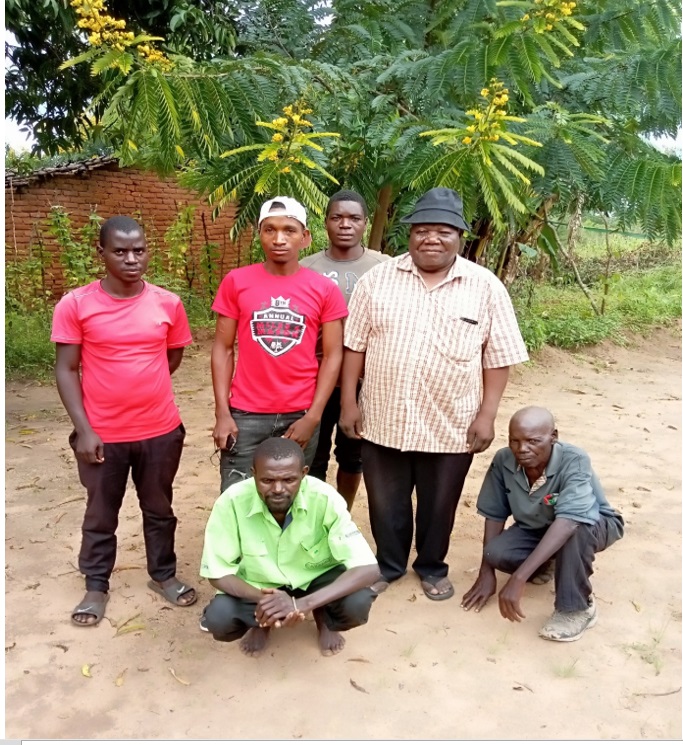
Figure 32: The Nthayo Mbale family. From R-L Mackson, Felix and Grandchildren of Jairos and Pyayira. Photo: W. Mkandawire/2023
Mackson is the son to Samson the elder brother to Pyayira. Felix Ntchito is son to Pyayira Nthengwe, the younger brother to Samson and Jairos but elder brother to Gindilon. Gindilon is the last born in Nthayo family. On the far left is Malizgani Mkandawire. The rest are their sons of the Nthengwe family.
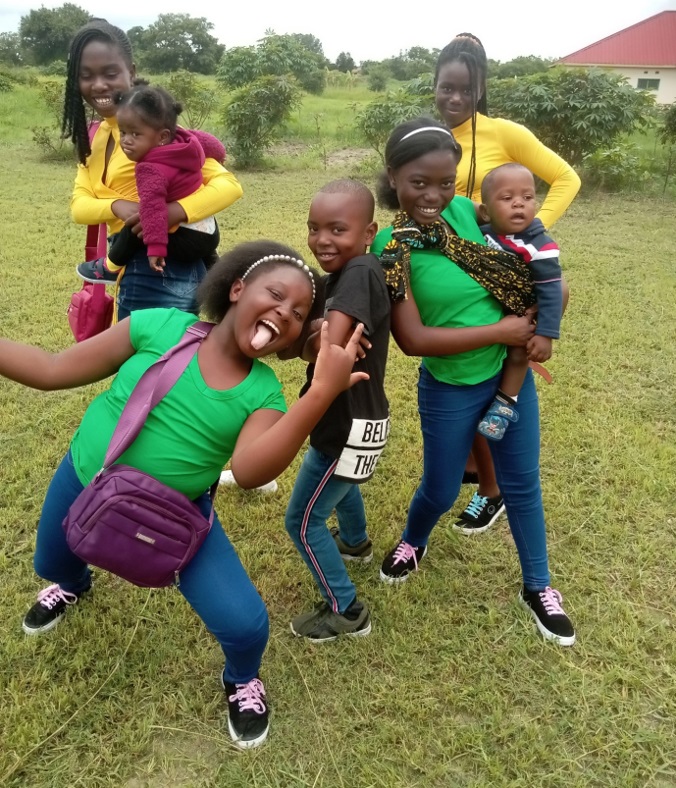
Figure 33: Felix Ntchito Nthengwe Partial family. Back row Left is Tuse Malema niece to Felix First Wife Leya. Back row right is daughter to Chenje Nthengwe young brother to Felix, Christine. The rest are Felix children and grandchildren from his second wife, Alice Phiri from Katete, Zambia. Photo: F. N. Nthengwe/2023

Figure 34: Lindiwe Nthengwe. First born child to Felix second wife, Alice. A brilliant girl child with a high vision of success. Photo: L. Nthengwe/2023
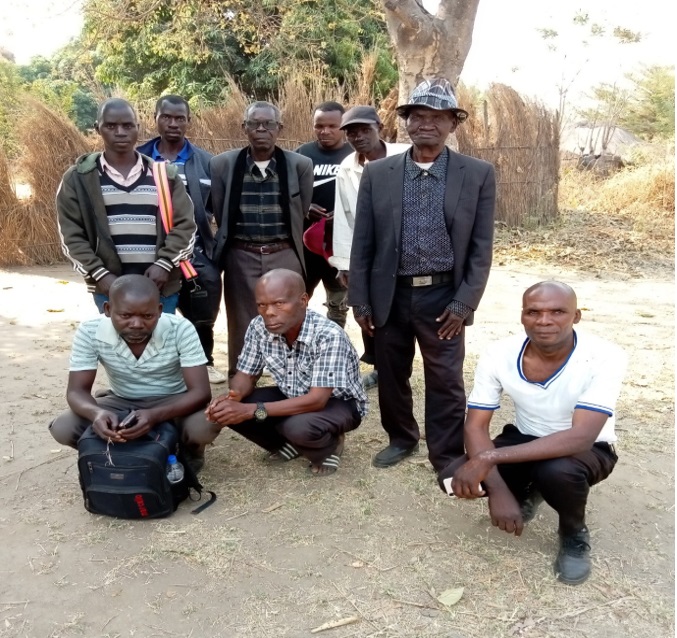
Figure 35: John Nyirenda son to Wuzgani Nyirenda (Kalovya Nyirenda, nephew to Felix Ntchito Nthengwe). From right to left: Wisdom Mbale son to Chuwulunga Mbale who is son to Mateyo Mbale who was son to Kalovya Mbale, John Nyirenda, son to Wuzgani Nyirenda. Secretary to Chief Tembwe (Zambia) Council, Nelson Nyirenda, son to John Nyirenda. Backrow centre is Mr Ng’uni, member of Chief Tembwe Council. The rest are Kalovya grandchildren. Photo: F. Nthito Nthengwe /2023 (Archive)
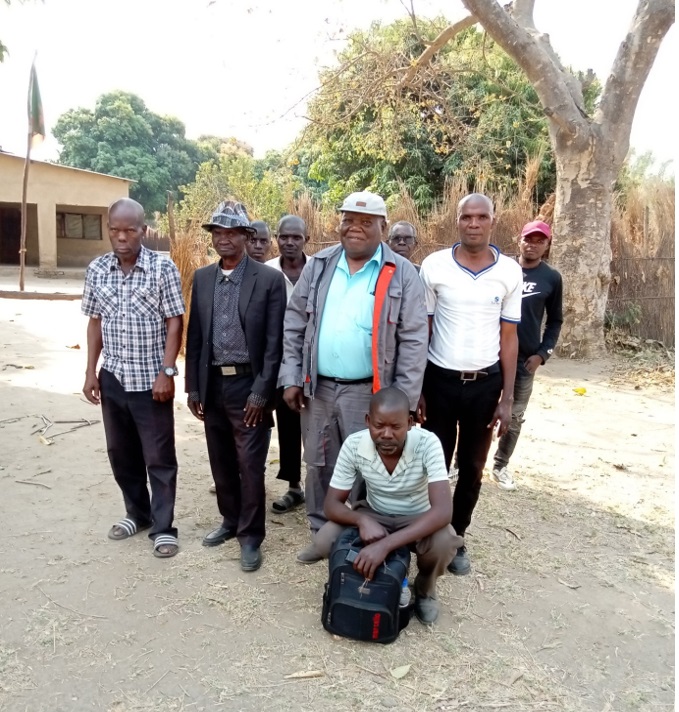
Figure 36: John Nyirenda with Felix Nthengwe: From kneeling down is Nelson Nyirenda, Felix Nthengwe spotting a work suit with a grey cape. On his right is John Nyirenda. The parents of these two are the founders of Kalovya Village after the death of Thomas Mgufu Mbale (Kalovya I). At the back with a red cape is Sokarao Mbale, the young brother to Wisdom Mbale. John and Felix are founder members of Kalovya Primary School in Chief Tembwe area (Zambia). Photo at Chief Tembwe Palace: W. Mkandawire, nephew to Felix Ntchito Nthengwe /2023
All photo from figures 31 to 35 are courtesy of Felix Ntchito Nthengwe in Kitwe of Zambia
Kamuvwi Mkandawire: Founding father of Maluza ChieftaincyThe children of Kamuvwi are Bodolo. Bodolo marries Nyavula and Nyankhata. In the first wife Nyavula the children are; Orphan and Lage mkandawire. Bodolo dies and Dimbiri Nyirenda inherits Nyavula and childrenare (see section under Dimbiri). In his second wife Nyankhata the chilresn are: Lameck Msengo Nelson. Lameck marries Rhodas Nyirongo and their children are; Happy,
As with other history write-ups, this section suffers from incomplete and incoherent information. It exposes the weakness of oral history. Benthupedia hopes that current and future generations will avoid this mistake by writing down their history. Wife, children, and relatives of Kamuvwi cannot be traced. When Kamuvwi dies the Maluza chieftaincy runs as follows:
Maluza NyirendaThe passing down of the crown to the nephews is intrinsically rooted in the Senga heritage.
Kambuka Nyirenda (father to Maluza Mhlawumo Nyirenda) Marries nyaGondwe. Their children are: Nkhusu; Kazani; Chimbamatondo; Kajimonkhole Nyirenda and Mhlawumo.
Mhlawumo: marries Wayitha Mkandawire, elder sister of Yandula Chindere Mkandawire. Mhlawumo, however, marries several wives, some of them are unknown. The children in Wayitha are: (i) Dewa; (ii) Gawira; (iii) Dimbiri and (iv) Wandeya Wadeka kavwakawo. In the supposedly second wife Lindani Botha, the children are: (i) Kachepa and (ii) Meyah. In what is probably the third wife, nyaChunda, the children are: (i) Galamala Timoti and (ii) Bata. Mhlawumo settles for the fourth wife, Kafwirawuzya. The children are: (i) Moses, (ii) Chikhawonga Guga and (iii) Selina.
i.Dewa: Marries Kavwakawo Botha. Their children are: (i) Berita; (ii) Elina; and (iii) Nelisi. He marries the second wife, Lindani. Their children are: (i) Lufeyo and (ii) Grace. Dewa marries the third wife, Tiza. They have a child, Thomas. Dewa marries the fourth wife, Leah Mvula. Their children are Kalinegi, Saulo, Mgeme and Kambombo.
ii. Dimbiri: marries Stere Ng’uni. Their children are: (i) Newulo, (ii) David, (iii) Samson (iv) Witness and (v) Tamanyawaka Deliwe. Dimbiri marries a second wife, Jessie Zimba. Their children are: (i) Nelson; …
iii.Moses Nyirenda marries Sella, daughter of Alick Petapeta Nyirenda. The children are: (i) Medai, (ii) Mlawona, (iii) Malama and (iv) Musili.
iv. Chikhawonga Guga Mzimba Nyirenda: Marries Chipulula Kumwenda. They have three girls. First girl Witness marries Mzale of Mphemba in Kamphakata. The second girl marries one Soko of Mahobe village. The third girl Mgada marries at Mgada of Kapera village, across South Rukuru River.
v. Kachepa Nyirenda: Marries NyaBotha and Nyaphangula. The children in NyaBotha are; (i) Vyeyo Wiseman, (ii) girl marries Ndengu. (iii) Male marries NyaChipofya of Kalyaman. In his second wife, NyaPhangula, the children are: (i) Twins Mleza and Nyuma, (ii) a girl marries Zimba of Kajande village at Jinga, (iii) Flyton Kaliko and (iv) Elias (deceased). Wiseman Nyirenda marries Bofida Gondwe. Their children are: (i) Tiyane (deceased); (ii) Rose; (iii) Yosefe (Joseph) (deceased); (iv) Yakhobe (Kiwi), current group Village Headman Maluza; (v) Esnart (deceased) and (vi) Nkhawone AKA Smart.
Maluza MtongaThe one other daughter of Munguza Mkandawire is Kajimonkhole. She marries Kapombe Mtonga. They have one child, by the name Yakobe.
Yakhobe Mtonga: (Maluza Mtonga) marries two wives; Mary Bata Nyirenda, a direct cousin and Jessie Nkhata. In his wife Bata, Maluza Mtonga fathers: (i) Friday and (ii) Emelita. In his wife Jessie Nkhata, they have: (i) Kanyifwa AKA Brighton and (ii) Halide.
i.Friday marries Tamara Chinula. Their children are: (i) Joyce, (ii) Luka, dies in his adulthood, (iii) Jacob, (iv) Timothy dies young, (v) Dafless.
ii. Emelita marries Yafeti Handala Nyirongo of Sonkho Village. Their children are: (i) Macrida, (ii) Balyenge, (iii) Emmanuel Phyoka, (iv) John Exley and (v) Lucia. Yafeti is born in 1927. Emerita is born in 1930. Yafeti dies in 1978 while Emelita passes on in 2000.
iii. Brighton Kanyifwa marries Ivy Longwe. Their children are: (i) Kamphamba, (ii) Lameck, (iii) Benard, (iv) Yohane, (v) Jessie, (vi) Friday and (vii) Memory.
iv. Halide marries Lonsey Nyirenda. Their children are: (i) Isaac, (ii) Nehemiah and (iii) Chaluta.
v.When the first wife dies Halide marries a nyaMnyirongo. Their children are: (i) Kanyifwa, (ii) Masiya and (iii) Romans.
Alick Petapeta Chiseseka Nyirenda:This is the Founding father of Sam Chigwangwa Chibinimbi Nyirenda Family. Alick Nyirenda marries Nthanda Chananga Ncheku, in Kamphata village of Malambo, in what is now Zambia. The couple is initially from Pondo Village in Malambo territory. Along with others, they migrate to Kamphata village within Malambo. The year of migration is unknown. Malambo is in Chama, North-east Zambia. Alick dies and is buried in Malambo. His year of birth and demise are unknown.
Family brawling breaks out after her husband, Alick, dies. Nthanda Chananga Mcheku is then forced in Kamphata to vacate. She moves to join her relatives at Maluza of Mzimba, in what is now Malawi. She moves in with the first grandson, Kazumbende Stoney Nyirenda, of her first male child, Mackey. Later, she takes on Medai, a granddaughter. Medai is daughter of Moses and Sella Nyirenda (see below). When Nthanda Chananga Ncheku dies, her remains are buried at Mtemera cemetery of Maluza alongside her brother, Kapombe Mtonga.
The children of Nthanda Chananga Mcheku and Alick Peta-Peta Chiseseka Nyirenda are: (i) Janet (1912-1998), (ii) Meke (1914-1974), (iii) Sella (1916 - year of demise unknown). Sella moves in with her mother Nthanda Chananga Mcheku at Maluza, where she marries Moses Nyirenda, son of Maluza Mhlawumo Nyirenda, (iv) Jotche (1918-10th October, 2003), (v) Chibinimbi AKA Chigwangwa (1920-22th August, 2006), and (vi) Doris Yangazu (1924-2001).
i.Janet marries one Kumwenda. They have six children altogether, one dies. The remaining children are: (i) Khongono, AKA Maria, (ii) Robert, (iii) Chatayika, (iv) Harry and (v) Dyna. Chatayika Kamaumba is crowned Chief Kamphata. This is in line with the Matrimonial tradition where male nephews inherit the chieftaincy.
ii. Mecky marries three wives. The first wife is Jane Botha. They have the following children: Kazumbende Chibinimbi AKA Stoney Nyirenda. After his mother dies, Stoney is under the care of his grandmother Nthanda Chananga Mcheku and Benthu in Maluza. Mecky marries a second wife M’Bothama Mwandila. Their children are: five girls and one boy they name Jimu. The girls’ names are unknown. Mecky marries a third wife, nyaZimba. They have eight girls; their names are not known.
iii. Selah marries Moses Nyirenda. Their children are: (i) Medai, (ii) Ethel Mlawona, (iii) Malama Ethel Mlawona marries one Munthali of Chawuti village in Madede.
iv. Jotche marries Katrina Dorothea Woga (3rd March 1924-27th September 2001). Dorothy, a coloured of Asian blood, is from Cape Town in South Africa. Jotche goes to marry a second wife by the name Queen of the Kawonde tribe. Four of the children from the first wife are born in Cape Town of South Africa. The rest, including those of Queen, are born in Zambia’s Lusaka, the capital city. The children in Dorothy are: (i) Janet Mary (23rd April 1953), (ii) Alec Silverman (23rd April 1955), (iii) Margaretha Silverman (10th May 1957), (iv) Meggie (-17th November 2021), she dies in a car accident and (v) Elfrida Sarah (28th September 1960-17th February 2004). Jotche marries a second wife of the Kawonde tribe by the name Queen, in Zambia. They have three children. They are: (i) Waggie (deceased), (ii) Selina (12th June 1978), and (iii) Brighton (02nd November 1987).
v. Chibinimbi Chigwangwa, AKA Sam, marries Enala Kawilo Nyirenda from Zowole Village around 1942. They have a child named Never Ndekazi. When the first wife dies probably around 1944 and 1945, he marries a second wife, Malita Mkandawire probably between 1944 and 1945. He fathers three children in her. Their names are: (i) Smart (1944-1996), (ii) Finious (1946) and (iii) Mlinda Bonita, AKA Isaac (1948-2022). Chibinimbi marries a third wife, Lucy Chibanga, in 1946. Lucy is born in 1933. She dies in 2018, aged 85. Chigwangwa and Lucy are cousins. They are blessed with the following children: (i) Dyna (1948), (ii) Bayard (1950- deceased), (iii) Kalumbi AKA Michael (1953), (iv) Msaya AKA Matile (1956) and (v) Meke junior (1962-2020). Chibinimbi marries a fourth wife, Dokiso Tiwakomole Nthengwe, AKA Meselina. Dokiso is Benthu’s third child in Erness Nyirenda. Their children are: (i) Alick (10th February,1962), (ii) David (1965), (iii) Joseph (25th December, 1967), (iv) Zakeyo (20th November, 1969), (v) Donald (1970), (vi) Janet (1972), (vii) Yandula (1974), (viii) Zondani (1976 -1976) and (ix) Nthanda (1978).
vi. Yangazu, AKA Doris, marries one Zgambo of Zowole Village in Malambo. Their children are: (i) Chileya, (ii) Goriya, (iii) Sayid, (iv) Winford, (v) Gama, and (vi) Nthanda. Gama dies young.
Sam Chigwangwa, fifth male of Nthanda Chananga Ncheku, marries Benthu’s Dokiso Nthengwe. Chigwangwa and Dokiso are cousins. Their marriage is probably arranged to keep the blood stock and Maluza chieftaincy through the nephews.
Unpacking intertwined family relations between the Mtonga and the Nthengwe, starts with six daughters of Munguza Mkandawire and his wife, Chikomazgango.
Kapombe Mtonga marries Kajimonkhole Mkandawire, one of the six daughters of Munguza and Chikomazgango. Mundalira Nthengwe marries the lastborn daughter of Munguza and Chikomazgango, Yandula Chindere Mkandawire.
Out of traditional etiquette, Kapombe and Mundalira are brothers through marriage. As a matter of fact, since Kapombe and Mundalira are brothers in marriage, Thanda Chananga Mcheku is the de facto sister of Mundalira.
Kapombe and Kajimonkhole bear one male, they name Yakhobe Mtonga. Mundalira and Yandula Chindere bear five children, four males and one female. The children of Kajimonkhole and Yandula Chindere are brothers and sisters through their mothers.
Nthanda Chananga Ncheku is a direct sister to Kapombe Mtonga. Mcheku is separated from his brother during the raging Zoa war. Separated from her brother, Nthanda Chananga Mcheku marries Alick Petapeta Nyirenda at Kamphata village of Malambo. The couple bears six children, four males and two females. Her children are direct nieces and nephews to Kapombe Mtonga.
The children of Kapombe and Mundalira address Nthanda Chananga Mcheku as aunty. Nthanda Mcheku's children and those of Kapombe and Mundalira, relate to each other as cousins. Since Benthu addresses Mcheku as aunty, their children are cousins, hence the marriage between Sam Chigwangwa and Dokiso.
Kalovya: Founding Father of Kalovya Nyirenda ClanTiza Tiwonelepo Nthengwe, is daughter to Chowo and Njabanthu Khalapazuba. Tiza marries Thomas Mgufu Mbale. Their children are: Nthayo, Mateyo, Zakaria and Rhoda.
Rhoda Mbale marries one Ngimba Manda. Their children are: Matafali, Tembani and Alesi.
i. Matafali, marries Kettie Mbale, a direct cousin. His marriage with Kattie is after he separate from his first wife Nyakumwenda.
ii.Tembani marries nyaMafuleka.
iii. Alice marries one Botha, a brother to Gotingo Botha.
Mateyo: Marries three wives: the first wife is nyaNyirenda of Chimphamba village. The second wife is NyaNgulube of Msazulwa village. The children are: Kattie Mbale... Mateyo marries the third wife, Nyamkandawire of Buli-Welachoto Vllage. Their children are: Chiwoto and Chiwulunga.
i. Kattie: Marries Matafale Manda, a direct cousin.
ii. Chiwulunga marries NyaMsimuko. He later marries the young sister. Their children are: Wisdom, Sokarao, and five daughters
iii. Chiwoto did not marry and, therefore, he has no children
iv.Wuzgani Thomas Karovya marries NyaGamba. Their children are, John, Zyanga and Tiza. Wuzgani is later offered a younger sister to his first wife as mbiriya (gift). Their children are Chimika, Kamwantche, and Elita.
v.Somehow, Tiza Nthengwe separates from her husband, Thomas Mgufu Mbale. She lives with her in-law Yandula Chindere Mkandawire. It is here where Tiza meets and marries Chimsewu Nyirenda. Recall that Chimsewu is son to Maluza Mhlawumo Nyirenda. The Tiza and Chimsewu child is Wuzgani Thomas Nyirenda. Wuzgani Thomas later becomes Karovya.
Kalovya Concumbine (Kapichira): Thomas Mbale befriends and produces a daughter Estere Mbale. Estere marries Mr Mbuzi and produce one boy and one girl. The boy is Ruben while the girl is Estere.
i. Ruben marries NyaZimba, Their children are Elita, Malizyani, Reuben and Ganka. In his second wife they have: Matolasi, Fakida, Jane, Felix (Chief Chikwa), John, etc. In his third wife, there some children.
ii. Estere marries Mugondozi. There children are: One boy and a few daughters
Chimsewu Nyirenda: Founding Father of Chimsewu clanMaluza Mhlawumo Nyirenda marries several wives. Some of his children are: Mchirankhuto, the first Chimsewu; Dewa; Gawira; Dimbiri, the next Chimsewu; Wandeya, and wadeya kavwakawo.
i.Mchirankhuto has the following Children: Phekesi, wife to one Mwale. Yesaya, father to Kaparamazayi. Emele, offered as a gift (mbiriya) to Mwale of Phekesi. Emele is direct sister to Phekesi.
ii. Dewa: Marries Kavwakawo Botha. Their children are: Berita; Elina; and Nelisi. Dewa marries a second wife, Lindani. Their children are: Lufeyo; and Grace. Dewa marries a third wife, Leah Mvula: their children are Kalinegi; Saulo; Mgeme; Kambombo.
iii.Dimbiri: Marries Stere Ng’uni. Their children are: Newulo, David, Samson, Witness and Tamanyawaka Deliwe. Newulo is husband to Sinayi of Fannie Chitira Nthengwe. Fannie Chitira is sister to Mundalira Nthengwe in Chowo and Njabanthu Khlapazuba. He marries a second wife, Jessie Zimba. The child is Nelson
Kalepule Chavinda:This is the founding father of the Chavinda Clan. After defeating the other tribes on their way down South, Kalepule changes the name from who they are as Kumwenda to a self-praise, Chavinda. The name Chavinda denotes a conqueror.
Kalepule fathers a son they name Fumbawowa. It is this Fumbawowa who marries Tembani Mkandawire, one of the elder sisters to Yandula Chindere. Fumbawowa and Tembani bear Chakufwa Chavinda, who becomes the first Ndakala. Another son they bear is Khongono Suzudu, who later names himself James. Along the two boys Chakufwa and Khongono are two girls, Nkhwere and Chimguyungu.
Khongono Zuzudu James Chavinda marries several wives, among whom is Nyalungu. Khongono and NyaLungu bear several children, some of whom are the famous Baidon and Joshua Chavinda.
Multiple migration from Malambo (Zambia), Sudan, and immigration within Malawi, has made it hard to trace each and every family. Absence of concreate dates and timelines have made it even harder to ascertain the accuracy of the lineage. The passing down of names to succeeding generations has also been problematic. The names Nthangali, Tiza, Joseph and others, have been passed down multiple times across generations. The lineage we outline, family dynamics and family relations are too intertwined to segregate. But the presented data is the closest one can get at with acceptable margin of error.
27. OBITUARY
Left hander by birth, Mike Brightwell Nthengwe dies in a hit and run car accident on Sunday, 21st June 1988. He is survived by two wives, Margarete Mbewe and Ruth Chirwa and six children; four boys and two girls.
Alfred Chokomeni dies in 1997, he is survived by a wife, Neggie Lusale, four girls and six boys. Alfred also leaves behind his father, Benthu, and his mother, Dyness Kawoli Nyirongo. At the time Dyness Kawoli Nyirongo passes away in 1999, she is survived by her husband, Benthu, a sister-in-marriage, Erness, daughter Norit Masiya and 22 grandchildren.
When Nthangali Joseph Gibson Benthu Nthengwe answer’s the heavens call on Thursday, 27th December 2001, he is survived by a wife, Erness and nine children – eight from Erness and one from Dyness.
Austin Tyson Longolani Samwanga Nthengwe dies on Monday, 2nd March 2009, he is survived by three wives, Joyce Nqube Nzima, Suzan Francisco Makwenda, Tamaratose Zgambo, four boys and eight girls (three adopted).
When Erness Chioni Nyirenda dies on Saturday, 8th November 2009, she is survived by seven children and 51 grandchildren.
Mapopa dies on 3rd November 2012. He is survived by wife, Kate Soko, a son and four daughters.
Tamaratose Zgambo of Longolani dies on Thursday, 9th November 2021. She is survived by six children, four girls and two boys.
When Macrida Masozi Nthengwe passes on Wednesday, 8th January 2022, she is survived by six children, two boys and four girls.
All three - Benthu, Chioni and Dyness – are survived by nine children, 73 grandchildren and several grand grandchildren.
Death is for people. Life is for God. In honour of our fallen parents, brothers, sisters, cousins and those that we may not know of. Table 1 shows some of the departed ones
Table 1: In honour of the departed ones
| Name | Date/ Year of birth | Date/ Year of demise |
|---|---|---|
| Chowo Nthengwe | Unknown | Unknown |
| Mundalira Nthengwe | Unknown | Unknown |
| Kasumbukira Chindundu Nthengwe | Unknown | Unknown |
| Zakeyo Nthengwe | Unknown | Unknown |
| Chithira Nthengwe | Unknown | Unknown |
| Dongo | 1942 | Unknown |
| Wayilela | 1946 | Unknown |
| Twin babies | 150 | 1950 |
| Yandula Chindere Mkandawire | Unknown | 1955 |
| Jonas | ... | 1959 |
| Jenala | ... | 1960 |
| Styness Nthengwe | 1953 | 1964 |
| Omi Nthengwe | 1962 | 1972 |
| Satumbwa Nthengwe | ... | 1975 |
| Ekesi Zimba | 1930 | 1976 |
| Esnart Chulu | 1926 | 1978 |
| Chanozga Esau Nthengwe | 1906 | 1988tbv |
| Mike Brightwell Nthengwe | 1952 | 21st June, 1988 |
| Getrude Nthengwe | 7th January 1965 | 12th October 1991 |
| Patwel vuzga Nthengwe | 1938 | 1997 |
| Chikomeni Alfred Nthengwe | 1947 | 1997 |
| Alick Nthengwe | 1958 | 1998 |
| Amon Emmanuel Nthengwe | 2nd June, 1981 | ...June,1999 |
| Kawoli Dyness Nyirongo | 1920 | 1999 |
| Whitehead Thomo Nthengwe | 1961 | 1999 |
| Esau Nthengwe | 1967 | 1999 |
| Snelly Nthengwe | 1965 | 1999 |
| Tafwilapo Kachali | 1938 | 1999 |
| Zinyanga Monica Nthengwe | 1969 | 4th June 2000 |
| Nthangali Joseph Gibson | Benthu Nthengwe 1914 | 27th December 2001 |
| Kingsley Nthengwe | 1967 | 2002 |
| Wilson Chindundu Nthengwe | 1979 | 2007 |
| Wilson kasumbukila Nthengwe | 1924 | 2008 |
| Jim Nthengwe | 1970 | 2009 |
| Longolani Tyson Austin Samwanga Nthengwe | 1939 | 2nd March 2009 |
| Chioni Erness Nyirenda | 1924 | 8th November 2009 |
| Menard Nthengwe | 1926 | 2010 |
| Nash Mapopa Nthengwe | 1960 | 3rd November 2012 |
| Timanye longwe | 1937 | 2014 |
| Soka Nthengwe | 1968 | 29th December, 2014 |
| Macrida Masozi Nthengwe | 1947 | 7th January 2022 |
| Tamaratose Zgambo | 1954 | 9th November, 2021 |
| Witness mwale | 1932 | 2021 |
Information in this obituary is thanks to Chimwemwe Simwaka Nthengwe and Meselina Dokiso Tiwakomole Nthengwe. Chimwemwe is the fifth son of late Mike Brightwell Nthengwe and Regina Ruth Chirwa. Mike is a son to Dyness Kawoli Nyirongo, Benthus second wife. Dokiso is Benthu’s daughter from his first wife, Erness Chiwoni Nyirenda. Please note that epitaphs on the tombstones provide conflicting dates of births and /or dates of demise passed on orally.
Also note that there are fallen relatives whose graves are unmarked. For instance, graves of Mundalira Nthengwe, Yandula Chindere Mkandawire and others like Nthanda Chananga Ncheku are buried within the cemeteries of the village, but their graves are unmarked. Other relatives like Zakeyo and Donald are buried in locations far away from home. We remember the fallen in life and death. May their souls continue to rest in eternal peace.
28. AUTHOR AND PUBLISHER
Sometime in 1965, a baby boy is born in Zambia’s Livingstone, in southern Africa. His grandpa, Chanozga, names him Mjedu. The name first appears in the Kasumbukira lineage. The boy’s father, Chigwangwa, names him David. Both names are after people of different histories and continents apart -Africa and Europe.
Mjedu is a name whose real story is unknown. The name is inspired by the twinkles of the eastern morning star. The name Mjedu signifies that the bearer has a bright future.
One Scottish explorer and missionary, David Livingstone, wanders about the savannah forest when he stumbles upon a gorgeous waterfall in November of 1855. He names the wonder feature Victoria Falls, after Queen Victoria of England.
The locals know it as Mosi oa tunya - smoke that thunders. The falls, characterised by cloud-like mists often appearing like smoke trails, are on the mighty Zambezi River. David goes to name the area after his surname, Livingstone.
The town becomes the second capital city of Zambia, before it is moved to Lusaka in the 1930s. The first known capital city of Zambia is Kalomo, some 125 kilometres north east of Livingstone.
In this town, Mjedu is born whose father names him David, after David Livingstone. Eventually, the name David gains traction and outshines that of Mjedu. So, Mjedu Nyirenda becomes David Nyirenda.
On one wet morning in 1972, David, his brother Alick, and their mother, Dokiso, arrive at Benthu’s homestead in Maluza Village, in Mzimba of Malawi. Mzimba borders Zambia to the northwest.
Dokiso is the third-born child in the family of Benthu. The three are warmly received under a thatched hut (mphungu). In the middle of the hut is a bonfire that warms the inside. The three are arriving from Livingstone.
In Livingstone, the two boys are schooling at Shanalumba Primary School before departing for Malawi. Fresh from their journey, David and Alick join their uncle, George, to start schooling at Echilumbeni Primary School in Malawi.
George is Benthu’s fifth son, brother to Dokiso. Uncle George walks his two nephews straight into the headmaster’s office to register them and pay their school fees.
David starts Standard One and Alick Standard Two. It is here where David’s second name takes a new twist. The headmaster of the school is potbellied Joshua Chavinda. In their relation, Joshua calls Benthu his father. It so happens that Benthu’s mother Yandula Chindere Mkandawire, has five sisters, one of whom marries a Fumbawowa Chavinda.
In our culture, children of sisters are brothers or sisters --not cousins, as it is in the English tradition. Excited in this relationship, the school head, Joshua, registers David Nyirenda as David Nthengwe. He extends the same gesture to Alick. During his primary school days, David adds Benthu as his middle name.
As David advances in age, education and professional work, he bears the name David Benthu Nthengwe in all his official documents.
Recall that Chanozga, who gives the name Mjedu is elder brother to Benthu. Benthu is David’s direct grandfather. Arguably, David has lived and grown up with Benthu and Erness the longest among all the grandchildren. But what’s in a name? Call him Nyirenda or Nthengwe, he errs and fails like any other person.
He confesses his failings to be too many to mention here. All the same, David celebrates small successes: a retired diplomat of the United Nations, a holder of a master’s degree in Social Sciences, obtained from the University of Leicester, in the United Kingdom (UK), a communications expert, a writer and a journalist. In these small successes, David considers himself the most privileged among all of Benthu’s grandchildren.
So, to whom much is given, much is expected.
29. A GLOSSARY OF BENTHU’S WORLD
This glossary is not exhaustive. We have prepared the explanatory notes to the glossary for mostly non-Senga and non-Tumbuka readers. We believe all readers will appreciate the deeper meaning and the environment under which Benthu was born, grew up, lived and died. The glossary is also written for the half educated about Benthu, his life and heritage. These words and situations better explain and illustrate the life story of Benthu and his family. In our thinking, explanatory notes have added value to meaning; we believe the content helps to define Benthu and what shaped his way of life. What we attempt to explain about Benthu is partially the great man’s heritage and legacy he left behind for his sons, daughters, grandchildren and relatives.
Asamunda: White colonisers. Historically, Britain, Germany, Portugal, France and Belgium officially colonised territories of sub-Sahara Africa. The scramble for Africa took place at a Benin conference in 1884. Colonisers assigned country names to territories that they occupied. Under Britain, Zimbabwe is Southern Rhodesia, and Zambia is Northern Rhodesia. Malawi is Nyasaland (a British protectorate). Under Belgium, The Democratic Republic of Congo is Belgium Congo. Under Portugal, Mozambique is Portuguese East Africa and Ngola is Angola. On his trips to South Africa, Benthu traversty Northern and Southern Rhodesia.
Bafa: Bathroom or washroom. In the village, a bathing room is usually made of special poles and grass with an open top. Its inside floor is made of durable wooden poles. Otherwise, most families took their bath behind a thick bush. Latrines (chimbuzi) were rarely in use. People responded to natures call in the open bush during day time. During night hours, they walked into the crop field or nearby bush a few metres away from the homestead to ease themselves. They dug a shallow hole with a hoe. After they are done, wiping is with large leaves, or cobs of maize as apparatus. They cover the shallow hole with earth. Benthu used a bafa for his bath. He took a hot bath even on the hottest day of the year of up to 35°c.
Bagala: Wooden stool. It is also known as chitengo (chair). Benthu used the bagala to place his radio singer on. Another flat wooden stool is where Benthu used to sit.
Bande: Dike. Bande (singular), mabande (plural). An embankment for controlling, or holding back the rain or flooding waters from a river. Dikes were common during the colonial occupation of Nyasaland. People did not like the exercise, which, in Mzimba, was introduced by the first white district commissioner, by the name Macdonald Madondolo. Benthu took part in the construction of the dikes.
Banthu: Belonging or relating to a group of peoples in central and southern Africa. Most studies indicate that the Banthu migration originated in West Central Africa, in modern-day Cameroon, Nigeria and the Democratic Republic of Congo (former Zaire). Some theories that indicate that the Banthu specifically came from the highlands in these territories. This group of people moved out across Africa in search of land and other resources. In Madede and Ndakala area, the Senga, Tumbuka and Ngoni are Banthu. The Chavinda under Ndakala are Nilotic’s from Sudan.
Boli: Zebra. With white and black stripes. Male and female zebra behave more or less like human beings when mating. The male will stick to the partner once mating begins until the female parturates (gives birth). This animal whose meat is extremely delicious is on the verge of extinction in this part of the world. Because of unregulated poaching, Zebras can no longer be seen in Benthu’s Maluza and across the territory.
Chaka: Can mean year or handle for an axe, or a hoe. Wood for making hoe or axe handle is from selected trees. Msinda is a special tree that grows around anthills. Its’ tough durable wood is used to make hoe and axe handles. The lesser strong woods are of Kamphoni and Mtondo. The other is a Mtowa tree, that whose handles easily crack. Benthu preferred Msinda for making handles.
Chama: A district in north east Zambia. It is territory where Malambo of the Senga tribe is found. Paramount chief Tembwe administers several villages including Kamphata. Kamphata village is where Dokiso’s husband Sam Chibinimbi Nyirenda was born and raised. The Senga of Mzimba originate from Malambo after fleeing the raging Zoa war in the 1800s. Benthu Nthengwe and his clan migrated from Malambo specifically in the area of Kapichira at Kamphambe village.
Chanozga: It means ‘it is good’. The name Chanozga is from verb stem ‘nozga’ (is a generic word that can mean fix, organise, arrange, etcetera). But in this context, the name Chanozga may mean ‘something is good’. The name is given to male children at birth. In the family of Mundalira Nthengwe and Yandula Chindere mkandawire, Chanozga is the third born child. Benthu is the fifth, Fannie Chitira Fannie, girl, is the last born in the family of five. The others are Jonas and Zakeyo.
Chantyere: A handy working tool with a wooden handle shorter than that of an axe. Its axe is fitted to the handle horizontally. It is mainly used for carving axe and hoe handles. It is a reliable tool for any wood works especially at a wood work shop. Benthu relied on this tool for selected woodwork.
Chibawe/Nombo/Khubi: Chibawe (Hawk). Nombo (eagle). Khubi (falcon). Poultry predators. These wild birds are a menace to poultry growing. They are scavenger carnivores by nature. These birds would keep Benthu worried finding ways to protect his chicken, especially when they have just hatched. The falcon has some benefits to communities. When a number of them are high up circulating on the same spot in the sky, they are transmitting a message to people below. The message could be that falcons have spotted a large herd of buffalo, or elephant in the vicinity. Or that they have spotted a carcass of a dead animal. Hunters or people rush to the spot perpendicular to where the falcons are circulating high up in the sky. If it is a carcass, a few falcons would already be feeding on the dead animal. People would set on the carcass with knives and axes to share the spoils. The younger Chibawe is called Luhela, or Kaluhera. They are deadly chicken predators.
Chibalo/Chilango: Punishment. Working in the mines and farms in South Africa was considered punitive, hence called chibalo. People traveling to south Africa in search of work were said to have gone to chibalo. Benthu and some of his village mates like Guga Mzimba Nyirenda, made gruelling and dangerous journeys to chibalo starting in the early 1940s and thereafter. Benthu preferred working on the farms and in eating houses (restaurants). He considered working in the mines as too risky. Mines usually collapsed and trapped to death workers many metres below the earth surface. The young crop of today travel to what they call Joni, short for Johannesburg, but they could be working anywhere in South Africa. The young men and women take up gardening and care giving in the homes of the white patrons receiving a poverty wage as pay. They travel by road and not walking by foot as was the case with Benthu. Several of Benthus’ grand children have travelled there. Water follows its gullies.
Chibiya: A clay vessel. Chibiya singular, Vibiya plural. Clay vessels are moulded into small and big vessels. Small vessels are for cooking meals and big ones are for brewing beer. Benthu’s mother, Yandula Chindere Mkandawire, mastered pottery in fabricating all sizes of vessels.
Chiduli: Anthill. They are earth mounds built by an army of termites. Most anthill are known for their rich brown or dark soils. Crops planted on anthills do well even without the use of fertilisers. Benthu optimised anthills to grow crop such as kafula corn, millet, pumpkins, sorghum or sweet cane (Njiho/Njivo/Mifi). Tomatoes too do well when planted around anthills. Flying termites (Mphalata/Inswa) sprouting from anthills, are a delicacy that show up in the month of March to April. Unverified theories suggest that winged Termites are only produced once a colony is mature and needs to expand (after approximately three to four years old). The swarm will leave the nest to seek out mates in order to form new colonies. Most fly during dusk or at night attracted to light spots. Benthu enjoyed mphalata.
Chigelo: Sickle. A serrated tool used for cutting grass and harvesting vegetables. Grass has been an essential roofing material for many-many generations until the advent of corrugated iron sheets. Benthu’s wives, Erness Chioni Nyirenda and Dyness Kawoli Nyirongo, used the tool to cut grass for thatching houses and roofs for granaries. The activity was carried out during May, June and July when grass is about drying. The work was usually left to women and girls. They would collate and tie them into mphundwe (bundle) see under mphundwe.
Chigwangwa: A hard part that forms at the bottom of the pot after cooking sima, porridge or rice. It is also known as chigongota or chikwangwa. It comes out crispy and brown like a cracker. The name was given to Sam Chibinimbi Nyirenda, husband of Dokiso Nthengwe. Apparently, the name was given to the bearer because he ravenously enjoyed the cracker. Chigwangwa’s other names are Sam, Chibinimbi, Palimatundu and Mundakalyanga. Chigwangwa is father to Alick, David, Zakeyo, Donald, Janet, Yandula and Nthanda.
Chigwere: Hippo or Hippopotamus. A massive marine resident found on the South Rukuru River. While it dominates the waters, it can also be destructive to crop fields on the river banks. This giant marine animal has over the years disappeared from the waters of the South Rukuru River. Poaching for its meat and large teeth has had the animal nearly extinct from the South Rukuru waters. Benthu and family did not eat hippo meat, but most families along South Rukuru River enjoyed it.
Chihengo: Winnower. It is made from bamboo or reeds. It is used by women to separate chaff from grain by means of a current of air. In the Senga and Tumbuka ethnic groups only women use a winnower. Weaving of winnowers is by men; pottery is by women.
Chikhawu: Cassava tuber. White when peeled. It can be eaten raw or cooked. It can also be processed into flour for preparing hard porridge (Kondowole) or fermented to produce liquor. Men use it as an aphrodisiac. Benthu grew a lot of cassava. But he rarely, if not never, consumed raw, cooked, or roasted cassava. He did not also enjoy hard porridge from cassava flour. Cassava is normally planted early in the wet season, usually around mid-November. As a perennial crop, cassava has no definite lifetime or maturation period. Chigwada, Casava leaves. Leaves can be cooked and tenderised in groundnut flour with bicarbonate of SODA distilled from ash, but not any other ash (see under vyoto). Chigwada is served with hard porridge prepared from maize flour (sima). Benthu occasionally nimble on Chigwada. His wife Erness was a specialist in preparing Chigwada.
Chikoko/Chinthuchawaka: Tumbuka for epilepsy. The condition is sometimes referred to as chizilisi (singular) or vizilisi (plural), convulsions in English. There are many possible causes of epilepsy, including an imbalance of nerve-signalling chemicals called neurotransmitters, tumors, strokes, and brain damage from illness or injury, or some combination of these. In the majority of cases, there may be no detectable cause for epilepsy. Epilepsy is common in the Nthengwe clan. When attacked, the patient develops spasms or convulsions. Convulsions are a sudden, violent, irregular movement of the body, caused by involuntary contraction of muscles and associated especially with brain disorders. A number of persons in the Benthu family are known to have this condition from birth. In some cases, the condition manifests during adulthood. Often times, death is by drowning when attacked while in water or by falling on fire. Persons with such condition are prevented from nearing water places, or are kept away from fire, or are dissuaded from climbing high trees, objects or structures. There is no known cure for this condition. Suggested traditional cure is preventing children from taking eggs, or eating mud fish. They are sometimes prohibited from eating certain types of okra like Lumanda or Nyolonyolo/Kateta. These perceived cures have not been scientifically proved to be potently effective.
Chikololo: A tobacco cigarette. It is prepared in two forms: processed from a tobacco cigarette factory, or from merely crushing the dry tobacco leaves which are wrapped in soft materials such as maize husks, dry banana leaves, or discarded paper. Benthu lit up, but gradually dropped the habit only to develop a craving for snuffing.
Chikumba: Skin. Vikumba plural. Skin of the human body or of animals is chikumba. Animal skins can come from all source of animals, wild or tamed. The most common are skins from tamed animals such as of goats, sheep and cattle. Skins can be used as mats for seating and sleeping. Alick, David, Joseph, Zakeyo and Donald slept on cow skins at their grandfather, Benthu. Animal skins were also used for preparing special attire for traditional dances like Ingoma of the Ngoni and Vimbuza of the Senga and the Tumbuka. Up to this day, the skins are used to make drums. Animal skins can also be used for decorating artefacts and many other items.
Chilayi: Is a short pole fitted with an axe or a hoe for digging holes during the construction of houses, granaries, thala, and such other works. It can also be used for harvesting cassava and potatoes. A chilayi or Chileyi was one of Benthu’s working tools.
Chiliro: Mourning. Senga and Tumbuka word for mourning. The word is given as a name to a child who is born soon after the demise of an elderly person in the village. For not being able to understand the calendar, such names also served as a form of documentation. The name is given to a male child while a female child is Masozi. Chiliro and Masozi are two of Benthu’s children.
Chilindo: An isolated homestead of usually a single family. Chilindo is noun word from kulinda (to wait). Chilindo or a waiting place in English, is a noun word from a verb kulinda. Chilindo is Tumbuka vernacular. It carries a nuanced meaning of sarcasm to a family that has chosen to isolate from the main village. Benthu leaved at a chilindo. Some villagers often rebuke if not mock Benthu, for confining himself at a Chilindo.
Chimbwi: Hyena. Wearing white and black spots. A hyena is also referred to as a wild dog. The animal is in the family of jackal (kambwe). Hyena and jackals are nocturnal animals. They live in underground caving (mphanje). Hyena are a menace to tamed poultry, sheep and goats. They catch and eat dogs too. The animal are scavengers, often on the trails of big wild cats. They trail cats to scavenge on carcases left by especially lions and leopards. In Maluza, hyenas have long been associated with witchcraft. Some elderly people were accused of turning into a hyena during night. No proof has come forth to ascertain such claims. Many scary fireside stories were around a hyena, which instilled fear especially in children. When a hyena dies, its odour prevents other carnivores from eating its meat, even fries do not come anywhere nearby. Benthu and his family were scared by even rumour of hyenas being around. When it sounded out, families kept indoors, scared of the animal.
Chimphonde/Chibwabwa: African nut butter. It is prepared by pounding fried and salted groundnuts. Nut oils can keep chimphonde for more than a year without getting stale. When refrigerated, it does not get frozen. It can be eaten raw, or used as a tenderizer in dry food stuffs such as meat, fish, mushrooms and vegetables. Travellers to South Africa like Benthu prepared and carried the chimphonde and dry vegetables, a vital food ration throughout the journeys. Groundnuts can also be processed into peanut butter without additives, often a substitute to margarine. Groundnuts are grown without the use of fertilizers. The plant is nitrogenous. In Malawi groundnuts can be grown everywhere.
Chimsewu: Is the descendant of the Maluza Nyirenda. Named so because the village is installed by the road side. This chieftaincy is located at Chipyuzi just behind Manda hill in Zambia. The first Chimsewu was famously known as Kasunga Mpombo Pala wanya namise wagona nanjala, transliterated as ‘The keeper of the rectum, when it opens bowls, you sleep hungry’.
Chimwamaji: Watermelon. Transliterated as drink water. The melon matures during semi-summer season, that’s from end of May to June. They are two types of melons: the casing can either be white or green. The inside is either white or red. They are sweet and succulent when fully ripe. Usually, monkeys would descend on them and eat out the inside of the watermelon eve before they are mature. Benthu still planted the seed despite the existential threat from monkeys.
Chinaka: Also known as ‘African meat ball.’ The plant grows largely in the valleys together with the grass. When mature, it develops a tube-like Irish potato. Harvesting is by digging it out from the shall soils. Chinaka is processed by pounding the tube which coagulates into a ball, hence named the African meat ball. The ball is cooked and tendered with distilled ash, commonly known as tchezeko or chidulo urgent. It can also be tenderised in groundnut flour. The ‘meat’ can be eaten as a snack, or with hard porridge. Benthu partakes of the cooking ravenously.
Chindere: Fool. She is mother to joseph Gibson Nthengwe. Her husband was Mundalira Nthengwe. She and Mundalira are parents to Benthu and four others. Mundalira died in 1947 and his wife Chindere died in 1955. It is unclear why she was named Chindere (fool). They are buried in unmarked graves.
Chinkhombe: Senga word for a cooking vessel. It can be in form of a clay or metal cooking vessel, pot.
Chipembo: A cooking place. Chipembo singular, vipembo plural. A chipembo would either be in the mphungu, a kitchen, or in an open place. Its main product is ash that women use to scrab pots and pans. The loose substance is also used as deodorants in latrines to kill the odour.
Chipingo: A trap. The trap is used to catch small animals, mostly birds. A chipingo is usually set up around a fruity tree, or on the edges of a freshly planted field. The bet is a fruit or a seed. The mechanics of a chipingo involve fixing a strong elastic rod of stick into the ground firmly. Trappers do not just use any other stick. The use sticks of either of Mvunje, Nchinkha, or Sito. The species contain a degree of elasticity in them that endures tension from bending. A treated string is attached and pulled down to create tension. The string is treated with special herbs to entice prey. A bet of fruit or seed is attached to a string and latched on a stick whose ends are dug into the ground. The extension of the string is made into a loop that catches prey by the neck once bet is released. A chipingo can catch a guinea fowl (Nkhanga) and other smaller birds. Animals the size of a deer need a wire or twine to catch such prey, but a wire set up is different from a chipingo. Traps are different depending on the method and type of prey.
Chiseseka and Petapeta: Senga honour names given to Chiefs under paramount chief Tembwe Nyirenda of Malambo, in Chama northeast Zambia. Among the Senga, chiefs are addressed as Ngoko or Angoko, in place of fumu (male) or fumukazi (female). Chiseseka is simply a title given to chiefs. This name does not carry any direct meaning. Petapeta is another title name for chiefs. In a literal sense, Petapeta refers to one who walks in a zigzag manner. The name imputes one with almost aimless movements between places. Chiseseka and Petapeta are title names that are given to the Tembwe bloodline sons who have sat and ruled on the Tembwe chieftaincy, or are from the Tembwe Nyirenda lineage. Chigwangwa, father to Alick, is a direct descendant of paramount chief Tembwe Nyirenda. The appointment and installation of paramount chief Tembwe cannot take place without consulting holders of Chiseseka or Petapeta titles. These people happen to be family members of Alick Chiseseka Nyirenda. Sons of Dokiso, Alick Nyirenda and his younger brothers, are the right heirs of the paramount Tembwe chieftaincy. They are rightly honoured as Chiseseka or Petapeta, Kumpembuzga Nkhumupa Chisungu (when in distress, Chiseseka and Petapeta can be soothed with nothing else but offering them a young celibate lady). As an honour, Benthu often addressed Alick, his firstborn grandson of Dokiso, as aChiseseka or aPetapeta. Benthu was spot on. Because Chigwangwa married Dokiso, their children are also heirs of the Maluza chieftaincy.
Chitete: Basket. It is made from reed or bamboo. A basket can be used for storing or processing food. Soaked grain (mphale) is place in chitete to help drain excessive water. Chitete is also used for carrying materials especially unprocessed food.
Chithokozo: Every clan is identifiable by a rendition different from all others. Chitokozo is a rhythmic recital of names of ancestors arranged in hierarchical order. It helps mark our profound expression of gratitude to them in order to guarantee and authenticate our sense of belonging to the clan. Chithoko defines genealogical distinction between our clan and others. Chithokozo can be expressed in few words or can run into several pages of words. Benthu has chithokozo which can be found under: BENTHUS’ RENDITION (CHITHOKOZO CHA BENTHU)
Chitupa: Housing for domestic animal or poultry. Chitupa (singular), Vitupa (plural). A chitupa can take different forms and shapes. Goats (mbuzi in Tumbuka and Senga), sheep (mberere in Tumbuka and Senga) and cattle (ng’ombe in Tumbuka and Senga) are sometimes housed in a chitupa made of wood, but without a roof. Chicken and doves are kept in chitupa with a roof. Modern chitupa for goats and cattle are rooted with either corrugated iron sheets or grass.
Chiuta: God. As understood by the western religion. Chiutangoza (idol), a god of the Senga (see under Kalukumbili). In other languages, chiuta carry the names of leza or Lesa; Mulungu; Namalenga; Tata or Tate; Mungu or Mphambe; Katonda or Chatonda; Nzambe and many others according to culture.
Chivwimbo: Nest, lid, or a cover. The other words for a cover are chibenekelelo, chivwindikiro or chijaliro. The verb stem is vwimbo. The verb for making chivwimbo is kuvwimba or close.
Chiwoni: Literally means something decorative. It is usually a name given to female babies. The first wife of Benthu is named Chiwoni.
Chiwuli/Kaligola: Skunk. A bush rodent carrying a fluffy tail. This rodent is slightly bigger and more agile than a rat. It attacks domestic fowl (poultry), such as chickens (nkhuku in Senga and Tumbuka), turkeys (nkhukundembo), ducks (mabaka), geese and pigeons (nkhunda) during night. Only dogs can prevent it from attacking poultry. The skunk also feeds on honey of bees.
Chiyaga: Usually a cloth that is wrapped above the bust to conceal a woman's breasts. While it helps to air late the body, it also serves other purposes. It is also convenient during toileting and other private activities. Yandure Chindere was famously known for chiyaga. Chiyaga is still in use to this day especially by elderly women, but not for dressing in public.
Chiyawo: Yam. Yams produce a tuber-like cassava or potatoes. The stem is a green creeper. They are consumed cooked like cassava. Benthu tried his hands at growing yams, but the soils were not right for this plant. One wonders where Benthu sourced yam vines, but it is a staple food in west Africa, mainly Nigeria.
Chiyombo: A special tree species from which ropes are made. The ropes are called nyozi. The tree is stripped of its bark and prepared into ropes. The nyozi is used to bind and reinforce roofs and walls of houses and granaries (nkhokwe). The rope is also used for reinforcing wattle of houses. Rolled straps are first submerged in water for a day to soften them. After which, the straps are ready for use. Nyozi was Benthu’s most reliable material for construction works.
Chikomazgango or Zganga: Bluffing. Zganga is to bluff. Chikomazgango is a noun in the Senga or Tumbuka native vernaculars. Zganga is a verb in these vernaculars. As names, they are given to boys. They connote a child that is born to cheat survival after previous losses of a child, or many before. After Benthu lost several children at birth, he concluded that any child after is merely a bluff. They would not survive. No empirical evidence supports such claims except that they are an expression of anxiety. Chikomazgango is child number six of Benthu and Erness born in 1950. True to his name, he was indeed a bluff. He did not make it.
Chona na ntchebe: Cat and dog. Benthu’s best animal friend was a cat. The cat killed him home rodents (mjantcha). It scared away, if not killed snakes. Snakes were Benthu’s worst scare. Benthu considered cats as gentle, except they poo in his sima flour. Man’s best friend, dog, was Benthu’s most disliked pet. The animal’s eating behaviour was enough to put off Benthu from keeping dogs. Benthu did not keep dogs, nor did he like their mere presence. Benthu said of the animal, ‘Dogs are dirty and filthy’. They eat anything and everything, including human poo.” By contrast, Benthu’s village mates kept as many as 15 dogs, mostly for hunting.
Dada/Tata: Father. The opposite of mama(mother). In Senga, it is Tata for father and Mayo for mother.
Dekhani: A black oily spell. The ng’anga applies the spell on the head of a suspected sorcerer (fwiti). Benthu and his wife Chioni Erness were long suspected of practicing witchcraft apparently to harvest a bumper yield. When the spell was applied on Erness, she was not expected to take and eat anything from her crop field, or she would die. With the spell dripping from her head, she boldly walked into her crop field, cut a sweet can, and ate it in view of the onlookers. Erness did not die, proof that she was not using witchcraft to yield more crops. It was a breath-taking but laughable incident to watch. All this happened in the late 1970s.
Dengele: A remnant from a broken clay pot. The remnant is an open oven for frying maize and groundnuts. A dengele is also used to fry grain of millet in bulk. Fried ground millet is use to ferment local brew. The remnant is sometimes used as a water trough for pigeons. It can sometimes be used to crush and grind burnt medicine roots. The remnant is useful tool for most families in Maluza for such uses.
Dongo: Soil. The noun word is given as a name to a child to signify that he or she may not last. It means bristle, breakable. It is given in the experience of loss of babies during childbirth. Dongo was a girl, second child of Bemthu and Erness.
Echulumbeni: Thank you. A Ngoni word. The word can also be given as a name, as in Echilumbeni primary school at Madede. The primary school facility opened in 1904. Almost all of Bentthu’s children and grandchildren attended or attend school at this facility
Euthini: Ngoni word for ‘what do you say? The county is one of the six Ngoni conquered territories across Mzimba, north-west northern Malawi. Euthini is situated on the west of Mzimba. Mzimba borders Zambia on the west. On the north-west Mzimba borders Rumphi in Malawi. On the north-east, Mzimba borders a lakeshore district called Nkhatabay. On the east, the Ngoni territory borders another lakeshore district called nkhotakota. Kasungu borders Mzimba on the south-east. Mzimba as a territory occupies a surface area of 10,430Km2, making it the vastest out of 28 districts that make Malawi. According to the National Statistical report of 2023, the population of 1,017,701 betrays the size of the territory. Euthini is a territory under Chief Chindi Jere of the Ngoni tribe. They are six Ngoni Traditional Authorities that rule over Mzimba territory. Outside Chief Chindi Jere, the others are: Kampingo Sibande, Mabulabo, Mzikuwubola and Mzukuzuku. All these traditional authorities fall under paramount chief M’mbelwa, saluted as Inkosi ya Makosi, the equivalent of a monarch. Inkosi ya Makosi crown Prince the 5th, is the reigning paramount chief M’mbelwa. No Ngoni chief occupies a grade lower than Inkosi in all the Ngoni conquered territories. Benthu’s Maluza is under Chief Chindi Jere of Euthini.
Folo or Hona: Tobacco. A green plant whose leaves can be processed into snuff, or made into cigarettes. Benthu used to smoke before converting to snuffing ground tobacco. Benthu and his wives snuffed ground tobacco to boost their alertness and energy. Ground tobacco is prepared on a mill stone (Mphero) with a smooth round stone (Mbokodo). The ingredients are dry leaves of tobacco, processed ash (Mdomba) and drops of water. Benthu’s mother, Yandula Chindere Mkandawire, used to process tobacco snuff on a milling stone. Yandula Chindere Mkandawire died in 1955, but her Mphero and Mbokodo can still be found at her village today. Her grandchild, Dokiso Tibakomole Nthengwe, has inherited the Mphero and its Mbokodo. Dokiso too prepares and snuffs ground tobacco. On occasions, the exchange of snuff opens a serious conversation, or an announcement of death, or upcoming events, i.e., a marriage. Outside Dokiso and Masozi, no other child snuffs tobacco. Benthu’s grandchildren, Donald and David, snuff the substance for pleasure. The men enjoy mostly the sensation from tobacco nicotine. Nicotine boosts alertness. Snuffing also preserves their grandfather’s legacy. In today’s Malawi tobacco is a high value product for the economy. The leaf is the country’s highest forex earner.
Fuko: A container of ground tobacco. The fuko can be a disused small container that can fit into a pocket. Fuko has its own rituals. A couple entering into marriage is first introduced through the exchange of mdaza (natural container), full of ground tobacco. Parents of the bride and bridegroom swap containers of mdaza filled with hona. The ceremony is conducted during the night. While the use of mdaza is fading away, the tradition is still practiced today
Futu/Mahuhu: A natural tree that bears green fruit which turns black when ripe. It has sweet taste when eaten, but leaves the tongue black. Its hard seed is discarded. Birds, rodents and other animals enjoy the fruit. When eaten, its fibre is good for opening bowels. Benthu occasionally ate the fruit as did others.
Gogo/Agogo: Grandparent(s). Gogo is gender neutral. Can be male or female. When gendered for distinction, they are addressed as grandfather (grandpa) or grandmother (grandma). Granny is female. Agogo signifies plural. Grandparents can be from the paternal or maternal side. In the Senga tradition, they are called sekulu, or asekulu (male) and Buya, or abuya (female). In the Senga, we do not have names for great grandparent, or great great grandparents.
Gulupa: Catechist. Within the rank and file of the Roman Catholic setup, a catechist is an assistant in the church. Although they are not priests, they do preach and conduct church services. Adamson Mkandawire assumes the name Gulupa for the position he held at Mzambazi Roman Catholic Church. Otherwise, his name is not Gulupa. Villagers famously addressed Adamson Mkandawire as Gulupa, to become Gulupa Adamson Mkandawire. Adamson is son of one of the Chindere’s sisters who was married to a man with a similar surname, Mkandawire. Through their mothers, Adamson and Benthu are Brothers. Adamson took custody of Benthus’ son, Longolani, in the late 1940s, for his education at Mzambazi Catholic institute.
Hlazi: Is a Ngoni word, in Tumbuka the equivalent is Mbirigha. Hlazi or Mbirigha is a young lady offered to a son-in-law as a second wife in recognition of his good works and conduct. Usually, a Hlazi is a younger sister or a direct cousin to the first wife. However, Hlazi or Mbirigha can also be offered in situations where the first wife is barren, unable to produce the required number of children, or has died young. This tradition is prevalent in the Senga, Tumbuka and the Ngoni ethnic groups. The gesture is not extended to a woman if a man is impotent. If that happens, it is shrouded in guarded secrecy.
Ingoma: A traditional Zulu dance of the Ngoni from South Africa. The dance is characterised by war mongering. When the Ngoni fled from the Shaka Zulu persecution, they trekked northwards to Zimbabwe, Mozambique, Zambia, Malawi and Southern Tanzania. In Malawi they conquered territories of Ntcheu, Dedza, Mchinji and Mzimba. They imposed their way of life in the conquered territories. Ingoma dance is characterised by the use of a spear and a shield made from animal skin. After the conquest of Mzimba territory by the Ngoni, Ingoma was imposed on the defeated populations as a traditional dance. It was so that every school and every village practice Ingoma. Benthu did not dance Ingoma. In Mzimba, the Ngoni celebrate umthetho at Hola Mountain just west of BOMA central business district
Jalawe: A rock that can be found just below the earth surface, or further down the earth. The rock impedes the sinking of water wells and nothing grows on top.
Jembe: Hoe. Jembe (singular), Majembe (plural). Made from metal and fitted to wood as its handle (hoe handle). The tool is reliable for crop production by smallholder farmers, mostly in the rural areas. It is mainly for making ridges. Alongside this tool, is an axe. Benthu had hoes for each family member who he deployed on his farm land. Benthu led the pack.
Jungu: Gourd. Jungu (singular), majungu (Plural). Of different round shape and colour. They are planted together with maize/corn at the beginning of the rainy season. The plant grows into a green creeping stem that produces round leaves. When gourds come out and are ready, they are boiled and eaten. Families ate gourds as an additional mill to sima. Elephants, monkeys, pigs, warthog, cattle, sheep, and other bovine animals, enjoy gourds. In his day, Benthu planted and harvested majungu in plentiful. Not anymore.
Kabale or Mtenje: Roof. Kabale (singular), wakabale (plural). Kabale is pronounced as kawale. Roof of a granary especially prepared in a corn shape. A kabale can also be for chicken or a dove-stay. In Tumbuka and Senga, Chicken housing is chitupa cha Nkhuku and pigeon housing is Chitupa cha Nkhunda. Alongside chickens, Benthu adored pigeons
Kabeza: A seasonal fruit. The Kabeza tree bears a green round fruit the size of a tennis ball, or slightly bigger. It turns yellow when ripe. Its casing houses several seeds that have watery staffing around the seeds. The fruit tastes sugary. Kabeza is ready from August through November. Benthu left the thorny natural tree to grow on his farm land in order provide fruit for his family.
Kabizi: A natural tree that grows as high as 30 metres. Its wood is exceptionally hard like oak. Kabizi wood is good for housing homes and granaries. The wood is also very good for timber and any other woodworks. Such type of wood was handy for Benthu to use for construction purposes. Often times Benthu did not clear from his land this type of trees. Illegal lumbering and logging for commercial use, has rendered this species of trees near extinct. Its green leaves attacks larvae that mature stinkbugs (kabizi). Cooked in salt water, dried until they turn crunchy, the caterpillar is a delicacy for the Senga and Tumbuka ethnic groups. The caterpillar, known as Kabizi named after the tree, appears at the beginning of the rainy season. The caterpillar was Benthu’s favourite delicacy when it appeared.
Kabvuba: Senga and Tumbuka ritual for honouring the ancestors. A Kabvuba is a dugout shallow hole in which a small portion of alcohol is poured as libation. In these ethnic groups, nothing is done without first honouring the Kabvuba. These people speak to their ancestors through the Kabvuba. Before moments of joy, a small amount of alcohol is poured in the Kabvuba to ask the ancestors to grace the ceremony, or is deliberately spilt on the ground as libation to appease the spirits. In so doing, the Senga believe the ceremony will run without any unfortunate incident. Benthu observed the Kabvuba tradition religiously.
Kabvumba/Kavuluvulu: Whirlwind. The baby tornados, or twisters, send dust and light materials high up in the sky. When a landfall of a whirlwind strikes a village, the Senga are suspicious. When the force of the wind blows off the roof, the Senga interpret that the ancestors are unhappy. In order to prevent the whirlwind from reaching the village, they point a baby finger (pinky), or elbow, in the direction of the wind force, so that it diverts its course. They do so while urging, ‘pitila uko, kuno kuli bere. [Go over there, for here there is a breast]. The link to the breast is not explained. Outside that the whirlwind is a natural occurrence, there is no hard evidence that the forces of wind are a warning message from the ancestors. Yet, Benthu and family members often performed this act believing that they can protect their homestead from the hostile wind forces. Whirlwinds are common during the hot dry season.
Kachalo Kabisi: Wet, cold land. In Malawi hilly and mountainous areas are associated with drizzling rains and cold weather. Even during the summer season. Nyika area and Mzuzu in north, Dedza in the Centre, Blantyre and Mulanje in the south are associated with such weather. Having lived in Blantyre, then called Kabula, Benthu describes the wet land, Blantyre, as Kachalo Kabisi.
Kalikumbili: A type of bird. Bird Kalukumbili is a designated idol of the Senga. Such idols are called chiutangoza, they are not the equivalent of the Christians’ God, or Allah of Muslims. Chiuta is Senga and Tumbuka noun word for God. Kalukumbili was worshiped by the Senga living in territories stretching from Chama in now northeast Zambia to Chitipa, Rumphi and Mzimba in now northwest Malawi. The mentioned locations were once under one territory. Among the Senga, deities (chiutangoza) can be in the form of a wild animal, a mountain, a tree, or a sculpture. Bird Kalikumbili is no longer worshiped in these territories since the introduction of foreign religions like Christianity and Islam. However, god Kalukumbili explains the origins of Benthu and his clan.
Kalovya: Is a chieftaincy of the Maluza and Nthengwe descendant. Kalovya and Benthu are separated by an international boundary, so that Kalovya is on the Zambia side. The 976-kilometer land boundary between Malawi and Zambia was first established as an internal British colonial border in the late 1800s. The frontier runs generally north-to-south through Chama and Lundazi, roughly following the drainage divide between the Zambezi River and Lake Malawi/Lake Nyasa. The creation of the boundary between the two countries was after the scramble for Africa at the Berlin conference in 1884. In southern Africa, Malawi, Zimbabwe and Zambia fell under Britain.
Kambala/Lipoko/Mabere: Millet. Roundish, reddish, the size of sand. It is planted by the broadcasting method at the beginning of the rainy season. It grows like any other grass except it matures in a folded finger like head. The plan is green and grows up to 50 centimetres high. Its millet is processed into flour that can be cooked into soft or hard porridge. People make sweet alcohol beverage and intoxicating fermented brew from its flour. Before harvest, birds pick and rodents munch the grain. Ritualistically, the grain is used to heal the inflammation of the lymph nodes (mbambavu/lymphadenopathy) that develop on the upper thigh next to groin. Mbambavu can sometimes develop under the armpits or lower jaws of the mouth. Mbambavu is painful and can cause high fever in a patient. As cure, the affected person throws a handful of the millet grain on the fire. When it pops the person jumps over several times. The patient takes a wooden cooking stick, warms on one end on the stick fire before pressing on the mbambavu. The swollen part usually disappears several minutes after. The pain is gone, so they believe. There is no scientific proof that it does work. Science says a mbambavu is as a result of an infection in one part of the body like fingers, toes and tongue. Once the affected part is treated, the mbambavu goes away.
Kamphamba: It is a diminutive term for Mphamba. The opposite is Chimphamba. Mphamba is a traditional herb that is used to cure ailment or cleans incantations. For instance, the angry swearing, ‘we will meet in heaven’, can be cleansed by mphamba the herb. If not respected, the person swearing in these words, may suffer from unexplained bodily disorders, like blisters. But Kamphamba is also a name given to a male twin as in kamphamba Nthengwe, twin of Omi.
Kamphoni: An indigenous tree with slightly smaller leaves with whitish bark. A tree can be used for making hoes and axe handles. When dry, it makes for good firewood. Kamphoni is in the family mtondo species. Benthu used the wood for multiple purposes, mostly as wood for fire.
Kamukaya: A family of peas. The seed is planted next to a standing pillar, or a tree, so that the green stem spirals up the object. The stem and its leaves are green. The seed and its pod are also green. Benthu loved eating fresh boiled kamukaya. When dry it can be cooked like any other beans or peas for the family to enjoy. Kamkaya peas are no longer grown in the village
Kandukutu: Mumps. The Senga believe that eating nuts that have stayed for more than one growing season (Skaba za chomba) can cause Kandukutu. The claim has not been independently verified. The disease does not have a known local cure, but it predominantly attacks young people. Symptoms of Kandukutu are swelling of the cheek and jaw area, pain and fever. Science says mumps are caused by a virus that is found only in humans. Mumps are contagious through especially sharing drinking and eating utensils.
Kanjerekamo: One small seed. A diminutive term for a single seed. The word kanjerekamo comes from a word njere or seed. Njere is singular and plural itself. In the Senga tradition it is regarded as a seed for the maintenance of the bloodline. The name is given to the only boy in the family. Gomezgani of Mapopa Nthengwe and Kate Soko is nicknamed Kanjerekamo. He is the only boy in the family of 5 children.
Kanyung'unyanga: He is elder brother to Mundalira Nthengwe. His full names are Nthangali Kanyung'nyanga. He is the first known Nthangali, Benthu son of Mundalira also assumed the name Nthangali, Menard son of Kasumbukila was also named Nthangali. George son of Benthu was also named Nthangali. After George, the name Nthangali has ever since faded from the Nthengwe lineage.
Kasumbukira: A title name. The first Kasumbukila is Chowo nthengwe, father and founder of the Nthengwe clan. The name has been passed down ever since Malambo, in Zambia to several generations down the line. Kasumbukila Chowo, Kasumbukila the son, Kasumbukila the grandson and kasumbukila the great-grandson. The current Kasumbukila is Donald Nthengwe.
Kantchebere: Sorghum. It is a grain sawn around anthills or along the riverbanks. The grain is prepared in a number of edible products. It can be eaten fresh after peeling it off. Its flour can also be cooked onto soft or hard porridge. Birds like parrots and rodents feed on the grain aggressively. Benthu’s mother, Yandula Chindere Mkandawire, grew sorghum in plentiful. She had the habit of enjoying it fresh. The grain is scarcely found today.
Katondo: Red arable soils. Villages of Maluza, Kalovya and those in the surrounding, are settled on Katondo soils. The rich red soils are suitable for planting a variety of food and cash crops including corn, groundnuts, beans and tobacco. Mango and wild fruits do well in Katondo soils, but not citrus.
Katope: Is a tree that does well along the valleys and river banks. It bears green round fruit that turns purple to dark blue when ripe. It is sweetish when eaten. Birds swam the trees when the fruit begins to ripe at the start of the rainy season in November. Herding boys use it for a meal during animal grazing.
Kawoli: A name given to girls. The name is the equivalent in the French language as 'petit poulet', or a baby chicken, figuratively, a tender wife. Kawoli is diminutive of the common noun muwoli. Kawoli, also named Dyness, was Benthus second wife.
Kazizi:
Owl. The bird is only active during night. It feeds on rats and reptiles. The Senga believe that when the bird perches on your house, or a tree nearby, it spells of a bad omen, usually associated with death. Its voice it’s so terrifying it keeps people awake. Benthu would wake up the next morning frighten by the presence of the bird, and what bad news was to come.Khuza: Console the dead. Kukhuza is verb to console or to condole. Makhuzo is consolation or condolences which is sometimes accompanies with a small amount of money.
Leza: Lightening. It occurs during the rainy season. Lightening is followed by a terrifying rumbling thunder that can be heard many miles away. In some cases, lightening can strike a tree, a house or a person. Many people have lost lives and property in this way. In the Senga, lightening that kills a person, or strikes a home, is believed to be the making of witchcraft (ufwiti). The Senga also believe that lightening does not strike the same tree or home twice. If the incident repeats, it cements the belief that it is the making of a fwiti. Benthu and many others, were frightened at the sight of lightening.
Lukhezo/Likhezo: Wooden spoon with a handle for scooping potions of sima from the pot. The sight of a lukhezo triggers hunger.
Luvumbo: Furnace. The village make-shift furnace is for forging metal into axes or hoes, or sharpening metal into spears, arrows or knives. The crude mechanism comprises a goat skin bag for blowing air through a metal pipe. The bag is blown with two hands held on the opening that pushes air through the metal pipe. The pipe is inserted in glowing charcoal to keep the fire burning. The sound that comes out is fascinating, ‘vu, vu, vu’. When the tinsmith slows down the frequencies, the sound also slows down to, ‘vuuu, vuuu, vuuu’. Materials from which metal products are forged are inserted into the glowing charcoal fire to soften them. Once metal turns red hot, it is pulled out and pummelled into the required products. Once the process is complete, the products are immersed into a bucket of cold water to cool them off. Later, the tinsmith removes the products from the water into open air, where they lie for several hours to further cool off. The finishing is on a filing stone called noro. Benthu often made or sharpened his axes, hoes or knives using this method.
Magadi: Freshly cleared forest area for growing crops. The marked-out forest would have the soil dug up and the trees left for felling afterwards. When felled, the logs and branches are systematically arranged in what Benthu called Mchinga. The Mchinga would be laid down from one end of the Magadi to the other. The tools for preparing Magadi are a hoe and an axe. Mchinga would be several of them running parallel to each other interspaced with tilled up land. When the Mchinga are fully dried with the summer heat, they would be set on fire. The unburnt logs would be collected, hipped together and burnt again. The area where the Mchinga are burnt, are doubly fertile for growing millet, corn and other crops (see millet under kambala). Preparing land in this way is called chitemeni, or shifting cultivation. The method is widely condemned because is causes deforestation. Modern day cultivation encourages the reuse of land using fertilisers.
Mahoto: Mahoto (plural). Hoto (singular). A puff up tree bears a slightly elongated but round fruit, a purple to dark colour it means a fruit is ripe. The fruit has fibber and is semi-sweet. It grows around rocky soils. The fruit is ready around September, October and November. Benthus family loved the fruit.
Makala: Charcoal. Khala (singular), Makala (plural). The black product is made by burning wood. It is a source of energy for cooking and warming homes. Benthu used wood for his fire and charcoal for forging metal. Because people have to fell trees to produce charcoal as a source of income, forests around Maluza are in danger of being cleared out.
Makande: A dish of unpounded boiled corn. Makande can also be prepared as 'food for work'. Its other form is pounded corn and cooked, they call nkhowe.
Malaro/Mawono: Graveyard or Cemetery. Maluza has several cemeteries, but the first one is at Mtemera, Southeast Mtemera valley. It is at this designated burial ground where Nthanda Chananga Mcheku and others are resting. The graves of Mundalila Nthengwe and Yandula Chindere Mkandawire cannot be identified. Many graves at Mtemera are unmarked, therefore, difficult to identify. Over the years, other cemeteries have been created outside the one at Mtemera. Apart from malaro, cemeteries are also known as masano, mathinda, mawono and thengere. The Senga point their head to the north when burying. In the Senga culture is a taboo to point a finger to the cemetery. They use a fist or elbow to point to malaro. No reason is advance for the injunction, but custodians of the culture say that the restriction is meant to respect the dead. Nkhwichi is tombstone. Malaro can also be given as name to signify the dying of a people
Maluza: It is the name of the village where the Nthengwe clan can be found. Maluza simply mean 'the loser'. Apparently, the name was given to a clan after losing a court case. Those in the know are not sure of the incidents that led to the name, Maluza. Currently, Maluza is a fledgling village that has mutated into smaller village pockets including Kasumbukila, Kalovya, Chimsewu and others.
Mambombo: Leprosy. Leprosy, or Hansen's is a chronic, infectious disease caused by the Mycobacterium leprae. The disease has been associated throughout its history with extreme prejudice, fear, and revulsion. The disease has been spotted in isolated families across Maluza and beyond. Patients lose their limbs and fingers. The Benthu family is not known to have suffered from this disease. Leper who dies of the disease are buried separately from the village cemetery.
Mapopa: Wilderness. The word is given as a name to a child born after most of the elderly in the village are gone. The name is given to a male child. Mapopa is child number 12 in Benthu and Erness family. Mapopa was born after a succession of deaths of several village elders.
Masala: Fallowed land. It is a piece of land which was once used to grow crop. Because it is over used the land is no longer productive, it is therefore abandoned for some years to regenerate fertility from natural reforestation.
Maloto: Dreams or vision. Loto (singular), Maloto (plural), a Senga and Tumbuka word. Maloto can be dreams that occur during sleep. A person is said to possess a visionary when he/she is able to have insight into the future by foretelling what is to happen, or come. The word is not the same as fortune-telling. Benthu was a visionary man, because everything that he portended about the future before, and long after his demise, became a reality.
Manquba: A vacated homestead. The new settlement is called Mathangeni. Manquba overgrow with good grass for thatching roofs. Benthu routinely relocated after 10 or 15 years on one settlement.
Masongolo/Mazaye: Is the family of Kabeza, but are slightly larger than Kabeza fruit. They are often half the size of a football. They bear fruit and are eaten the same way as Kabeza, except that they are sweeter than Kabeza. The housing of Masongolo is harder than that of the Kabeza. Like Kabeza, the juice from Masongolo fruit can be processed into an intoxicating substance. Sprinkle a pinch of ash and the juice instantly ferments into alcohol. Benthu also looked after the Masongolo trees on his farm land to provide fruit for the family.
Masuku: Sugar plum. The plant grows along valleys and around hilly areas. It is an evergreen or semi-deciduous tree reaching the height of up to 12m. The Masuku tree ripens around the start of the rainy season. The fruit is eaten fresh. Heaps of the fruit are sold in large quantities in local markets. The plum contains two to three hard seeds. Others are seedless. The seed grows naturally. Benthu enjoyed the brown fruit.
Matondo: Maggot like Larvae. The source of this creature is unclear, but they are in the family of caterpillars. Green and segmented, Matondo are found eating leaves of a Mutondo tree. They take the colour and name from eating leaves of the mtondo bush. Matondo are often abundantly available at the end of the rainy season. These maggot-like creatures are scary and are as big as a thumb. As scary as they look, Matondo are a delicacy for many families. When they occur, families harvest them in baskets or calabashes. Matondo are prepared by pressing the scary head to clear the inside gut. After the cleaning, they are boiled in salted water and dried on mats until they turn crispy. They can be served as a snack. When tenderised in groundnut flour, they can be eaten with hard porridge (sima). Benthu loved Matondo.
Matowo: Snot apple. It is also known as Goron Tula, or African Chewing Gum. It produces a slimy sugary substance when chewed. The plant grows around anthills and its fruit ripens from the month of June and onwards. Research says, the wild fruit has multiple health benefits including the prevention of high blood pressure, lowering blood sugar, improving the immune system and it can serve as a remedy for asthma.
Matundu: Is a thorny shrub that grows around an anthill. It bears green round fruit that turns red when ripe. It tastes sweet and sour when eaten. Sam Chigwangwa chibinimbi Nyirenda, husband to Dokiso Nthengwe, nicknamed himself Palimatundu, meaning 'here are fruits of matundu'. He combines Palimatundu with Mundakalyanga to become Palimatundu Mundakalyanga. Mundakalyanga means 'you can be eating', so that Palimatundu Mundakalyanga translates as ‘here are fruits, you to eat'. Was the bearer of the name Palimatundu sweet and sour as the fruit, which is a subject for future research?
Matwatwa: Is a green creepy plant that usually grows around anthills. It bears a green round golf size fruit. When ripe, it develops brown spots. It is semi-sweet when eaten. It has several seeds in one ball that can be swallowed. The fruit is read during the months of November, December and January. The outer case produces a white milky substance that sticks on the hand of the harvester, or around the mouth when sucking the seed out of its casing. Its bush is a hiding place for snakes and nesting for poisonous wasps.
Mazengo: Wood wattle. Mazengo are wooden logs specifically cut down for the construction of thatched houses, round or rectangular. In such construction mud is used to fill spaces and hold the house together. For most of his life, Benthu and his family lived under a roof of thatch.
Mbavi: Axe. Panelled steel metal with a wide sharp edge and a narrow-pointed end. The narrow end is drilled into wood as its handle (axe handle). The tool is every family’s possession used for cutting down trees, or for chopping firewood. Benthu had different sizes of axes that he sometimes used as a hand weapon.
Mboholi/Mphatata: Sweet potato. Mboholi is Tumbuka. Mphatata is Senga. It is produced from growing vines. Potato vines are planted around February and early March, it is ready in June and July. Its tuber can be eaten in several forms: cooked; or baked. Mboholi can be eaten with any beverage except alcohol. It can also be sold for cash. Benthu grew mboholi, but liked them roasted. Chimpholya/Bwaka Sweet potato leaves cooked in boiled water. It has medicinal properties for treating abdominal disorders. Benthu ate Chimpholya when in season. Kabata (black jack) and okra are other seasonal vegetables.
Mbulu: Bush alligator about a mitre long. The Senga eat this mbulu although Benthu did not. They can be destructive to tamed animals especially poultry.
Mbura: The tree grows up to 30 metres high. It has a rough bark outer skin, with slightly rough greenish round leaves. It grows along the valleys. This tree bears fruit which is off brown in colour. It retains its colour when it’s ripe. The fruit tastes sugary when eaten. When pressed, its sugary substance can be prepared into soft porridge mixed with millet, or maize flour. The fruit is ready during the month of September, October and November. The fruit casing can be crushed to extract its nut-like seed. The nut of mbura can be eaten raw. Benthu loved porridge from mbura.
Mcheku: Probably short for mchekulu, meaning old. Mcheku is wife to Alick Nyirenda, parents of Sam Chigwangwa Chibinimbi Palimatundu Mundakalyanga Nyirenda. They married in Malambo. Mcheku also bears the name Nthanda – Nthanda Chananga Mcheku. When the husband Alick dies, Nthanda Chananga Mcheku crosses over into Malawi following her brother, Kapombe Mtonga, whose only child, Yakhobe, accedes to Maluza chieftaincy. Nthanda Chananga Ncheku, is buried at Mtemera cemetery of the Maluza village. Her grave is unmarked.
Mchindiko: Wooden lever. Mchindiko is used for raising a roof of a granary to allow access to stored grain. When the roof is too heavy, two lavers and more workforce are required to lift the roof. Benthu’s granaries often required more workforce to raise the heavy roofs (kabale or mtenje).
Mchiza: Wooden working stick. Mchiza is usually used by elderly men and women to support them when walking. The stick is usually associated with special powers. For instance, no one is allowed to jump over the stick when it is lying down. It brings a bad spell. Especially girls that have sex outside the wedlock are particularly warned against stepping over the mchiza. They can die, or run mad, so the Senga believe. Some elderly men would have a mchiza and a flywhisk (lutchowa)
Mudadada: A long stretch of thatched houses facing each other in a cluster. Maluza was one such village before it broke up into several family cluster units. It is this mdadada from which disgruntled Benthu broke away to raise his family in isolation.
Mdomba: An agent for preparing ground tobacco. The agent is made from ash or soot. Special materials like stalks of maize, straws of groundnuts and beans make for the best agent. The processed agent from these materials is called Chidulo, or Tchezeko (Tchezo) (Bicarbonate of SODA). This SODA can also be used for dual purpose including tenderising food like okra. Soot that has gathered around thatched roofs or calabash surfaces is also preferred. But this soot takes long to accumulate into substantive quantities. Ash from exotic plant like banana leaves and wild shrubs like kafusa are the best alternatives. Yandula Chindere, Erness, Dyness and Dokiso have been masters at preparing this agent.
Mitala: Polygamy. Benthu married two wives, not unusual among the Senga. His first son Longolani married three wives. In some situations, some men married as many as they could. Mitala saved many purposes, mostly as a social safety net. They believed that the more the children, the worthier.
Mkambi: A metal hoe usually heavy and used by stronger men. Its handle is equally heavy. Such a hoe would be used by George, Benthu’s eleventh child. George is born strong and tough. No amount of work was too much or too heavy for him. It is small wonder that he was named Nthangali at birth. Nthangali signifies endurance or enduring.
Mkhwele: Monkey. Short of speaking like humans, this wild animal is sub-human by its looks and behaviour. The monkey dwells not far away from human settlement. The animal eats anything that human beings consume, from corn to rats and insects. Like humans, monkeys are organised in tribes. Every troop of monkeys has a leader called bongwe (alpha). Interestingly, research reveals that different monkey tribes (macaque social groups) are believed to be matrilineal. Dominant females hold positions of power, but are led by a dominant male called the alpha (bongwe). The is followed by male sub-leaders, then by the females of the group, and lastly, by other males. The monkey is a nuisance to man. They are in two categories: those that move together in organised families of up to twenty, or more, led by a bongwe. The loner is called jendayekha. Together they can be so destructive to crop fields in a moment’s invasion. Benthu and his family contended with these red patched buttock animals especially when crops are just ready and even before. Monkeys are so contemptuous of woman coming to chase them out of the crop field. They would ignore her and continue to destroy the crops. Families are forced to erect watch houses in strategic monkey entry routes for early warning.
Mkondo: Spear. Mkondo is mostly associated with the Zulu (Ngoni) people from South Africa. The spear and shield made from animal skin are fighting and dancing cultural heritage. Benthu possessed spears but not a shield. His weapon of war was a bow and arrows.
Mkukwe: Stook. Mkukwe (singular). Mikukwe (plural). A mkukwe is an arrangement of sheaves of cut grain-stalks placed so as to keep the grain-heads off the ground. Stalks of corn are either laid on a specially prepared wooden surface called Thala, or piths are gathered around a tree. This is so that corn can properly dry before storage into granaries. The Thala is made of wooden Migololo supported by levers, depending on the length of the Thala. The Thala looks like a bed. Benthu prepared mikukwe for dry corn.
Mlamba: Mud fish or catfish. This fish is protein food for most communities. Its consumption is however restricted by some tradition beliefs. Some communities believe mlamba either causes, or induces epilepsy. It is restricted from children in the same way as eggs. A certain okra called Lumanda, or Tchekwetchwekwe, are also in the category of food staffs that are restricted from children, or are banned altogether. A number of Benthu’s family members were prohibited from taking such food stuffs. No science has proved the link to epilepsy to be accurate. The Senga also believe that when you dream of catching mlamba it is a bad omen.
Moba/Phere/Pombe: Beer, alcohol. In Benthu's day, preparing intoxicating or sweet brew was a common feature of the family. Millet flour and water are the main ingredients for preparing the seven-day brew. The process involved soaking millet grain for a couple of days until it is about germinating. Germinated grain would be sun-dried on mat of reeds. When crisp dry, grain was ground on a mill stone. Women and girls would take to forage heaps of dry wood from the forest. The day brewing is expected to start. Women and girls would collect calabashes of water from open water sources, some of which was stored in huge clay vessels. Rarely do boys help to collect water. A select three massive clay vessels would be placed in the middle of blazing wood fire to boil the water. Once the water has boiled, fried millet flour would be carefully mixed with boiled water in the vessels. Boiling water and fried flour would begin to fill the vessel from heating. Three dry maize husks would be tied at the end of a dry maize stalk. Each would be dipped in and out of the boiling porridge repeatedly. The undertaking helps to keep the liquid from spilling out of the vessel. The exercise is repeated until the force of the porridge subsides. When the porridge has cooled of, huge containers of gourd would be used to drain porridge from the vessels, which is then pour into another set of empty clay vessels. The porridge would be left for three days to cool completely. At this stage the mix is called mtaba. The liquid is drinkable, but tastes sourish. On the fourth day, more water is boiled. Germinated millet flour would be placed in two reeds baskets. Hot water would be poured in each of the baskets and mixed with huge cooking sticks until the flour turns into thick porridge. The thick porridge would be left to cool for a day. At this stage it is called Chilungo. Chilungo is sweet and edible. A portion of it can be mixed in cold water to make alcohol free drink, called mthibi or chindongwa. If left for more than a day, chilungo ferments into a bitter taste. Mixed with hot water, the liquid turns into alcohol, called mkontho. Mkontho is another form of intoxicating beverage. On the sixth day, Chilungo is mixed with Mtaba and it is left to slowly ferment into alcohol. Before the mixed ferments into alcohol, it is called chipotwa, or chinya, which even young people can enjoy. On the seventh day, the mix of Chilungo and mtaba ferments into full blown alcohol. Hence the name seven-days. The whole process and preparation of this brew is called kuchiligha. Highly potent moba is distributed from clear vessel into calabashes of different sizes. Titled men and important astringed visitors are served brew stored in bigger calabashes.
Mpalilo: Arrow. It is made of a double-edged metal fitted to a reed for shooting down wild game using a bow. In previous years a bow and arrow were also a deadly weapon for fighting aggressors. Benthu had a bow and arrows including knobkerries or clubs. These were ammunitions he used to drive away monkeys. Benthu was not a hunter
Mphala: A boy's only dormitory. When a boy reaches adolescence (from age 10), they are separated from sharing the same house with their parents. Mphala is a thatched rectangular structure. Lighting in the dome is by burning njaswe of a Mnjovu stick or straw of thick grass. Modern day housing allows adolescents to leave under the same roof with parents.
Mphanda: Wooden lever. Is V-shaped to support wooden surfaces like thala (sun table). Levers can be used to support Thala on which granaries sit, or where unpicked crop is stored for further drying. Mphanda was part of Benthu’s essential construction materials.
Mphasa: Mat of reed. In most villages, families use Mphasa for multiple purposes. Most notably, Mphasa is used for sleeping on and for drying food stuffs, such as pounded soaked grain of maize, millet, vegetables and others like these. Milled maize flour is also dried on Mphasa. Mphasa is usually used by women during leisure or ceremonies. In days before now, Mphasa was used to wrap corpses as coffin for burial. Benthu's family used Mphasa for all these purposes. Mphasa is also a source of income for skilled knitters. Making Mphasa is a painstaking process. One needs to harvest reeds from the river banks, halve them one by one before drying them. Special rope and a needle of metal are used to knit together split dry reeds into a mat. It can take days of knitting to finish. A finished Mphasa is 2 by 5 meters in size.
Mphero: Milling stone. It has a flat surface for processing grain like soaked maize, dry millet or sorghum. Back in the day, before the introduction of the modern milling technology powered by diesel or electricity, women spent hours grinding grain on the stone in order to produce flour to feed the family. Women, and not men, would crouch on their knees to grind grain. It was tedious, but inevitable undertaking to feed the family. Benthu’s wives, Erness, Dyness and their daughters, processed flour in this way.
Mphichi: A short stick of wood. A mphichi is a light weapon that Benthu often used to parry stray dogs and stubborn chicken. He would go after chicken until he gets his target, often fatally.
Mphindi or Supa: Calabash. Mphindi is used for collecting water, or can be used as container for water or food stuffs such as dry beans and vegetables. People in the rural use the calabash for drinking opaque alcohol made from millet. Easily breakable, it is grown by most of the rural families before plastic jelly cans were introduced. Its plant is a green creeper. The smaller version of the calabash with a handle is called “Nkhombo”. It is used as a cup for drinking water, beer, or sweet alcohol.
Mphundwe: Bundle of grass. Grass mowed with a sickle is bound together by ropes into a Mphundwe. The material is usually harvested from March to July. In rural Malawi, grass is used for thatching roofs of houses, hats and granaries. Grass is often competed for by women. Once grass is harvested and bound into bundles, it is carried to the homestead and placed on a Thala. In Benthu’s world, fetching grass and collecting water is for women. The work of constructing houses and thatching roofs is left to men.
Mphungu: Thatched hut. Mphungu is better known in French as pallet. It is used for multiple purposes; provides shade from heat; eating or cooking place. Nowadays it is the equivalent of the summer hut. Benthu had a round mphungu in the middle of his homestead that functioned as the Centre of authority. It is under mphungu where matters of family importance were discussed and decided. For the most, it functioned as a court house.
Msolo: A special tree for constructing houses and granaries. Usually poles from this tree are used to construct floors (wazgalo) for granaries. Their durability is up to five years. Benthu preferred poles from this tree combined with others for their durability.
Mtemera: A valley of grass and Katope trees. The valley stretches from Kakozi on the south to Katumbuzga north-west of Benthu’s homestead. It crosses into Zambia where it opens into a stream of water. The valley has been a reliable source of drinking water from underground.
Mthombo or Chisime: A dug-out water well from which drinking water is collected. The Benthu family collected the precious, but scarce liquid from wells at Katumbuzga, Mtemera, Khulukuto, Soyo, Libwe la Mphasa, Lwanyanga and Jalawe. The Benthu family crossed the Malawi–Zambia border to collect water in calabashes from the hilly areas of Khulukuto, Soyo, Libwe la Mphasa, Lwanyanga and Jalawe in Zambia. This is in the land of their other mother, the second wife to Mundalira. Some of the water sources were nature’s providence (not dug-out by men). The water sources were located between 5 and 10 kilometres of distance. Water was so scarce that especially women and girls had to wake up around 0400 hours to get to a water well. Families competed to get to these water sources first, or they would find the well dry. Heat from the sun would drink up all the water. At times monkeys would have gone there and spoil the water with their poo. Still, this untreated water was collected for drinking and other domestic use. A striking image is of Erness and Dyness balancing three calabashes through bush and hilly landscapes: the bigger calabash seated on the head, and the smaller one on the top. The third one switched the hands. A stem of leaves would be submerged in the calabash to keep the liquid from spilling. Water is indeed life! The scarcity of the precious liquid is mostly experienced in the dry and hot months of August to December. As years went by, boreholes have been sunk which has reduced the burden of women and children walking long distances.
Mtondo: An indigenous tree with wide green leaves and a brown bark. Sometimes, Benthu used its wood for making hoe and axe handles. When dry, it makes for good firewood. The tree also attracts caterpillars for its green leaves. Benthu's homestead was dominantly surrounded by the growth of mtondo and kamphoni tree species, generally classified as munyozi.
Mubabani: A critical tree species whose bark and roots the Senga and Tumbuka use for treating body disorders. The plant is believed to have medicinal properties good for cleansing the body system and for curing abdominal disorders. Men use it as an aphrodisiac. Distilled water from its bark and roots is as bitter as Quinine. Sometimes its bark and roots are burnt on fire and ground into powder. The black powder is added to soft porridge or sauce from meat for the patient to take. Families believe the cocktail works, but without any scientific evidence.
Mubanga: Wild hard tree species. Mubanga makes for good wattle for constructing houses and granaries, but not for making timber products. Because it is so hard, it easily cracks when used as timber. Such type of wood was handy for Benthu to use for his construction purposes. Mubanga resists termite attacks and does not easily soak when in wet places. Often times Benthu did not clear such type of trees from his farm land.
Munjiri: Warthog. Its meat is so delicious that the species is severely threatened to become non-existent. The skin is also edible. Its tasks fetch good money on the black market. The animal’s natural home is underground caving (mphanje). Munjiri can also be destructive to crops. Like wild pigs (ngulube), warthogs attack crop fields only during night, especially in the quiet wee hours. The animal is extraordinarily sensitive to any slight noise of movement. Like wild pigs, warthog gave Benthu sleepless nights defending his crop field from the animal.
Muntchinkha: A tree that usually grows around an anthill. Its red fruit is called Ntchinkha. Benthu often used the tree's durable stick (nthantha) for constructing granaries. Benthu used this material for weaving smaller granaries called Tuku. A Tuku is used to store groundnuts, beans and jugo beans. The Tukus' round walls are reinforced with thick mud.
Munya: Munya (singular). Minya (plural). Tiny flying insects that make honey either in Kabizi, or mubanga trees. Dry mtondo and kamphoni logs are also a good host for Munya and its hives. We observe that the choice of hardwood is a natural instinct, probably to make it hard for honey harvesters. Minya also produce wax. The insects are mostly ubiquitously found from June to just before the rainy season. Munya is an irritant to humans. They irritatingly swarm around one's sweaty head to collect human fluids. The insect insistently collects human fluids probably for making wax, hives and honey. The insect can also be seen sucking nectar from flowering mango trees. Benthu’s boys usually harvested honey from munya.
Mutatani/Matatani: Is a tree that takes after the shape of an umbrella, and can grow up to 30metres high. The tree bears round green fruit the size of marble, but slightly larger. The fruit turns yellow when ripe and tastes sour and slightly sweet when eaten. Juice from the fruit can be prepared into an intoxicating drink by adding a small amount of ash. Zakeyo, the fourth son of Dokiso, was born under a Mtatani tree at Benthu’s homestead.
Muzukulu/Bazukulu: Muzukulu is a grandchild. Bazuluku is plural for grandchildren. Muzukulu/Bazukulu is gender neutral. Can be a male grandchild (grandson), or a female grandchild (granddaughter). In the Senga tradition, grandchildren cascade in the following order: Muzukulu (grandchild), muzukulu chivu (great grandchild), muzukulu choto (great great-grandchild), muzukulu Thengere (great, great, and great-grandchild) and muzukulu Mavi (great, great, great, and great-grandchild). We do not have the reverse equivalent to grandparents. In the English tradition, you are either a grandchild, great grandchild, great great-grandchild or great great great-grandchild. The order is repeated for parents and grandchild.
Mvwenga/Mndavwa: A special dish that is a mixture of beans and groundnuts. Benthu's family relished mvwenga. The other name is Mndavwa.
Mwali: A young teenage adult who has started menstruating. When a girl reaches this stage, she can be married. During Benthu’s days, menstruating girls from age 13 went into marriage. Benthu married his first wife Erness when she was barely 13 of age.
Mwalimu: Swahili for teacher. It can be used in professional sense or in nonformal sense to signify one who passes knowledge to others either pedagogically or in guidance and leadership
Mzambazi: A Catholic institution 15 kilometers east of chief Chindi seat at Euthini. The location is about 50 kilometers from Maluza Village. It is here where Benthu sent Longolani, Menard and George to pursue their primary school education. Longolani and George are the sons of Joseph Gibson Benthu Nthengwe. Menard is the son of Kasumbukila, elder brother to Benthu.
Nanazi: Pineapple. The fruit comes out green but turns yellow when ripe. It is sweet and succulent. Benthu tried his hands to grow pineapples, but the soil and the weather did not allow for pineapples to grow in this location. At the end of the day, Benthu only managed to harvest two, or three of the fruit.
Ndalama or Kopala: Money. This word is used in many countries such as Malawi and Zambia. In these countries, ndalama means both coin and note. The coin is Tambala and the note is Kwacha. In Zambia the coin is Ngwe and the note is Kwacha. Kopala is from the word copper. Benthu earned ndalama from the sale of crops.
Ng'anga/Ntchimi/Sangoma: Witch finder, or Traditional healer. Of witchcraft or magic practicing. Ng'anga in Senga and Tumbuka. Sangoma in Ngoni of the Zulu people in South Africa. Ng'anga or Sangoma are highly respected among the Senga, Tumbuka and Zulu people. Ng'anga or Sangoma diagnoses, prescribes, and often performs rituals to heal a person physically, mentally, emotionally, or spiritually. A practicing Ng'anga, or Sangoma, often times claim that they can identify a spell (nyanga) in the witches', or wizards' homes without any scientific proof. Whatever they do, these people claim huge sums of money, or ask for animals as payment before they can act out. Ignorance is bliss, Sangomas can draw crowds of believers as they would in a Church service. Their performances are usually during odd night hours. Benthu detested and despised Sangomas as scammers, misleading and only confusing people. He roundly condemned them as con men and women who were out and out to scheme families of their resources.
Ng'ombe: Cattle. A collective noun, cow is female, male is bull, calf is a baby cow or bull. Communities around South Rukuru combine farming and animal herding, mostly cattle, sheep and goats. Green pasture on the banks of South Rukuru River allows for rearing these animals. The Ngoni categorise their cattle by age. Nkhuzi is a young bull. Bongwani is young and unmature male. Komokazi is a mature cow. Thokazi is young and unmature cow. Benthu had cattle and sheep, fostered with his brothers-in-law at Ntchalinda and elsewhere. Cattle have their own rituals too. Couples who own cattle have to observe a certain conduct. They cannot quarrel or fight. They cannot afford to be unfaithful; they cannot also discuss their cattle aimlessly. Animal owners believe that disobeying any one of these would prevent cattle from multiplying, or would have the animals go sick frequently.
Ngoma: Corn or maize. Chingoma singular. Vingoma plural. Staple food for the Senga, Tumbuka and communities across the country. It can be consumed in different forms as processed flour that is prepared into soft or hard porridge. Fried or cooked (Makande), in pounded form (Nkhobe). Nkhobe can be also tenderised in groundnut flour. At other times it is mixed with Jugo Beans (zgama), or mere beans (Ntchunga). When eaten fresh from the field either cooked, or roasted on fire, it is called Skowo. Mjuwa, or Mijuwa are fresh stalks of maize that fail bear grain. Such stalks are peeled and sucked for their sweetness. In Malawi this crop is planted in December. Corn matures in March or April. The crop is usually harvested from the month of May. Surplus quantities can be sold or used as food for work. Other products from maize grain are alcohol, maize hasks (viswawuliro) are good for ruminants’ animals. Maize bran (gaga) is good feed for poultry and animals, or manure. Cobs(s) chigamu or vigamu, where kernels are attached, are a source of energy for cooking, or as an apparatus in place of tissues in latrines. They are also good fodder for animals. Ash from cobs can be distilled into bicarbonate of SODA (chidulo or tchezeko) for cooking. Chidulo is also an agent for processing tobacco snuff. Benthu grew enough corn that could last beyond two growing seasons.
Ngulube: Wild pig. Ngulube is a threat to farm produce. It attacks crops during night time. Animal is edible and its meat is sought after. Like the warthog, this animal is nearly extinct. Ngulube is in the family of warthog and domestic pigs. Benthu fought night battles to keep the aggressive animal out of his crop field. Light from fire often prevented ngulube from invading the field.
Ngwazi/Nkhwazi: Champion. An accolade title bestowed to a person who has actualised him/herself in life beyond expectation. Hastings Kamuzu Banda, first president of the Malawi nation, is regarded as one, or claimed to be one. Benthu was the ngwazi of the Maluza. For overachieving.
Ngwembe: Wooden utensil. Back in the day, families ate meals served on a curved wooden bowl called Ngwembe. The use of period predates the coming of plates made of plastic, metal and ceramic. The equivalent of a spoon for taking hot soft porridge was a dry bark of a tree (Chikwa), a curled leaf (Jani), or a cut out piece from a remnant of a calabash. The index finger was also used to eat warm porridge. A Chande made from a remnant of a gourd, was also used as a plate or as a scooping spoon. Benthu used to use such wooden bowl from his youth until he acquired metal plates, cups and spoons from South Africa.
Njala: Hunger is a state of having a strong desire for something. In the Senga and Tumbuka, njala is a generic word. It can be used to express hunger for food, or desire for sex. In other languages is nzala. Hunger can also mean famine, to express the acute shortage, or scarcity of food. Nyota is thirst for water or any other beverage, especially alcohol. In Maluza men and women resorted to alcohol to quench thirst. Benthu experienced famine during the 1950s.
Njati: Buffalo. It is a wild animal in the family of cattle. People hunt it down to kill for their meat. This bovine can be aggressive towards human beings. When killed, its meat can feed whole villages. The buffalo defends itself using horns, or by discharging mucus towards the aggressor. Mucus from the animal’s nostrils is intensely itchy. Benthu enjoyed the animal’s meat as much as he feared the animal.
Njiho/Nyifi/Mifi: Local sweet cane. The stem is smaller compared to that of the sugarcane. Njiho does well on the soils around the anthill. It is in the family of sorghum, only distinguishable after maturity. Sorghum is for grain, Njiho for its sugary stem. Pests (kapuchi) often destroy the fresh stalks of Njiho. When peeled, the stem is crushed to extract glucose water that can be cooked with soft porridge. Peeled stems can also be dried and stored for consumption during the dry season. Benthu grew Njiho every planting season that the family enjoyed around March and April. The species is almost extinct today.
Njinga: Bicycle. Benthu was the first man to own a bicycle in his community. In 1940, Benthu returned from his travels in South Africa with a two-wheeled clunky machine. The wonder machine was never seen before in his Village and beyond. Black in colour. The make was a Humber
Njoka: Snake. Within the Maluza ecosystem, snakes are not unusual neighbours. The types of snakes range from kalikukwiti, Chipiri, cobra, black/green mambas, to pythons. Some of the snakes are venomous. Snake bites from cobra, black and green mamba are dangerously poisonous. Victims can die just moments after the snake bite. Sometimes traditional medicine can help to save the victim from dying. There were rituals to observe around some snake bites. For instance, a snake victim was prohibited from reaching the village until the ng’anga treats them. Benthu had strange phobia for snakes that he would scamper away from his own home. He left snake-killing to his brave wife Erness. She would hit and kill snakes no matter how charging.
Njuchi: Bees. Honey (uchi) makers. Bees usually make their hives in the cavities of big trees, or underground chambers of anthills. Honey from bees is brown, sticky, sugary substance. Bees sting aggressors to protect their hives. Harvesting uchi requires the use of smoke to daze the insects from stinging the harvester. Honey from bees can be eaten straight out, or with other food stuffs. Larvae of bees (masa) can be boiled and dried for a snack. Bees also produce wax, a dark soft putty-like sticking substance. Benthu's wives used bee wax to mend cracks in calabashes. Calabashes were essential containers for correcting and storing water.
Nkhalamu: Lion. The huge cat is also referred to as king of the jungle. In years gone by, lions were a menace to communities. They killed and mauled tamed animals, including dogs. At times, some individuals fell victim to lion attacks. A sounding lion would send shivers across communities.
NKhokwe/Nthamba: Granary. Round in shape, and of different highest’s of up to two and half metres. A granary is made by weaving sticks called sito, or mapaso. Its roof is called kawale, or mtenje. Benthu relied on the kamemenambuzi to make Nkhokwe and its mtenje. The floor on which the nkhokwe is hinged, is made of wooden poles. The floor seats on three aligned logs, called Migololo. Migololo (plural), Mugololo (singular). Migololo sit on six wooden supporting V-shaped levers (mphanda), which are dug into the ground. The levers are often of Kabizi and Mubanga trees because of their resistance to termite attacks. Kamemenambuzi stick is often used as mapaso for its resilience to forced bending. The stick is also resistant to wet weather. Rodents, termites and wood borers find it too hard to destroy. Once completed, the flooring of a granary is with mud to stop rodents from entering between the poles. Walls are sometimes reinforced with mud to prevent rain water from soaking stored grain. Access to the inside of the Nkhokwe is by lifting the roof with long wooden levers called mchindiko. Lately, most families have discarded the use of Nkhokwe as storage facility. They use polyethene bags to store grain. Pesticides are applied to prevent weevils from attacking stored grain. Because Benthu produces a bumper yield of corn, he makes several granaries to store of his produce.
Nkhorongo: Forest. A home to wild life. A forest of huge trees as high as thirty metres with thick undergrowth. Wild life of all type can be found in this forest. Benthu’s surroundings were well forested until his passing
Nkhombo: Calabash cup. Like a calabash plant, it also grows from a green creeping plant. The nkhombo is used as a goblet (cup), in place of a modern cup. When its outer case is ready and hard, it is prepared into a goblet for drinking substances like water and alcohol. Nkhombo, calabash and mtchuko (clay pot water container), were Benthus main tools for use and storage water, or any other liquid.
Nkhowani or Wowa: Mushroom(s). A tender, all fresh natural growth. They can grow from 2 to 20 centimetres high. Mushroom take the shape of an umbrella, a middle stick with a round canopy. Chipho is a place where mushrooms grow naturally. Mushrooms usually grow around anthills (chiduli), or under the growth of thick forest. It sprouts off earth at the beginning of rainy season through February. It comes in varieties of Beech Mushrooms, Button, Chanterelle, Chestnut, Cremini and Giant Puffball. The Tumbuka call mushroom Nkhowani, and the Senga call it wowa. Some mushrooms are edible, others are not, because they are deadly poisonous. Edible mushrooms are delicious food prepared in different forms, boiled fresh, fried, sun dried, or smoke dried. Fresh and dried mushrooms can be tenderised in groundnut flour. White to darkish Ndelema and brown Kasitu, can be place on burning charcoal to cook and are eaten hot. Benthu enjoyed mushrooms in whatever form it was prepared.
Nkhuku: Chicken. Poultry was another Benthus passion. Chicken was slaughtered only for special visitors. When one was prepared for the family, Benthus wives would not partake of the chicken. In the Senga tradition, the wife is not expected to eat chicken. This practice has ever since died. Benthu never tamed ducks, he found them to be recklessly filthy.
Nkhulande: Army ants . They are mass foragers. They are called driver ants because they drive away, or devour all insects and small animals. Even the large animals, however, have learned to fear these restless armies of ants. Elephants, for example, are more afraid of drivers than of any other living thing in the forest. Nkhulande move over the ground in large swarms, or columns. They subdue prey on their way such as large scorpions and lizards that other ants cannot. We observe that they attack villages during winter from the month of May to July. They can attack and subdue chickens and pigeons. Nkhulande can suck eggs empty. They can also invade homes and cause misery to occupiers. Stopping them is by pouring hot ash on their column if detected early. If not, actual fire is used to kill them, especially when they attack during night. The use of fire has ended up gutting houses accidentally. Benthu has had to fight army ants on several occasions.
Nkhumba: Pigs. Later in the years, Benthu tried his luck at taming pigs. It was a futile attempt. Care and maintenance lacked dismally. Pigs died from diseases such as African swine fever, foot and mouth, influenza and pneumonia. The internal and external parasites such as Bot flies, Biting flies, mosquitoes, Lice, Hose mange, tick and large round worms went unchecked. Benthu had cattle and sheep which he fostered with relatives’ far away from his village, because water was scarce. He did not also have spare hands of boys to graze the animals. The equivalent of nkhumba is ngulube (wild pig), (see under ngulube).
Nkhunda: Pigeon or dove. Benthu reared the bird in two pigeon stays. Pigeons are a delicacy prepared only for special visitors. The main threat were skunks (Chiwuli), army ants (nkhulande), hawks (vibawe), feral cats (zumbwe) and snakes (Njoka). Benthu battled to fend off predators from attacking his poultry. It was never easy. A pigeon is a symbol of peace. They also carry ritual that the tamer has to observe. Families are not expected to quarrel, or pigeons will disappear from the village. The Senga also believe a home without peace stunts reproduction in pigeons. Catching pigeons for a meal also takes special occasioning, or pigeon would spurn brooding the eggs.
Ntchunga: Bean. They are of different variety and colour. Green, white, grey, red, yellow, khaki, and many other colours. Like cow peas, beans can be ground to prepare a party called Chilanda. Cooked beans or party can be eaten with hard porridge. Benthu used to grow mostly red (kachikwama), yellow, and white beans. Benthu grew beans for consumption and sell for cash. Storage was in a granary called Tuku, or were sealed off in calabashes as reservoirs for future use. Before storing them, beans were mixed with ash to prevent weevils (fufuzi) from destroying the grain. Benthu’s wives took charge of this procedure religiously. Beans were purposely preserved for consumption during the lean season of the year. A portion of them would be used as seed for planting in the next growing season.
Nthanda: Star. Nthanda is Senga for stars in the sky. It is a name given to females at birth, a boy is named Mjedu after the morning flickering star. The names Nthanda and Mjedu are written in the stars to tell of good fortune, so the Senga believe. Nthanda is wife to Alick Nyirenda. Nthanda is also sister to Benthu. Nthanda and Alick are parents of Sam Chigwangwa Chibinimbi Palimatundu Mundakalyanga Nyirenda. Chigwangwa is husband to Dokiso Tibakomole Nthengwe, whose lastborn girl is named Nthanda.
Nthangali: Endurance or enduring. Nthangali is a name that have been given to three generations in the Nthengwe clan. The last child named Nthangali is George, son of Joseph Gibson Benthu Nthengwe. The name has not been given to any child ever since it was given to George. All the same, the name has failed to gain traction even with the current bearers.
Nthanganeni: Dormitory for girls. Usually, a round hut built for girls in adolescent age (from 10 to 19 years). Some girls can stay in a nthanganeni beyond the age of 19, until, or unless, they go into marriage or school. Usually, and before they hit adolescence, girls share the same house with their parents. A girl is separated from sharing a house after showing tell-tale signs of one about to break her back (menstruating). It is taboo in the Senga community for girls and boys of this age to share the same house with parents. Alone in a nthanganeni, girls are prone to night sex predators. Lighting in the dome is by burning a njaswe of Mnjovu stick or straw of thick grass. Gradually, modern housing make room for parents and adolescents to leave under the same roof.
A buthu is an adolescent girl who has not broken her back (umwali). It is during this period when a buthu is drilled, prepared and groomed into a woman ready for life after. A buthu is grilled to learn all forms of domestic chores, mostly towards how to serve a man. The buthu is oriented into a world that she has not created. When a buthu breaks her back, she is not allowed to change her clothing until the second menstruation which is usually after 30 days. In these 30 days, tradition bars such girls from speaking with boys and men. They are even prevented to cook anything for the family. A girl in this condition is kept in a solitary room. Sadly, many girl children have missed out school through such cultural practices. In Benthu's world, boys are not put through the same rigorous orientation, which marks the beginning of gender inequality between boys and girls. Such cultural and social construction are a daily reality among the Senga, Tumbuka and Ngoni ethnic groups.
Nthengwa: Marriage. Union between man and woman. Musweni is husband. Muwoli is wife. Tatavyala is father-in-law. Mamavyala is mother-in-law. Mkweni is son-in-law. Mukamwana is daughter-in-law. Mulamu is in-law of brothers and sisters in the family to whom he/she is married. ‘Chi’ or ‘ka’, i.e., the disparaging affixes. Chisweni or kasweni, and chiwoli or kawoli mean husband but in derogative expression. Kawoli can sometimes arouse tender love as in Benthu’s second wife, 'Kawoli'.
The Senga, Tumbuka and Ngoni culture categorise marriage into three, all of which demand that these requirements are met. In the Senga and Tumbuka culture the requirements are malobolo (dowry). The Ngoni word for dowry is lobola. The first category is a marriage that has followed a well outlined tradition and custom. When a suitor (jaha) has identified a suitress (nthombi or mbeta) to marry, a middle man called Thenga is appointed to conduct the business of marriage in line with the tradition. The Thenga is usually an uncle (sibweni), but not always so. In this case, the prospective husband is asked to pay fuko, komokazi, nkhuzi and beka (cattle). These requirements constitute malobolo or lobola. Usually, the Thenga has to negotiate the number of cattle in collaboration with the family of the prospective husband. The bridegroom is then escorted to the groom’s home. The send-off is accompanied by the performance of rituals. Alcohol and snuff are very central to these rituals. Only when this process is respected, groom and bridegroom can proceed with the marriage with full conjugal rights. In a situation where a girl has conceived outside traditional procedure and requirements, there are penalties to be paid. The family of the boyfriend is expected to meet certain addition requirements before the marriage can ensue. They are asked to pay nkhuku, chibuda muzi/chiganga/chapamsana as penalty. These are compulsory requirements before discussions of the marriage and the settlement of lobola can commence. When boy and girl have eloped, the procedure for penalties is the same even if the girl has not conceived. In this case, after a few days of eloping, the boy’s family contact the girl’s family through the appointed Thenga. The Thenga informs the girl’s family not to look for their child, ‘she is with us.’ That statement is in itself admission of guilt. When the girl is of school going age, more penalties are added, including that of flouting traditional marriage procedure. Costs of school fees and uniform are added. In the case that no malobolo or lobola is paid, the matter does not end there. A Thenga makes journeys from time to time to remind of the outstanding lobola. Perhaps the most stringent reminder is when the woman dies. The coffin of the wife cannot be buried unless the malobolo or lobola is settled. Lobola is nowadays monetise into hard cash. Chokolo is a widow or widower. In the Senga and Tumbuka tradition, a widow can be inherited by a brother, or a cousin to the deceased, or as tradition allows. In the event that the man has left his wife for long periods, the woman can be inherited. Benthu took marriage tradition and custom to heart.
Nthengwe: Is a clan name that originates from Malambo of Chama, in now northeast Zambia. There specific place of origin is Kamphemba of Kapichila in Chama under paramount chief Tembwe. The Nthengwe are Senga by tribe and they follow a patriarchy system. They migrated from Malambo probably in the 1800s fleeing many causes: armed conflict; the threat of wild animals; and in search of land. In Malawi, there are found at Maluza village, on the west of South Rukuru River, bordering Zambia. Benthu and his family are Senga by tribe. While Benthu was born at Maluza village, his parents were direct descendants of migrants from Malambo. The Nthengwe are scattered throughout Malawi pushed by education, Marriage, or professional work.
Nthochi:
Banana. Matochi plural. The fruit comes out green and turns yellow when ripe. Benthu grew two varieties of bananas: Cavendish (Kandifu) and the local banana. Benthu did not grow plantain and Mutika (kamtumbiskeni). The old man sold bananas for cash. He would occasionally give bananas to his family to eat. Rich in fibre, vitamin C and other food values, bananas can be eaten in several forms: boiled raw, roasted raw, fried raw, or ripe. Ripe bananas can be murshed together with maize, or millet flour. The product is steamed to make Burmese, or pancakes (chibama or chigumu). Benthu's wives used banana leaves for preserving dry food stuffs like mushrooms, vegetables and such like these. Preservation was by weaving banana leaves into a football-like, called chikwati. Banana peels and the stem is good folder for pigs.Nthonga: Club or knobkerry. It is made from special hardwood. It complies a round sculptured wood. A hole is drilled in between into which a wooden stick if fitted. The stick of a Msipani tree is a handle. A nthonga has been a handy weapon for hunting in the Benthu Nthengwe clan and others across Maluza.
Nthowa: Caterpillar, or Walkway. Larva of butterflies. They appear at the beginning of the rainy season in the Mtowa tree eating the bitter leaves. They are a delicacy in the Benthu family and communities across. They can be fried and consumed instantly or boiled and dried for consumption at a later time. When dried, they can also be cooked in groundnut flour. Unpicked caterpillar metamorphoses into butterflies.
Nthumbila: Mound of soil. Matumbila (plural), nthumba or nthumbila (singular). Nthumbila is also plural in itself. A mound of soil prepared as ridge for planting seed. Benthu’s ridges which were made with hoes were unusually big. Benthu argued that ridges of that size were good for retaining moisture for the crop during dry spells. Such ridges also assisted to create fertile humus for the crops. Matumbila also attract a stubborn grass weed called chankhalamu. The grass weed turns whitish when mature. Each year, Benthu battled to get rid of this tenacious weed. Nthumbila is also a mound of soil on a tomb, or burial grave.
Nthumbuzga: A thorny wild tree that bears a green fruit which turns reddish to dark in colour. The fruit is roundish but flat on top. The fruit is ready during June and July. Birds are attracted to this fruit. Benthu’s family enjoy the fruit when ripe around June or thereabout.
Nyifwa: Death. Benthu rarely attended funerals, unless the deceased was very close to him, like brother, son or daughter. He left his wives or children to attend funerals on his behalf. Funerals scared Benthu. They call the dead person chitanda.
Nyifwayawo: Death is theirs. A name often given to a child whose parents have suffered losses. The name is often given to female babies to signify loss. Unfortunately, babies given such names rarely survive. Benthu did not have a child named nyifwayawo, his relatives did.
Nyisya: Deer. A wild animal often hunted down by poachers. Its fur is white to reddish in colour. The animal is often at risk of being killed by pythons, lions and dogs. The deer often lives off millet and green Sodom apple (nthula). Its tender meat is delicious and sought after by poachers. The animal’s skin is good for fabricating traditional artefacts. Its horns can be prepared into a traditional flute (chimeme). Benthu owned a gun (futi), but never used it to poach animals. He often rented the weapon to hunter to carry out the dirty work for him. The old man enjoyed game meat, nevertheless.
Sanganavo: Wasp. Masanganavo (plural). A winged insect which has a narrow waist with a sting. Masanganavo are typically yellow with black stripes. The black masangalavo are called mazilanyondo. They construct and live in a paper nest from wood pulp. Wasps raise their larvae on a diet of insects. Most wasps are dangerously poisonous. Poison from its sting is excruciatingly painful, leading to inflammation. Easy targets are face and limbs. An army of them nests under roofs, or in similar dingy places like mango. Benthu always cautioned against stalking wasps on their nests.
Sato: Python. Often survives on catching smaller animals, the size of a deer. A python does not have teeth for chewing its prey. We learn that a python does not kill its prey with its bite. But it kills by suffocating, coiling around the victim and squeezing its muscles tightly to constrict blood flow before swallowing its prey. It swallows and digests prey using its saliva. Often times, it stays in the same place where it has swallowed prey, usually for months. Its skin is treasure. Its fat is traditional medicine for curing diseases. Typical of Benthu, he nervously freaked out at the sight of a snake, and any snake.
Sibweni: Brother to one’s mother. Children of the sister are nephews. Children of the sister address her brother as sibweni. The sibweni address children as nephew if male, niece if female. Sons and daughters of brother and sister relate to each other as cousins (mvyala). Children of the brother address his sister as ankhazi. Nephews have a wide range of choices. They can marry as cousins. They can also inherit wife to their sibweni. In the Senga tradition it is not uncommon for cousins to marry. For instance, Chanozga, Benthu’s elder brother married his cousin, Maluza Mtonga married his cousin and many like them. Chigwangwa married his cousin Dokiso of Benthu. Benthu and siblings were nephews and nieces of Maluza.
Sikwa: A game of disks. Remnants of a calabash are neatly cut into round disks. The round light plate is hold in the middle and fitted with a grass straw or reed. The game is played on hard dry ground, free of sand and dust. Two opponent seats opposite each other at a distance of three to four metres. Each fixes a straw into the ground. The straw represents a village. The straw is held between the insides of the middle finger and the thumb. The sikwa is slid at high speed into the direction of the opponent’s village. The aim is to bring down the fixed straw. Once the straw falls over, the village has fallen. It’s the best score. If the standing straw is slit into half, the village is half decimated. The game can be played over and over again until the opponents are tired, or the sun has set down. At times, the game ends into fists, from aggravated scorning that follow after the fall of the village. The game is played under the shade of the house, or a leafy tree. Benthu’s family enjoyed the game watched by village elders. The other game is called Ntchuba. A pair of eight shallow round holes or more are dug in the ground. Players use stones or marble. Several opposing playmates participate in the game. Ntchuba is won by emptying the opponent’s holes. Mostly boys and men play sikwa and ntchuba. Women rarely take part. Checkers draft was another game played by male and female. A hand made playground is a cardboard drawn in pencil or ink. Pieces for the draft are bottle tops of two different colours. A game of draft is won by occupying the opponent’s spaces. A game of Sikwa, Ntchuba and draft stimulate the brain. Computer and phone games are slowly killing the traditional games.
Sila: Puberty. Sila is associated with a boy’s coming of age. Sila or puberty is when a boy reaches sexual maturity and becomes capable of reproduction. To prepare them for reproduction, they need to heal from sila. Sila is characterised by a severe fever and a headache. The condition is treated by a combination of herbs cooked together with a young cock called Chitotoka. Young female chicken is a Msoti. The men concoction is Mubabani roots and it’s back which are roasted and ground into a dark powder. It is this dark powder that is mixed and cooked with a young cock. Bitter as it may be, the boy suffering from sila has to eat and finish the whole chicken. After which, the boy heals and is ready to engage in reproduction activities. If untreated from sila, the Senga believe that the boy is unlikely to bear children. Sila is for boys, umwali is for girls, but the procedure is more involving for the girls than for boys. That was in the days of Benthu. Today hardly few villages practice this tradition. Among the Senga, circumcising men, or Female Genital Mutilation (FGM) are not the norm.
Sima: Hard white porridge made from maize flour. If the grain is yellow, Sima is also yellow. Sima can also be prepared from flour of millet, sorghum, cassava and rice. Sima from corn is a staple, not to mention in the Senga, Tumbuka and Ngoni tribes. Sima from maize flour is called posho in Zulu and pap in Afrikaans of South Africa. Sadza in Zambabwe and peleche in Setswana of Bostwana. Wali in Bemba, or shima in Nyanja of Zambia. Nsima in Chichewa of Malawi. In the DRC it is called moteke in the rural and fufu in the urban areas. Ugali in Swahili of East Africa. Kawunga or phosho in Luganda of Uganda. Only Nigerians have coined an English word for sima, they call it swallow, popularly known as fufu. Rich in starch (carbohydrates), sima can be eaten with a variety of relish like meat, beans and vegetables. Many times, families in Maluza would run out of this staple mostly during the lean season. It is this time when Benthu would been inundated with hungry people looking for food. Benthu would engage some of them in food for work activities to receive grain. Other would bring calabashes of water in exchange for grain.
Skaba: Groundnut. A nut that grows and matures underground. People plant the nut at the beginning of the rainy season in December. It matures by the end of March, beginning April. When mature, the legume is cased in a khaki shell. Harvest is from April through July. When shelled the nut bears a magenta colour, but whitish inside. It is food as well as a cash crop that attracts good money when sold. Groundnuts can be eaten raw, fried, or cooked. The nut can also be prepared into flour for tenderising food, into chimponde. Benthu and his family grew the nut in plentiful with which to support their financial needs, mainly school fees and domestic items like salt, soap tablets, clothing and for paying medical services. The farmland on which the nut is grown is called chibela.
Solo: Name of a special bird. All birds are special, but some birds are more special than others. Bird Solo wields the behaviour of human beings. The wild creature is a beehive spotter. Once the bird has spotted a hive in the forest, it flies to where people live. Solo then begins to chirp, cheke cheke cheke cheke, perched on a twig of a tree. The chirping communicates a message to the people that says, 'come with me. I have something to show you.' People heed the call. A few curious men armed with axes, follow the bird attentively. The bird leads the way continuously chirping cheke cheke cheke cheke. In this moment, those who follow the bird, believe it must be a beehive to which they are being led. It often happens. When solo reaches close to where there is a hive, the bird flies lower and changes tone into a quick pasted chiki chiki chiki chiki (kuzizga). The area is usually around a thick forest of huge trees. Upon which, men start to scurry around looking up the trees for the beehive. Often times, they find the tree housing the bee hive. After harvesting honey using smoke to daze the bees, men walk off with a hold of honey. Solo then descends on the harvested beehive to feed on the dazed insects and their larvae. It sometimes happens that Solo leads the men to a heap of a python, a resting lion, or a herd of buffalo. Indeed, sometimes curiosity kills the cat. Other curious birds like Kakowa and Kowera, vocalise to foretell the change in season, mostly when the rainy season is just about. Kakowa wears white feathers, Kowera wears brown. Vocalising is meant to invite the opposite sex among birds, but a message for people to expect the rains. Most birds mate at the beginning of the rainy season. A self-inviting deep blue Munthyengu and another wearing black and white strips, called Kathyethye, usually fly around the village to pick on feed. All grey wild pigeon, Njiba, is another man's nature to cherish, but it is the male pigeon's vocalising that is beautiful to the ear, 'Lucy phika mdyedye. Ine nikombe mtiko. Iwe ukombe mphika. Lucy, prepare food. I will eat from the cooking stick. You will eat from the pot’. The lingual are not that accurate, but make for young people’s fun. Female Njiba goes, 'Ku kruuuzu, Ku kruuuzu, Ku kruuuzu.' A Gong’gontha, or woodpecker, makes its nest by pecking dry wood with the longish beak. The name Gong’ontha is phonetic from the sound of pecking on wood. Africa's jet fighter, Kabelubelu, fly high in a fascinating and manoeuvring formation. Black like a stealth bomber, they fly at incredible speed. They can also hover around at the same spot high up under the blue sky. Under the skies, they are a marvel to watch whenever they are on the drilling exercise, often in the late afternoon. Kasuska, Bat, is a bird with scary looks. The flying mammal has features of a rodent with teeth and noticeable ears. Vampire wings spread like an umbrella. The bat is a nocturnal creature, active only during night. The black mammal hibernates in dark places under the roof, or in thick leaves of a tree. Bird watching comes home around Maluza. But now a variety of bird species are on the verge of extinction. Blame it on wanton deforestation.
Somba: Fish. In Madede and Ndakala, fish is sourced from South Rukuru River. The river has variety of fish species. The smallest is nthubi and the biggest is mud fish/catfish. Varieties in between include belebete and bakayawo. Rich in protein, fish can be eaten in different forms, cooked or fried. Fish can be sun or smoke dried to preserve it for eating when it is scarce. Fish has been a long source of income for families living along the river banks. Benthu enjoyed nthubi, fresh or dried.
Sumbi/Kombwe: Egg. Sumbi (singular). Masumbi (plural). Eggs guarantee continuity in the bird family. Eggs are also a source of protein and income. Benthu ate chicken eggs occasionally. Children were spared from eating eggs because of the belief that they triggered epilepsy. There is no scientific link to support the claim. Another school of thought, however, argues that the restriction was made to save eggs so they can hatch. The biggest menace to eggs were feral cat (zumbwe), hawks (chibawe). Animals like skunks (Chiwuli), army ants and snakes caused Benthu a lot of headaches.
Tanje: Pumpkin. Plural, matanje. A pumpkin is far more-larger than a gourd. The stem is a green creeping plant with leaves wider than of a gourd plant. It bears a variety of pumpkins with different tastes. It is boiled before eating. The plant does well around anthills and fire scorched soil. Elephants and monkeys’ feasts on pumpkins aggressively. Its leaves called nyungu are eaten fresh or dried. Pumpkin leaves. Leaves that are just shooting before are mature are picked and cooked either fresh or dried. Either way, they can be tenderised in groundnut flour. Benthu occasionally ate cooked pumpkin leaves
Tcheni: Left over food given to boys. Back in the day, the tradition was that elders would start eating the meal only to leave a small portion for the boys. Girls often ate with their mothers. Benthu experienced this tradition during his youth. Boys fiercely competed for tcheni, sometimes violently. The weaker ones loathed the tradition. On many occasions, the feeble missed out on the meals. However, Benthu was progressive. He did not subject his children nor grandchildren to this archaic custom.
Thala: Sun table. A specially prepared surface of wood on which granaries sit. It is made by digging levers into the ground which hold logs. It is on the logs that poles are systematically setup on which granaries sit. A thala can also be used to dry corn (mkukwe) or nuts that have not been picked. Benthu erected thala for many uses, mainly for drying unpicked crop.
Thuli na Musi: Pulveriser. Mortar and pestle are a village technology for crushing and pounding grain such as corn, nuts and others. Every girl child grows up learning the process of pounding. Erness, Dyness and all their daughters fed their families in this way. The musi has its rituals. No one in the village is allowed to stepover a musi. No explanation is given for the restriction, but everybody obeyed. This type of food processing has been taken over by modern milling machines which combine shelling, crushing, winnowing and pounding.
Tuku: Small granary. It is shaped like a cognac bottle, built with sito. The walls are padded with thick mad as reinforcement. The small opening on top is sealed off with mad. A kabale, roof, seats on top of the granary. A pigeon size hole is cut out as an opening on the lower part of the wall. The hole is also sealed off with mud so that access into the inside is buy smashing off the dry mud. The tuku is for storing grain of groundnuts, beans and jugo beans. Sito are clipping sticks used to weave granary or corn house. Benthu uses sito to construct granaries of all sizes for food storage.
Ulimbo: A locally produced glue. Such glue is produced from a special natural tree called mtowa. This tree carries a rough bark, with small, light oval-shaped green leaves. The tree has many branches and can grow up to 25 metres high. When tapped by a sharp object, the tree produces a milky sticky liquid. The tapped area oozes the substance that is collected in a container. Especially boy hunters set out to tap the Mtowa tree to harvest the dense liquid for ulimbo. The substance is boiled to remove water. Ulimbo is specially prepared for trapping small birds. It is rolled around a dry stick. The stick with Ulimbo is setup in a tree that birds patronise to pick fruit. It is a wild game of chance. Families also used the substance from mtowa for covering on fresh wounds to prevent infections. The tree leaves also attract larvae of butterflies which metamorphosise into caterpillars (nthowa).
Uta: Bow. A bow and arrows (mpaliro or ntcheto) function as a weapon for hunting or driving away monkeys. A bow is made of a string attached to a specially prepared wood. A rolled string is usually made from animal skin, or a nyonzi. The wood is from a special tree that is resilient to snapping when bent. Msipani species is preferred for the wood of a bow. Arrows are fitted to a stalk of read. Mphuso is a round wooden arrow. The blunt arrow is also fitted to a stalk of reed. Mphuso was used for killing birds. A bow and arrow are an identity weapon for the Senga and Tumbaka tribes. Arrows and mphuso were tradition ammunition in Benthu’s arsenal of weapons.
Vimbuza: A traditional dance performed by the Senga and Tumbuka. Vimbuza is performed to exorcise obsessions of vyanusi and virombo spirits. The dance is characterised by a ring of singing and clapping women. They are supported by drumming a set of three drums called ng’oma. Ng’oma yikulu (big main drum), small drum (mphiningu) and smaller drum (mphoza). The dancer (male or female) performs antics in the middle of the ring of singing women and drumming. The dancer is dressed in special attire that include specially forged round-shaped metal. The metal casing contains a gong that helps to produce a sharp sound (nje, nje, nje). The ring of metals is phonetically called mangenjeza, derived from the sound nje, nje, nje. Several metal casings are fitted with a string that is tied just above the ankle of the dancer. Other materials include bead around the waist and neck. Some strings of beard crisscross the chest and the back. A skirt of animal skin straps (Madumbo), a significant attire commonly made from skin of goat, sheep, or cattle. Madumbo are worn around the waist of the dancer. Sometimes a dancer wear mphungu (headgear), also made from animal skin. The mphungu is sometimes fitted with feathers from different birds like turkey, chicken, pigeons, and guineafowls. The dancer also holds a flywhisk (lutchowa) or a special small axe (kapopo). Benthu’s wife, Erness, danced vimbuza. His second wife, Dyness, did not. Benthu did not allow the performance of vimbuza in his village, so, Erness had to organise with the nearby villages to exorcise her spirits. Vimbuza is performed in northern Malawi and north-eastern Zambia, areas where the Senga and the Tumbuka can be found.
Vyoto: Ash. The silver-grey powder substance is a by-product of combustion from any object that can burn to ashes. In the rural, ash comes mostly from burning wood, or grass. Science says medicinal properties of ash include; Carbon, Calcium, Potassium, Magnesium, Manganese, Phosphorus and Sodium. The by-product can be used for multiple purposes. Vyoto can be processed into brine or saline water (tchezeko/Chidulo). The urgent falls in the family bicarbonate of SODA for tenderising food staffs, mostly okra and chigwada. It can be used as an abrasive for scrubbing pots. Ash can also be used as manure for enriching soils for growing crops. Some special shrubs produce ash that is added to smoothen snuff from tobacco leaves. The dry and loose substance can also be used as a disinfectant. Or to speed up the ripening of fruit like banana, or pawpaw. It is also a preservative agent for unprocessed food stuffs like potatoes and others. When mixed with soil, ash prevents termites, or borers from destroying wood. Ash can also be used as paint for decorating mud houses, or clay artefacts. Benthu used the by-product in many ways.
Yandula: Speak up or plane. It is the first name of Chindere. Her full names are Yandula Chindere Mkandawire. She was the wife to Mundalira Nthengwe. Yandula was the mother to Joseph Gibson Benthu Nthengwe. Yandula can mean food without additives, or condiments. For instance, Yandula, or kwandula, can mean cooked vegetables without cooking oil, tomato, onion, or tenderiser. Yandula, or kwandula, can also mean speak up, or say it all. The name Yandula has no direct bearing on the bearer. It is therefore impossible to place the character one way or the other. Yandula was a given name, the context of which we are unable to unravel. Similarly, her middle name Chindere, is unexplained about why she was named so. Speculation may be that a name was born out of ridicule, the ridicule of her parents. We may never know. In the Senga and Tumbuka daily parlance, Chindere simply means a fool, or uchindere, meaning foolish. Chizeleza, means one without morals.
Yembe: Mango. Benthu grew mango ubiquitously. Mango fruit come out green and turn out yellow when ripe. They are ready at the beginning of the rainy season through February. A variant of a mango is Dudu. Dudu is slightly bigger than a normal mango with an attractively different flavour. Benthu enjoyed Dudu more than mango. Birds and monkeys compete for mangos. Mango trees that Benthu planted decades ago, still supply the fruit today. People from all walks come to pick mango from trees that Benthu left behind.
Zgama: Jugo Bean. Zgama is a very close relative to the Bambarra Nut. This variety is greatly loved in Malawi where it is extensively grown for consumption, and is often sold on the roadside. The bean is a tasty, high protein snack favoured by people. Jugo bean can be cooked with pounded corn, called nkhobe. When cooked with beans and nuts, it’s called mndavwa or mvwenga. Zgama has its rituals in the Senga and Tumbuka groups. It is only planted and harvested by women who have suffered loss of a child, or more. The bean of pairs can be thrown around a pigeon stay to induce the laying more than one egg per pigeon. That’s what the Senga and Tumbuka believe without any scientific proof. Benthu used to enjoy fresh cooked zgama.
Zinyanga: Bound by witchcraft. Name given to a child whose fate is in the hands of a witch. Benthu’s lastborn girl child was named Zinyanga. The name is reflective of the context at birth. Remember that an African does not die a natural death. Something else kills them. Only Benthu and Erness can explain reasons behind the naming. Zinyamga later named herself Monica to become Monica Zinyanga Nthengwe. She died on 4th June 2000. (For the rest of Benthu's children.
Zobvu: Elephant. A giant forest animal with a pair of long cream white ivory tasks. It has wide pinna that flap when walking. The elephant is mostly found along the valleys of Lunyangwa river in Zambia and the savannah vegetation of Malalwi and Zambia. Its meat and tasks attract licenced and unlicenced poaching. When gunned down, ivory is removed and sold for top Dollar. Its meat is eaten across villages. The greyish black animal is destructive to crop fields. It swallows whole calabashes and pumpkins leaving behind a trail of destruction and hips of dung. Benthu and communities fended off a herd of elephants by beating drums, shouting loudly and lighting up fire. While Benthu enjoyed elephant meat, he dreaded the animal’s feeding and destructive behaviour to crop fields.
Zumbwe: Feral cat. Zumbwe is an unsocialised outdoor cat. Such a cat has either never had any physical contact with humans; or human contact has diminished over enough time, that he/he is no longer accustomed to it. Mostly black, with orangish eyes, zumbwe was a threat to poultry. The cat attacks chicken usually around dusk. Zumbwe was one of Benthu’s worries for his poultry.
In this glossary of words and their explanatory notes, we hope readers now see Benthu’s environment, his ethics and habits. Almost all of these words appear in Benthu’s biography, from the first to the last chapter. If not, the author has considered to add the missing words in the biography in an attempt to complete the picture. The author feels he has explained the words to better orient and deepen their understanding and the context in which they appear to the reader. Benthupedia, therefore, invites Benthu’s family members, relatives and friends to add any new words to the glossary, in order to further complete Benthu’s life and world.
30. SYNOPSIS
Benthu is born and lives in an ordinary village. The community is infested with poverty and illiteracy. Out of such a challenging community comes a man who is extraordinary. As he advances in age, Benthu develops a deep comprehension of life essentials that his peers do not own.
Hardly 25 years of age, has naive Benthu dived into the deep blue sea in search of treasure to better his poverty-stricken life? Benthu comes out of the deep sea emotionally bruised and psychologically scarred. It is an experience Benthu does not wish repeated for as long as he lives.
Anger and fear engulf the man so much so that he does not see any other way out. He stands steadfast. Bitterness out of a bad adventure can drive you under, poison and tear your soul apart. Instead, Benthu transforms resentment into a vehicle for raking in good fortune. Benthu begins to live a fledgling life in a community that does not inch away from the shackles of medieval thinking.
The author displays this outstanding man and incorporates life experiences from the past into the future through the education of children. Good intentions can also pave the way to unintended outcomes. Does Benthu see a return on his dream investment? Benthu, a life, provides responses.
1. "...let us bring out the truth to avoid distortions to our history in the future. The custodians of our history, have died with the knowledge of our roots. Those of us who are around, are young and ignorant about our roots. If we are not careful, we will lose our land to encroachers. It is already happening. It is important for us to know our roots and how we are related… documenting our history is commendable work” Samuel Chiti Botha. (Thursday, 1st June, 2023)
2. "I am extremely relieved and happy, that our father’s history has finally been documented. This history is not just for us, it will serve the future generation. It is a permanent record of our history. It gives a whole picture of who we are and explains the connection to other families much as we are dispersed. I am really pleased…” Elita Mukole Nthengwe (Mrs. Msimuko) (Monday, 22th May, 2023)
3. "I am really impressed… the sheer depth of the details, take me back to the village. the biography captures and touches all corners of our history. This is commendable work.” Kamphamba Chindere Visoul Nthengwe (Friday, 26th May, 2023)
4. "I have lent a lot about Benthu and our history. The information is an eye opener..." Gomezgani Nthengwe (Friday, 2nd June, 2023)
5. "I am now happy that the history of my father and mother has now been documented. Congratulations for the good job. It is not easy to put together all this history." Dr. Rodrick Joseph Benthu Nthengwe (Tuesday, 04th July, 2023)
6. "I do not wish to see you my daughters-in -law visiting others peoples’ home, you will be corrupted. Benthu often advised." Joyce Nqube Nzima, first wife to Longolani Samwanga Austin Nthengwe. (Wednesday, 24th May,2023)
7. "I remember one day my father asked me, 'why don't you mould pots?' I answered back, 'why did you stay long where you went (South Africa)?' my father did not reply. You have done well to document your grandfather’s history." Dokiso Tibakomole Meselina Nthengwe (Thursday, 20th April, 2023)
8. "My praise and vote of thanks for these efforts. It is not easy." George Gibson Benthu Nthengwe (Tuesday, 30th may, 2023)
"You are evoking my memory about our past history. Indeed,
31. ACKNOWLEDGEMENT
This biography would not have been possible without the support and contributions of the Benthu family members and relatives. The author of Benthupedia would like to pay special tribute to the following people:
- Elita Mukole Nthengwe (Mrs. Msimuko), expertly captures the Tumbuka version of the Benthu lineage verbatim. Erness Chione Nyirenda is behind the unravelling of the complex lineage that she passes on to Elita in 2002. This verbatim collection happens hardly after a year of the demise of Joseph Gibson Benthu Nthengwe, in 2001. Elita captures the information by combining the knowledge of her family. She also made variable corrections to the biography.
- Special tribute to late Austin Nelson Msimuko is in order. Austin commits himself to assist his wife Elita to capture and preserve Benthu’s lineage. Benthupedia further extends profound gratitude to Dokiso Tiwakomole Nthengwe. Dokiso provides critical historical information to plug holes in the biography. She does so with a vivid mind.
- Felix Ntchito Nthengwe, not only reviews the biography, he provides additional insight into the Nthengwe clan. Felix will forever be thanked for his valuable input.
- Others of equal value are: Joyce Nqube Nzima (Mrs late Austin Longolani Nthengwe), Neggie Lusale (Mrs late Alfred Chikomeni Nthengwe), Watson Chiliro Mziya Nyirenda, Sam Chiti Botha, John Kalovya Nyirenda and Chimwemwe Simwaka Nthengwe. Apart from sharing insight, George Nthengwe and Zakeyo Nyirenda inspired research and compilation of this biography. George also acts as a de facto legal counsel to touchy passages. Jacob Mtonga validates some of the chapters in the biography. Jacob is thanked for taking his time and his useful feedback. Inkosizana Ndakala Chavinda provides insight into the Chavinda clan and origin. Benthupedia actively involves the energy of a young person: Mafunancy Chavinda, takes copious notes through dictation. The gifted young lady is greatly thanked.
-
King Msimuko uses his special skills to develop Benthupedea website. King is a talent to celebrate. Daniel Banda and Sheila Kankhande are thanked for their dedication and trusted assistance. Lad and las were truly committed. They endured endless hours to see through the writing of the Biography to the finishing line. David Benthu Nthengwe, not only mobilises resources. He compiled, translated, edited Tumbuka text into English. David has also made resources available for designing the web page and publishing the biography in other forms. The biography comes in a hardcopy, online and digital platforms. The biography can be found on URL: www.Benthupedia.com. The website will be updated periodically.
Photo crediting: Most of the photos in the biography have been supplied by different family members. Names of photographers and dates on which they took the photos are unknown, credit is given to family members who have supplied images. Dates have been recorded base on the date the photos were supplied and marked Archive. Special thanks go to all family members who either supply photos from their Archives, or captured new images.
Author, researcher, compiler, writer, editor and concept developer: David Benthu Nthengwe
Assistants: Daniel Banda and Sheila Kankhande
Web designer and developer: Fumu King Msimuko
The author reserves the right to accept or decline changes to editorial content, use, publishing and any alterations to the web structure and its algorithm. Author takes full responsibility for any mistakes or misrepresentations in this biography.